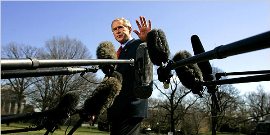
 This morning Whirl and I concluded watching the PBS public affairs program, Frontline, turn a critical eye on its own world: modern American journalism. “News War” is a four-part in-depth series about a myriad of issues facing journalism today. Employed as I am by a large media company saddled with debt and riding into an uncertain economic horizon, the topics of this series were near and dear to my heart.
In the first two hours of the series, “Secrets, Sources & Spin,” Frontline talked to the major players in the debates over the role of media in U.S. society. They examined the relationship between the Bush administration and the press, the use of anonymous sources. The centerpiece of this discussion was the use of anonymous sources and their consequences in the Valerie Plame leak investigation. In the second hour, the series followed this discussion into another area of journalism to highlight unnerving similarities and concerns: sports journalism. We saw interviews of the journalists facing jail for refusing to reveal their sources in relation to the BALCO investigation. San Francisco Chronicle reporters Mark Fainaru-Wada and Lance Williams. Their investigative reporting of BALCO made national headlines exposing steroid abuse in professional baseball.
President Bush praised their stories and commended the reporters for their public service. But in May 2006, his own Justice Department authorized the issuance of subpoenas that would compel the reporters to appear in court and to identify the source of the leak. The reporters fought the subpoenas. But this week, the leaker came forward and publicly identified himself, thus releasing the reporters from their promise of confidentiality.
Control of the message is a critical issue. And that issue can often be at odds with the public service mission of the free press. Frontline’s discussion of the development of the legal concept of privileged communication between reporter and source fascinated me. The erosion of that concept terrified me.
 Beta|Erinyes