Archives For author

Windy City Rollers All-StarsMy friend, Scorey Feldman, has been on me for several years to come out and see the Windy City Rollers compete. I’ve meant to do so on several occasions, but the opportunity always seemed to have passed by the time I remembered that I wanted to go. A few days ago, I learned that the last home game of the 2009 season was scheduled for Saturday. Again, I meant to tell Whirl about it and ask if she’d like to go. And I got sidetracked. (This is becoming something of a theme in my life. I should do something about that.) So yesterday afternoon, a few hours before the bout, I asked her and some of my friends if they’d like to go. Whirl agreed; my friends had other plans. But Smokes suggested I should call up Scorey and see if I couldn’t get a media pass to shoot the bout from the floor. So I did. And Scorey hooked me up with a photography pass and a media access pass.

The little part of my brain that operates as a photography assignment desk sent over the instructions to the other little part of my brain that is a wannabe sports shooter: go to UIC Pavilion and make photographs that will cause Strazz to weep. (My assignment desk mind has some incredibly high standards.)

Hoosier Mama and Varla VendettaThe night was a double header. Two bouts. The first bout pitted the Windy City Rollers development team Second Wind against the Brewcity Bruisers from Milwaukee. The second bout — the main event — was between the Rose City Rollers Wheels of Justice and the Windy City Rollers All-Stars. The WCR All-Stars are the top-ranked team in the region and headed to the National Tournament in Philadelphia in November. The Wheels of Justice are one of the hardest hitting, physical teams in the nation.

So I had about an hour to try and get my act together on how to shoot this sport. Everyone I met was friendly and helpful. Gil Leora, the team photographer, suggested shooting positions and provided some very helpful advice on how to capture the action without becoming an accident of the action. Flash Hottie spent a lot of time with me explaining the rules, the strategy and highlighting some key players to watch. As I said, I’ve never been to a roller derby bout before. And now that I have been, I can state that I really had a great time. It’s a fun sport, with lots of action and strategy. Flash Hottie described it as a martial art mixed with athleticism. And while the redundancy of that statement amused me at the time, I think her irony was intentional. It doesn’t take itself terribly seriously.

Megan Formor 1The entire production is done by volunteers. None of the players or the support staff get paid for what they do. One of my co-workers, Tally Savalas, also works for the WCR as a statistician. He was amused to see me in attendance, and then further intrigued that I was there to shoot it.

As to the results of the bouts, the Second Wind lost a close-fought game against the girls from Milwaukee. The All-Stars game was extremely close for the first three quarters of the game until Varla Vendetta and Eva Dead broke it open and routed the Wheels of Justice 113-73. The breakout scoring all happened in the last twelve minutes due to hard-fought, physical play and some very speedy jammers.

And with that, the team is off to the Nationals.

If you get a chance, check it out!
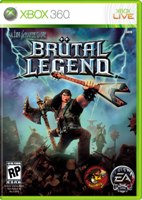
Tim Schafer, Brütal LegendTim Schafer loves heavy metal music. He loves the history, the power, the imagery, the scale and the ridiculousness of it all. He has channeled this love into the video game Brütal Legend, released this week: Rocktober 13th. I have been anxiously awaiting this game since I learned of its development a couple years ago. My excitement has two sources: First, I think Tim Schafer’s last game, Psychonauts, was one of the best games for the last generation of game consoles. Second, the particular focus of this game is something I’ve never seen in a game before. Not even the success of the Harmonix Guitar Hero and Rock Band games can approach either the breadth or depth of Brütal Legend with respect to heavy metal.

I must pause here to acknowledge an observation Vern, one of my high school friends, made many years ago. Whenever I talk music with people, his words come back to me. Vern suggested that all boys go through a metal phase. For some, this phase lasts a few weeks (or even just a few hours). For many boys the phase lasts a few crucial years between the ages of eleven and seventeen. For some, the phase never ends. Vern does not pass judgment on any of this. He does not use it to be particularly divisive or exclusive. At the time he said it, Vern was fifteen and intoxicated by Elvis. Two years earlier we had been screaming along with the rest of the fans at the Scorpions concert at the State Fair Grounds celebrating part of our own metal phases.

The game portrays an incredible amount of affection for heavy metal, a fact that has attracted a startling number of entertainers to be part of it. Lemmy Kilmister, Rob Halford, Ozzy Osbourne and Lita Ford all provide voice talent. Over 100 different artists from a huge variety of metal genres have contributed music to the soundtrack. The game is fantastically clever. The game is funny. The game is stylized and dramatic and epic. It is all of these things and at the same time Schafer is aware of the absurdity of metal as well. It has a sense of itself as a game. He does not allow the genre to take itself too seriously.

It’s a lesson we could all stand to remember from time to time.

Pride and Prejudice and Zombies, Jane Austen and Seth Grahame-SmithI consider myself a well-read, liberally educated man. Few authors have sunk so low in my esteem that I have stricken them from consideration when selecting a book to read. I like to read. I have respect for authors who have suffered the painstaking ordeal of writing a novel. In the vast majority of cases authors deserve a measure of respect for accomplishing that much. Jane Austen is not one of these authors. I know, I know. She’s amazingly popular. Her skills as a writer are transcendent. Her social commentary is sublime; her irony is dramatic, bitter and pointed — all at the same time (something Alanis Morissette was never quite capable of pulling off I’m sad to say). I don’t like Jane Austen books. I don’t. I don’t care for her writing. I don’t like Jane Austen books. So, aside from a compulsory reading assignment in school the only way you would ever entice me to pick up a Jane Austen novel would be to put zombies in it.

And sure enough, that’s exactly what Seth Grahame-Smith has done. Pride and Prejudice is part of the public domain, so Grahame-Smith took the text and intercut it with a contemporary zombie story that would make George Romero proud. The end product: Pride and Prejudice and Zombies. In an interview Grahame-Smith explains, “You have this fiercely independent heroine, you have this dashing heroic gentleman, you have a militia camped out for seemingly no reason whatsoever nearby, and people are always walking here and there and taking carriage rides here and there … It was just ripe for gore and senseless violence.”

It’s October. That means Halloween and spooky things. There are new horror movies to see — including at least two zombie movies: Zombieland and Survival of the Dead. So I’m going to read a Jane Austen zombie book. Yes. A zombie book!

From the back cover:

“It is a truth universally acknowledged that a zombie in possession of brains must be in want of more brains.” So begins Pride and Prejudice and Zombies, an expanded edition of the beloved Jane Austen novel featuring all-new scenes of bone-crunching zombie mayhem. As our story opens, a mysterious plague has fallen upon the quiet English village of Meryton — and the dead are returning to life! Feisty heroine Elizabeth Bennet is determined to wipe out the zombie menace, but she’s soon distracted by the arrival of the haughty and arrogant Mr. Darcy. What ensues is a delightful comedy of manners with plenty of civilized sparring between the two young lovers — and even more violent sparring on the blood-soaked battlefield. Can Elizabeth vanquish the spawn of Satan? And overcome the social prejudices of the class-conscious landed gentry? Complete with romance, heartbreak, swordfights, cannibalism, and thousands of rotting corpses, Pride and Prejudice and Zombies transforms a masterpiece of world literature into something you’d actually want to read.

CoolThe well-worn idiom reads necessity is the mother of invention. Last week the central air conditioning unit for our loft finally konked out. The system had been installed thirty years ago with the original 1979 conversion of the commercial building into residential use. Ours is the last of the original A/C units on the roof. And up until last week, it still worked rather well. It was noisy, and sometimes cantankerous. It usually needed a mild servicing call in the spring each year. But it functioned. It cooled the loft effectively.

Our only real trouble with it came in 2005. The A/C blower mechanism decided it was going to leak sporadically over the top of our bathroom that spring. Whirl — already taxed with taking care of me after the brain injury — spent considerable amount of time and energy maintaining the house and managing the leaks until we finally found the cause and corrected it. An archaic drainage system had clogged up and would overflow from time to time depending on the humidity. That was the catalyst to start our planning to replace it. We put a new A/C system in our budget and started socking money away. Our intent was to upgrade the entire system in 2009 or whenever the unit died. Whichever came first. As it turns out the deadlines came due at almost the same time. Almost.

We just wish the unit had hung in there for two more weeks.

Rather than pay to repair the old unit only to replace it a few weeks later, we decided to build our own air conditioning unit on the cheap based of some plans originally attributed to some college students in Calgary.

Tools and ComponentsTools and Components : Styrofoam Cooler (1), Box Fan (1), Copper Tubing (3/16 inch; 50 feet), Zip Ties (60), Aquarium Pump (1), Aquarium Tubing (20 feet), Mini Tubing Cutter (1), Scissors (1)

Rigging the Tubing 3Rigging the Tubing : We began by positioning the coil of copper tubing on the front of the box fan. We aquired 50 feet of 3/16ths inch tubing and took advantage of the grid-like guard that existed on the front of the fan to anchor the tubing. We used zip ties on the cross-hatches, beginning on the outside edge and methodically spiraled toward the center.

Cutting the TubingCutting the Tubing : We could have planned a tighter spiral that left us with less leftover tubing. However we decided to cut the excess with the mini tube cutter and leave it off. We connected the aquarium tubing to the ends of the copper spiral with the feed starting at the outside edge and the return from the other end of the spiral.

Imagine Cool Air HereTrimming the Zip Ties : I liked the look of the the forest of zip ties. It gave the whole design some motion. However the noise of the box fan was already considerable. When the flapping of the free zip ties was added to that, it was too much. We quickly cut down all the zip ties.

Filling the TankFilling the Tank : The experiment attracted the attention of our two cats. At several moments throughout the project I felt like they were our foremen, directing our efforts. We submerged the aquarium pump in the water and connected it up to the vinyl leads to prove out the entire closed system.

Ice!Adding Ice : The pump is not particularly powerful, but given enough time it was able to provide a constant — if somewhat weak — flow from the water reservoir through the copper spiral and back to the return. The last step of the process was to get that water cold. We added a lot of ice to chill the water as much as we could.

Completed A/C UnitSuccess! : Turning on the fan and the pump yields a small but refreshing breeze of of chilled air. It does not replace our failed A/C unit but it does provide significantly cooler air than what comes off of our unmodified control fan. A more powerful water pump would propel the cold water through the copper tubing faster and provide for more effective overall cooling.

The complete gallery of photographs includes a few more images than what I’ve included here. The unit is not pretty. It will not cool down the big expanse of the loft, but it was a fun experiment and cost about $50 in parts altogether. And more than half of that total was spent on the tubing.

I knew Kevin Smith was coming to Chicago to give a Q&A at the Chicago Theatre when he announced it several months ago. At the time I was hip-deep in a rather monstrous pair of projects at work and the waters were still rising. I declined to get tickets. This afternoon, with the most onerous sections of one of the two projects completed, and the second project’s appetite for my time at least partially satisfied, Smokes‘ invitation to go see Smith seemed positively filled with possibility.

Tickets were still available this afternoon. I consulted with Whirl. She agreed that it sounded like fun. So I bought two tickets and after work we met up with Smokes and Liz and went to see “An Evening with Kevin Smith”.

I am a fan of Kevin Smith. I’ve enjoyed his movies for many years. We’re almost exactly the same age and as such our cultural landmarks are similar. We share a passion for Star Wars. I get his jokes about Jaws. I’ve seen his college campus talks on DVD and I am an irregular listener to SModcast, his mostly regular podcast he does with his friend and producer, Scott Mosier. And for a guy who exposes most of the details of his life to the public, the largest detractor to the whole event was that many of the stories we had heard before: either in interviews, on the View Askew forums, some in books, and many of them on SModcast.

But I think that’s okay. I found him an engaging storyteller. — He’s curiously divisive, as well. Something — perhaps because I have some affection for him — I can’t quite entirely understand. I mean, he is mostly harmless. At least from where I’m standing.

People enjoy taking him down: calling him a hack, a has-been, or a no-talent boor. Oh, and he’s fat.

I guess I just have to shrug and disagree. I enjoyed tonight. I laughed a lot — and loudly. He related some poignant insights about collaboration and expectations in movie making. He told a gut-busting story about an unfortunate event in the Laser Blazer bathroom during a poker tournament. He deftly fielded a number of well-meaning if not overly reflected questions from film students. I particularly respected his maxim of “death before discourtesy” when working in the business. He told of become intoxicated by a ten-disc hockey documentary and then pleading with his wife to share his childlike enthusiasm.

These stories were intersected by impromptu unscripted moments that led me to believe he is a genuinely authentic guy with a knack for spinning a good yarn.

And that’s all right with me.

I find this week’s episode of This American Life fascinating. Entitled “Frenemies” the show’s caption begins:

This week we bring you stories about friends. Or wait, enemies? How about both? Tales of estranged sisters, BFFs breaking up and making up and breaking up, and how reality stars walk the fine line between making friends and making a name for themselves.

As engaging as the listed elements of the show are, for me the most interesting section is a smaller transitional piece with Ira Glass and lexicographer Erin McKean. Glass relates the history of the use of the portmanteau “frenemies” and its emergence into popular culture. Before leaving the topic entirely for the next act of the show Glass and McKean digress to discuss other similarly blended words. During the interview McKean gives four examples. Some are well-known; some are more obtuse.

  • guesstimate : McKean attributes the creation of this word to 1936.
  • anecdotage : The essential meaning here being the arrival at that point in life when you tell the same anecdotes repeatedly.
  • linner : That meal you must have between lunch and dinner. Glass responds, “That just makes me feel mad at somebody.”
  • slanguage : McKean describes the allegedly clever introduction of this term into conversations with lexicographers, “Slang plus language.” Glass, “But you do not find that clever.”

McKean goes on to describe a phenomenon that particularly intrigued me: the lexical gap. She assigns it as a potential source for some of these new terms. While admitting that there are lots of words for things that are uncommon, there are holes in any given language. And when we come across a concept that is not adequately filled by a single term, lexicographers refer to that absence as a lexical gap. In English the most famous case of a lexical gap is the existence of the term for a child who has lost its parents: an orphan. But there is no single term for a parent who has lost a child. A lexical gap.

When I heard McKean name the term my mind immediately jumped to the warning plastered everywhere on the London Tube: Mind the Gap.

I don’t know why I thought of that.

Marina City, IBM Tower, Trump TowerIt is very difficult to live in Chicago and not recognize the name Daniel Burnham. We have Burnham Harbor, Hotel Burnham, Burnham Park. There is a yacht club and an elementary school named after him. His name is associated with a number of signature Chicago buildings: the Rookery, the Monadnock, and the Fischer Building are but a few that I particularly respect. Burnham led the team of architects and landscapers that put together the 1893 Colombian Exposition in Chicago. His efforts spearheaded the construction and successful operation of the White City — an event that brought Chicago back from the ashes of the devistating fire just over twenty years earlier.

And in 1909 Burnham and his co-author Edward H. Bennett published “The Plan of Chicago.” The plan was the first of its kind: a broad view of the city to organize its design, its look and its structure. The 1909 Plan of Chicago marked the birth of the field of city planning. If you live in the city, it is impossible not to be aware of the plan’s impact: the open lakefront, the grid progression of streets and arterial boulevards, the outer park structure, civic and cultural centers.

2009 marks the 100th anniversary of the publication of the Burnham Plan. As such a number of exhibits and events have been developed to celebrate the Burnham Plan Centennial. One of these exhibits is the Chicago Model City, presented by the Chicago Architecture Foundation in the Atrium Gallery of the Santa Fe Building, 224 South Michigan Avenue. The exhibit tells the stories behind the planning of Chicago and presents those whose decisions transformed Chicago.

LaSalle Street CanyonThe centerpiece of Chicago Model City is a 320 square-foot model of the Loop, Near North Side and Near South Side. It includes more than 1000 buildings. But the exhibit is more than just the breathtaking model. There are five sections to the exhibition: Global City, Connected City, Green City, Beautiful City and New City. For each of these themes the Foundation attempts to answer these four questions:

What did the planners see?
What did the planners imagine?
What was the plan?
What happened to the plan?

What is fascinating to me about this exhibition is how the presentation provides a much needed element of reflection upon the full meaning of Burnham’s often repeated quote: “Make no little plans; they have no magic to stir men’s blood.” Plans are good; plans are often necessary. Plans provide a framework of accessibility, understanding. Plans provide structure. The challenge that I find myself facing over and over again is to balance the benefits of planning against the vagaries of change. Flexibility, adaptability. Contention with the unforeseen. The survivability of plans once conceived and implemented in the world.

Soldier Field West ColonnadeAs tempted as I am to trot out a series of cliched statements about the benefits and detriments of plans or the lack thereof, I’m going to forego that tact. Instead I’m going to encourage you to visit Chicago Model City for yourself and allow the perspective of a hundred years of modern culture on a large scale to shape your own thoughts on the subject. I initially visited the exhibition to photograph it. I have collected several architectural photographs of Chicago over the years, and I was intrigued by the chance to try and capture these buildings in miniature. But as I reflect on the larger missions of both the Burnham Plan and the centennial I find more interesting, more personal perspectives than those gleaned solely through the camera lens.

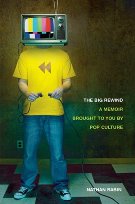
The Big Rewind, Nathan RabinThe Big Rewind is a collection of autobiographical essays by Nathan Rabin. Rabin is the third author to be featured at the panel discussion I attended last month over at the DePaul Center. He was the first to read a selection and the sound engineering was not entirely worked out so I missed much of what he was saying. To compensate for that I picked up The Big Rewind before leaving the discussion and now am going to give it a shot.

Roger Ebert described Rabin’s life as reading “like a fanboy’s collision with Dostoevsky.” I got to talk briefly with Rabin after the panel discussion, mostly pleasantries and a brief discussion of the Watchmen t-shirt I was wearing at the time. This was stark contrast to the themes of the essay he read for the crowd earlier. While I do not consider myself an artist I try to always be looking forward to new forms of expression and creative endeavors. And insights into the hyper-accelerated pop culture world in which I find myself are have been curiously entertaining to me in the past. It is what drew me to reading Chuck Klosterman, and Klosterman is now the indirect catalyst for me reading Rabin.

Publishers Weekly writes:

Rabin, a writer for the Onion‘s arts section, endured a dysfunctional childhood marked by parental abandonment, a stint in a mental hospital and an adolescence spent in a group home and a drug-ridden co-op house. And in this memoir, he views his life through the blurry lens of formative cultural influences. His episodic narrative recounts a sarcastic, insecure youth’s gonzo misadventures with a cast of freaks, misfits and aloof or cruelly promiscuous girlfriends, then moves on to adult run-ins with air-sick celebrities, bored prostitutes and nutty Hollywood types. Convinced that cultural tastes reveal the soul, like a My Space page, Rabin opens each chapter with an earnest (though rarely incisive) appreciation of some favorite in a personal canon that ranges from rap albums to The Great Gatsby, and intrusively peppers his writing with pop culture references. There are, alas, limits to the evocative power of pop culture references, and the author’s arcane allusions — Susanne and Jack’s relationship was like a gender-switched version of the star-crossed duo in the Stephen Malkmus song ‘Jenny and the Ess-Dog’ — test them. Rabin’s vigorous, smart-assed prose sometimes brings the sideshow vividly to life, but it’s marred by self-conscious fanboyism and labored jokiness.

Illinois Canyon 8This past weekend Whirl and I celebrated our eleventh anniversary at Starved Rock State Park outside Utica, Illinois. I have been to Starved Rock several times but I had not been back to the park since college and I don’t recall ever spending the night there. We stayed in the historic lodge (a lodge that is currently celebrating its 70th anniversary) and spent much of our time on the park trails exploring. We took the opportunity to haul a bunch of our photography gear with us and I am quite pleased with the results of having done so. (Even if my back is a little annoyed with me for asking it to lug that stuff up and down the canyons).

We had mostly great weather — comfortable temperatures and lots of sun — for most of our stay. Saturday afternoon was rainy and we stayed indoors after a leisurely morning exploration of Illinois Canyon at the far east end of the park. The rest of the time we tromped around the trails unencumbered by computers or cell phones or other people. It was a great opportunity for us to just spend time with each other doing something we both enjoy. And doing it together.

The Lodge was bustling with activity. At least three weddings, and two major family reunions happened while we were there. One of the women working the front desk remarked that they were booked solid through the end of September and had been steadily busy most of the summer.

American White Pelican Pod

As far as wildlife, we were far too late to see the famous Bald Eagles that winter above the Lock and Dam on the Illinois River. But we did see plenty of other animals. Dozens of Great Blue Herons, scores of Double-crested Cormorants, rough-winged swallows, chipping sparrows, wild turkeys, an Egret, deer (complete with a spotted yearling fawn), blue birds, Indigo Buntings, blue-gray gnatcatchers, and what we’re pretty sure was a muskrat swimming along the riverbank. Perhaps the most surprising sighting for me were these huge pods of American White Pelicans traveling west down the Illinois River. On Sunday we perched on Eagle Overlook above the Lock and Dam and watched as pod after pod flew by in formation. Most of the groupings were ten to twenty birds in size, with the largest grouping number well over fifty birds. Over the course of a couple hours we must have seen two hundred pelicans flying west along the river. Spiders, dragonflies and damselflies were out in force feeding on mosquitoes. The spiders provided particularly intriguing opportunities for macro photography.

If you’ve never been to Starved Rock State Park, I highly recommend visiting. It is a wonderful little oasis in the middle of the state.

Men C3 1The second annual Chicago Criterium ran today in Grant Park. The first race of the day, the Juniors race, started at 7:00 AM, so I trundled out of bed early and walked over to the park. Despite the smallness of the hour, this had a nice photographic benefit of allowing me to shoot in the warm morning light just after sunrise. Normally a Sunday morning at that hour is deserted downtown. The Starbucks by our house doesn’t get busy until at least a couple hours later. But today the Loop was busy already early in the morning.

Men C3 3Last year, I wrote about my experiences with the race. I reminisced about my experiences as a bicycle racer. What I did not mention was that I came to the Criterium without much of a plan. I just came to check it out and see what it was like. I used the excuse that I was going to take pictures to push me over there. But once I was there, I was somewhat at a loss. So I shot a lot of pictures of people I didn’t know and just soaked it all in. It was enlightening to me to be around bike racing again after so many years away from it.

When I posted the pictures I got a number of messages from people expressing interest in the photos or requesting permission to use them on other websites. So this year, I tucked a few of those names in my back pocket and made it a point to seek them out and say hello. One is the father of two boys ages 10 and 12 who are starting racing. Another is the skilled rider whose win in the Category 4s race last year advanced him to Category 3 where he’s raced successfully this year.

Men C3 7This gave my photography some direction. I sought these people out and tried to make interesting pictures of them in action. In effect I was my own photo desk: I gave myself a photo assignment and carried it out. Not that I have a particularly keen understanding of how that sort of assignment works in the real world, but I pretended. I also tried some other techniques. I tried to do some more panning shots. I tried to get a good shot of a start, and of a finish. I’m quite pleased with the results.

My only regret is that I decided to only bring one lens to the race. And it was the same telephoto lens I had brought last year. So I retread some ground, shooting similar shots from similar positions on the course. I wished I had brought my wide angle lens to try and get a different look of the race. I took notes as to what some of the other photographers were trying in hopes that next time I’ll come up with something new.

I had heard that last year’s Criterium was well-received by the cycling community. The announcers reiterated that fact more than once, that USA Cycling (formerly USCF) rated the Chicago Criterium the top criterium race in the nation last year. The rating was based on organization, the course, the schedule, the availability to transportation and a host of factors that might easily be used to demonstrate that Chicago is capable of hosting an Olympic-level cycling event. Several people I talked to expressed that they thought if Chicago were to win the Olympic bid we would see more interest in racing. And if Chicago lost the Olympic bid, they feared this may be the last year for the Criterium. I guess we’ll find out in October.