Archives For author

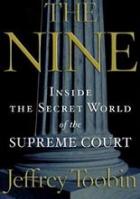
The Nine, Jeffery ToobinBlame my increased interest in American politics on my employment by the fourth estate. Or my presence at both political conventions this year. Or the unusually close proximity of my home to the Election Night rally in Grant Park — and all that means for the junior senator from Illinois, now president-elect of the United States. Or maybe it’s just middle age reminding me that I should put down the comic books, turn off the video games and pay closer attention to the wider world around me.

In The Nine, Jeffrey Toobin, a legal writer for the New Yorker, surveys the United States Supreme Court from the Reagan administration on. During this period the justices wrestled with abortion, affirmative action, the death penalty, gay rights and church-state separation. And despite a court dominated by Republican apointees, Toobin’s picture is one not of unmitigated conservatism but surprising moderation. Toobin guides us through the last 15 years of court history by focusing on individual justices. Edward Lazarus of the Washington Post, while generally critical of Toobin’s conclusions, describes these portraits as “unspoiled by hagiography.”

Whirl recommended I read this book after she had finished it a few months ago. Toobin bases much of his book on exclusive interviews with the justices themselves and former law clerks. And by doing so attempts a contemporary profile of those justices, the institution of the court and the changes it has undergone over the last several decades. Lazarus writes,

[W]e have come to vest these unelected, life-tenured judges with final authority to interpret the Constitution as well as all federal law. Yet the justices go to considerable lengths to shroud their deliberations in secrecy, and some of them, notably the current chief justice, engage in a disinformation campaign, announcing that they are disinterested referees, like umpires in baseball, engaged in the pedestrian enterprise of calling legal balls and strikes according to a clear set of rules.

Toobin deserves credit for adding his influential voice to the chorus seeking to debunk this myth. As he observes, the justices are chosen through a political process for political reasons, and the decisions they reach are inevitably influenced by their ideological commitments, personal experiences and personalities.
News WarThis morning Whirl and I concluded watching the PBS public affairs program, Frontline, turn a critical eye on its own world: modern American journalism. “News War” is a four-part in-depth series about a myriad of issues facing journalism today. Employed as I am by a large media company saddled with debt and riding into an uncertain economic horizon, the topics of this series were near and dear to my heart.

In the first two hours of the series, “Secrets, Sources & Spin,” Frontline talked to the major players in the debates over the role of media in U.S. society. They examined the relationship between the Bush administration and the press, the use of anonymous sources. The centerpiece of this discussion was the use of anonymous sources and their consequences in the Valerie Plame leak investigation. In the second hour, the series followed this discussion into another area of journalism to highlight unnerving similarities and concerns: sports journalism. We saw interviews of the journalists facing jail for refusing to reveal their sources in relation to the BALCO investigation. San Francisco Chronicle reporters Mark Fainaru-Wada and Lance Williams. Their investigative reporting of BALCO made national headlines exposing steroid abuse in professional baseball.

President Bush praised their stories and commended the reporters for their public service. But in May 2006, his own Justice Department authorized the issuance of subpoenas that would compel the reporters to appear in court and to identify the source of the leak. The reporters fought the subpoenas. But this week, the leaker came forward and publicly identified himself, thus releasing the reporters from their promise of confidentiality.

Control of the message is a critical issue. And that issue can often be at odds with the public service mission of the free press. Frontline’s discussion of the development of the legal concept of privileged communication between reporter and source fascinated me. The erosion of that concept terrified me.

Read the rest of this entry »

Lead Photo SelectionsA couple personal factors have raised my awareness this election cycle. The Illinois junior senator, Barack Obama, has been a figure in the race from the earlies days of a long campaign. I changed jobs — while within the framework of media, I moved from video games to traditional media. Newspaper, radio, television. My colleagues are the reporters, correspondents, editors, and photographers that make of Tribune Company. I don’t write this to seem boastful. Quite the contrary, it has been my association with these people that has enriched my own personal understanding of news and politics in ways that I had not previously experienced. One of my major projects this year was to provide the essential networking support for our editorial staff during the two major political conventions.

I read the daily paper. I work for the daily paper. My colleagues I work with are kind, insightful, curious, garrulous, demanding and intelligent. And despite the particular problems — from the general state of the economy to the specific challenges of print and advertisings to the very specific challenges of reinvigorating Tribune under new management and new ideas — I feel blessed to have the opportunity to work alongside these people.

Tonight, Election Night, I am working the late shift, from the mid-afternoon to the run of press and perhaps later. I slept in before voting this morning. And I tried to anticipate what might happen tonight — to the country, to the state of Illinois, the city of Chicago and to me. Election Night is about as big as it gets for news. This is the big night. This is politics on the grand scale and the small scale both. This is a two-year campaign, to research and polls and conversations both on and off the record. That this particular election has come down to a son of Chicago and is culminating in rally of hundreds of thousands in my back yard.

Read the rest of this entry »

I try to keep my personal politics off of this blog. I am not sure how successful I was when I was chronicling my work at the political conventions earlier this year, but I tried. My goal was to capture work-a-day experiences and write about the practical and logistical elements of my time there. I left the political opinions to my skilled co-workers from the Editorial departments. So, today, this day before Election Day, I am going to try and repeat that tone and talk a little bit about these last few days of the campaigns. You may have heard about the Rally in Grant Park scheduled for tomorrow night. My friends, John and Sabrina, have both managed to score a couple of the elusive 65000 tickets. The rest of us have been graciously invited by our Mayor to attend anyway. Not to be outdone, city officials quickly put together a scary list of steps they will be taking to manage the rally. Things like intermittent rolling street closures, controlled access, metal detectors. That sort of thing.

Read the rest of this entry »

Watchmen, Alan Moore & Dave GibbonsI will attempt to make a case that Watchmen is not as a comic book but a novel through the clever use of argumentum ad verecundiam. Ready? Watch. In 1988, Watchmen received the Hugo Award. In 2005, the editors of Time Magazine placed Watchmen on the ALL-TIME 100 Novels list. The list of the best novels written between 1923 and the present. More recently, Entertainment Weekly placed Watchmen at number 13 on its list of the best 50 novels printed in the last 25 years. And just in case that hasn’t convinced you, a few more soundbites:

“A work of ruthless psychological realism, it’s a landmark in the graphic novel medium.” — Time Magazine

“Watchmen is peerless.” — Rolling Stone

“Remarkable … the would-be heroes of Watchmen have staggeringly complex psychological profiles.” — New York Times Book Review

“A brilliant piece of fiction.” — The Village Voice

So, all of these authorities say Watchmen is great literature. So it must be true! The point here is that none of this matters. Watchmen is a story — a dense, complex story with social, psychological and structural elements worthy of more traditional literary examples. Originally published by DC Comics in 1986 and 1987, Watchmen is a twelve-issue series created by Alan Moore and Dave Gibbons. I am reading it in a collected form: the so-called graphic novel. Alan Moore has stated that the initial premise for the series was to examine what superheroes would be like “in a credible, real world”. That premise shifted as the story developed and grew in complexity. Watchmen grew to encompass the idea of “power and about the idea of the superman manifest within society.”

Compelling storytelling takes myriad forms: song, theater, novel, poem. Why not this?

Independence Day 4Last week I learned Craig had taken his own life. Craig was a good friend of mine all through childhood in Colorado. We climbed mountains together, descended the Arkansas River in canoes and it pains me to think that the last time I spoke with him was twenty years ago. When I moved away to college I lost touch with Craig. I lost touch with most of my friends. I can count the ones I still have addresses for on one hand– and that includes my younger sister. For the past twenty years I have kept up with Craig’s life mostly through periodic updates from my mother. I know Craig spent time in Seattle, lived on a houseboat in the bay, and most recently had a home in Montana. He never married.

The news of Craig’s suicide has prompted me to think more directly about my life. The decisions I have made. The consequences of those decisions. I avoid thinking about these ideas in terms of remorse or nostalgia or melancholy. I think doing so lays an easy emotional trap. When I do that what I end up creating is a lonely retrospective of failure. If only I had done that instead, everything would be so much better. I see no value in that sort of self-evaluation. I’m no longer interested in answering the question: What went wrong? I am interested in an honest, authentic appraisal of how I got here and what that says about me.

Read the rest of this entry »

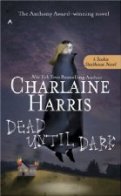
Halloween means monsters– ghosts, vampires, women wearing little more than fishnet stockings and a smile. So it is in the spirit of Haloween that I’ve started reading the Sookie Stackhouse novels by Charlaine Harris. Eight novels comprise the Sookie Stackhouse series, so far– the first one being Dead Until Dark published in 2001. The series takes the vampire legend and turns it on its head. The premise is that the development of synthetic blood has allowed vampires to come “out of the coffin” for the first time in history. So much of vampire lore is wrapped up in the element of secrecy about them. Harris does away with all that in the second paragraph before moving on to her version of vampire stories.

I came across these books via the HBO series “True Blood”. Alan Ball created the television series, basing it upon the Sookie Stackhouse novels. You may know Alan Ball as the writer of American Beauty and the creator of another of my favorite HBO series, “Six Feet Under”. When I saw that he was creating another TV series, I decided to take a look. After two episodes I wanted to read at least the first book.

Sookie Stackhouse is a small-time cocktail waitress in small-town Louisiana. She’s quiet, keeps to herself, and doesn’t get out much. Not because she’s not pretty. She is. It’s just that, well, Sookie has this sort of “disability.” She can read minds. And that doesn’t make her too dateable. And then along comes Bill. He’s tall, dark, handsome– and Sookie can’t hear a word he’s thinking. He’s exactly the type of guy she’s been waiting for all her life …

But Bill has a disability of his own: He’s a vampire with a bad reputation. He hangs witha seriously creepy crowd, all suspected of– big surprise– murder. And when one of Sookie’s coworkers is killed, she fears she’s next …

It’s autumn, it’s Chicago and I’m looking for a new book to read. Fortunately my conscientious public library runs a nifty program twice a year to help people like me choose interesting books to read. Twice a year– once in the spring and once in the fall– the Chicago Public Library selects a book for the entire city to read. As part of One Book, One Chicago the library provides lectures, film screenings, Q&A sessions, seminars and other programs located at the various libraries throughout the city. The idea is to engage the populous in a discussion of a great book. The Fall 2008 selection is the 1979 book, The Right Stuff by Tom Wolfe. The Right Stuff tells the story of the lives of the seven astronauts chosen for Project Mercury. In the 1983 foreword to the edition I’m reading, Wolfe writes for several paragraphs about the style of military writing in the 20th century.

Immediately following the First World War a certain fashion set in among writers in Europe and soon spread to the obedient colonial counterparts in the United States. War was looked on as essentially monstrous and those who waged it– namely, military officers– were looked upon as brutes and philistines. [….] The only proper protagonist for a tale of war was an enlisted man, and he was to be presented not as a hero but as an Everyman, as much a victim of war as any civilian.

Wolfe goes on to explain that the early age of spaceflight was dominated by former military pilots. Officers. His book serves as an attempt to reconcile this era of the anti-hero with the courage and daring of not just the dangers of “test flight”, but the great unknown of spaceflight.

Chicago Public Library is presenting Tom Wolfe with the Carl Sandberg Literary Award tomorrow night at the Harold Washington Library across the street. Tickets to the dinner are going for a grand a piece. I don’t think I’ll be attending, but I am looking forward to reading this bit of New Journalism. I applaud the relevance of this book’s selection on several levels.

Mass Start 3Whirl and I got up early this morning to see the start of the Chicago Marathon. And when I say early, I mean early. The sun was not yet up when we headed up to Millennium Park. I had hoped to shoot the start of the race from the BP Bridge. I am a fan of the bridge and its architect, Frank Gehry. This morning I was not a fan of When I arrived an inconvenient sign notified me that only credentialed media photographers would be granted access. I briefly considered trying to flash my Chicago Tribune badge. While having drinks with Genaro Molina and Myung J. Chun, photographers from the Los Angeles Times, at this year’s political conventions, Genaro informed me that often the company ID badge is all the credential he has needed to gain access to shoot. So I thought about it. And then thought better of it– slinking off to shoot from the Randolph Street bridge with the rest of the great unwashed.

While waiting for the race, we caught a rare glimpse of two of the peregrine falcons Whirl monitors for the Field Museum. They were circling above us, maybe forty of fifty stories up between the Aon Tower and the Prudential Building.

As the warm morning light came over the trees, thirty-five thousand people took off in a mass for the start of this year’s marathon. I was not there to cheer on anyone in particular. No one I know personally was running this year; I just wanted to be a part of the start of it. To get a few pictures and enjoy one of the last great weekends outside before autumn turns to a cold winter.

Superheroes (and a Villain)The race route traveled through twenty-nine Chicago neighborhoods. I took a number of pictures along the start on Columbus before moving to the LaSalle Street bridge. There I took a few more pictures and asked Whirl if she wanted to hop the el down to Chinatown to catch up to the leaders. But by this point she was getting hungry so we settled for a quiet breakfast at the South Water Kitchen before making our way home.

I’m not sure I’ll ever garner enough courage to try a marathon. I am fairly certain I have the endurance for it, if I put my mind to it. I’m less confident about surviving the pounding my feet and legs would take. — And I’d need to drop the rest of this weight I’ve been steadily taking off over the past year. Nonetheless, the difference between walking twenty-six miles and running them is pretty big. Still, it was impressive to see this many people test themselves against a true test of strength and willpower. For those of you who did run: I applaud you.

Well done!

I have begun down a path to dismantle one of my most interesting labs: phaedo.erinyes.org.

Almost four years ago I put phaedo together. I designed the server to accomplish a number of different tasks. Initially I wanted a server that would function as a fileserver for our home and a mailserver for Internet email. My ISP supports customers running servers on their end of consumer-grade DSL. I used the server as an experimental platform. I worked on projects involving CMS systems, SQL server, DHCP, perl, advanced sendmail and milter configurations and a number of other scenarios over the course of its life.

So in early January 2005 I got phaedo up and running and successfully installed at home. I was proud of my accomplishments. I had set up a blog under the CMS system and was searching for topics to write about. Two weeks later I found the subject that would consume me for over a year: my brain injury. The first posts I made on the system were me chronicling my injury and subsequent recovery. What I have not talked about is the curious development that the systems I was using to publish my thoughts– blog, email, chat server– were brand new constructions. I quite literally had completed the design and installation just a week or so before I went into a ten-day coma.

So phaedo’s second laboratory function came around as part of my recovery process. I had to relearn what I had designed. I had to dismantle parts and put them back together to reteach myself critical system administration tasks. This was painful and slow and filled with anxiety and distress. I desperately wanted to succeed. And brain trauma is a very effective way to complicate those sorts of broad plans– or any plans, for that matter.

Over three years later and the same server continues to putter along reliably in our loft. I have made improvements over the years and some minor changes, but at its core it is essentially the same system as the one I started to build in the week between Christmas 2004 and New Years 2005.

Technology has advanced, my work has changed. — Part of the original design was to set up a space that could function as a testbed for systems that I was working on in the office. But more important than either of those, my life has changed. I’ve come to the conclusion that I do not want to be a full-time system administrator both at work and at home. I have other hobbies that I enjoy now. I want those hobbies to provide a relief from distress, not add to it.

All of this is my overly candid way of saying that this website will be changing. This will be the last post I make on phaedo. Stephanie and I plan to continue the weblog. Stephanie has already moved her falcon journal to its new home. I invite you, one of the countless legion of faithful readers, to our new homes:


The Erinyes Weblog
https://beta.erinyes.org/
Peregrine Falcon Journal
http://peregrines.erinyes.org/