Archives For author

I am in Denver, Colorado for the next nine days. After that, I fly to St. Paul, Minnesota and stay there for eleven more days. I am doing this in support of Tribune Publishing’s coverage of the two national party conventions. The Democratic National Convention begins Monday, August 25th in Denver. The Republican National Convention begins one week later Monday, September 1st in St. Paul. I am responsible for the networking needs for our newspapers for these two weeks.

Today was my first real day on the job. Don’t get me wrong, we’ve been planning this work since November of last year. Then again, a lot has happened in the interim. Plans change. Sometimes plans change a lot. Sometimes plans change and you don’t even realize that they’re now nearly the opposite of what you thought they were in the first place. Or was that the third place? I forget. Plans change.

Anyway. It’s late. And I’m rambling. I thought it would be worthwhile to write down some brief observations about each of my days working on the conventions. I’ve brought the camera with me as well and am taking pictures. However I think I will publish the pictures a bit later, after the events have officially opened. I’ll tell you why a little later.

Read the rest of this entry »

I enjoyed Survivor so much that when I was at the bookstore looking for something to take along with me on my business trip at the end of this month I picked up another novel by Chuck Palahniuk. This time I picked up Choke. Choke is another example of transgressive fiction. Transgressive fiction follows the premise that knowledge is to be found at the edge of experience and that the body is the site for gaining knowledge. Victor Mancini serves as protagonist by way of being a delightfully degenerate grifter. Not just for money– the major crux of his con being the reason for the book’s title– but sex and drugs and happiness as well.

From the back cover:

Victor Mancini, a medical-school dropout, is an antihero for our deranged times. Needing to pay elder care for his mother, Victor has devised an ingenious scam: he pretends to choke on pieces of food while dining in upscale restaurants. He then allows himself to be “saved” by fellow patrons who, feeling responsible for Victor’s life, go on to send checks to support him. When he’s not pulling this stunt, Victor cruises sexual addiction recovery workshops for action, visits his addled mom, and spends his days working at a colonial theme park. His creator, Chuck Palahniuk, is the visionary we need and the satirist we deserve.

I have begun a photography project: 100 Strangers. This is a first for me, to shoot pictures with a particular purpose in mind. The challenge is simple: take 100 portraits of 100 strangers. Candids are not allowed. The project’s creator, Teppo, asks:

Want to be a better street photographer? Want to develop as a photojournalist? In order to be one you often need to have the courage to go and talk with people you don’t know.

I think this is a noble goal. I also have to ask myself about the possible causes that would generate such a project in the first place and see so many people attracted to it. What sociological forces are at play that compel one to believe that talking to strangers is a dangerous thing? Is this another example of our growing culture of fear? Are cameras somehow tools of intimidation? Have I grown so used to the anonymizing powers of technology that real face-to-face communication with real people has become foreign? Or is this just group therapy for introverts?

My friend, Princess FixIT, makes some powerful observations on shifting cultural attitudes about strangers in the last two generations. She talks about her grandmother’s trait of striking up conversations with ease. At lunch the other day as we were discussing the project, Princess stated, “Are you kidding!? Grandma did ‘100 Strangers’ every day!” My own grandmother had a very similar approach to people she just met.

Like Princess, I do think that technology has the potential for doing a considerable disservice to the art of communication. Rather than bringing people closer together I find that many technology methods often achieve the opposite. Technology anonymizes conversations, emphasizes difference and distance between us, and inserts errors and confusion where a smile, a hug or a handshake would have soothed things over.

Do we compensate for this perceived– but unrealized– distance between ourselves with ever more obsessive, self-involved technologies? We stopped writing letters and invented email because email was faster. We stopped writing email and started blogging because then we did not have to personalize and repeat the message to everyone. Just post to the blog and the onus was on the audience to find out what we were doing or what we were thinking. Or we stopped writing email and started using instant messaging, because instant messaging was even faster. We have stopped writing multi-paragraph blog entries and are now adopting µblog services like Twitter and identi.ca because blogs just have too many words. Your life is now represented in 140 characters or less. Archived forever. And we install all of these technologies in our mobile phones so they are always available.

Does all of this technological development really improve one’s quality of life? I do not think so. I think it contributes to a culture of self-obsessed introverts with chronic attention deficit hyperactivity disorder. Welcome to the anoniverse. Now if someone would just be so kind as to show me the way out, I’d like have a real conversation. With someone. Anyone.

I am motivated to participate in the 100 Strangers project by the prospect of taking better photographs. I am also using the project as a way of disrupting the culture of anonymity. That is to say, I believe technology has made you and me shier, less approachable, and more cowardly than would like. I am going to change. Myself.

Pro C1/C2 15I have an awkward relationship with bicycles. Bicycles have been involved in two of the most dramatic events in my life. In 1984 I was struck by an automobile while riding a mountain bike on a closed road outside Aspen, Colorado. I flew through the windshield face first and ended up in surgery for six and a half hours– total stitch count: four hundred and thirty-five.

In January of 2005, while crossing the three-way intersection of Milwaukee, North and Damen in Wicker Park, I was struck by a bicyclist and suffered a severe brain injury. I crashed to the ground and cracked my head against the curb in a classic coup-counter coup trauma– total days spent in a coma: ten.

Juniors 1But the thing is not all my interactions with bicycles have been bad, brutal or bloody. Starting as a boy, somewhere around the spring of 1982, I began racing bicycles. My dad had been a bicycle enthusiast for a long time. While in college, he took long trips on his bike. He commuted into the office when we lived in Washington D.C. And he raced competitively for several years before I was born– including a qualifying entry in the the Nationals. When I took an interest in bicycles, dad renewed his. I was old enough that dad had someone he could ride with from time to time, and when we traveled to races together it was a trip we took together. I joined the United States Cycling Federation (USCF), the organizing body for amateur bicycle racing, and raced Juniors, kids 18 and younger. Dad had been a USCF member before, renewed and now raced Veterans, racers 35 and over.

Pro C1/C2 26The 1980s were a great time for cycling in the United States. The Coors Classic stage race was the largest stage race in the US– and fourth largest stage race world wide– and it ran for two weeks through my home state of Colorado. Greg LeMond won the Coors Classic in 1985. Bernard Hinault won it in 1986. LeMond would go on to win the Tour de France three times. Bernaurd Hinault had already won the Tour de France five times when he won the Coors Classic. The 1985 Kevin Kostner movie, American Flyers, is set during a fictional American stage race based off of the Coors Classic. They shot part of the movie on the brutal Morgul-Bismarck course– a road course I raced that year.

In 1984, Los Angeles hosted the Summer Olympics. Americans Alexi Grewal, Connie Carpenter, Rebecca Twigg, Steve Hegg, Mark Gorski and Nelson Vails all won medals in cycling that year. The United States Olympic Training Center is in Colorado Springs, just 40 miles from where I grew up, and when McDonald’s built the velodrome in Los Angeles for the Olympics they built an exact duplicate of it in Colorado Springs. For four years Dad and I would go to Colorado Springs to compete in the Tuesday night track racing series.

Elite C4 3This heightened interest in cycling in Colorado granted me the opportunity to meet and ride alongside Carpenter, Twigg, Gorski and Vails. Gorski and Vails just showed up at the velodrome one Tuesday evening on a lark. They demonstrated tandem sprint riding for us– some of the fastest, most explosive cycling you will ever see. I met Carpenter at the 1986 State Track Championships being held at the OTC Velodrome. I met Twigg at the 1987 State Road Championships at the Air Force Academy.

Spring and summer in the mid-1980s, Dad and I raced most weekends somewhere along the Colorado Front Range. We raced track races, road races and criteriums. When we were not racing, we were training or touring. I completed three centuries in those years of racing: a ride of 100 miles in one day. When I moved away to college, I sold my car but kept my bicycle. I continued to ride regularly and race somewhat irregularly through college. When I took a year to study in Germany, I did not bring my bike with me and that decision marked the end of my racing career. When I came back to the US, I continued to ride, but more as general exercise and for fun, rather than competitively.

Pro C1/C2 8Now. Today. My bike terrifies me. — What troubles me is that I was good at cycling. I had the endurance for it, I understood the tactics of it. Moreover, I enjoyed it. I still have the bike I rode to a silver medal in the Colorado Road Championships in 1987. I still have it and I cannot bring myself to ride.

I’ve written about my resurgence in my interest in photography. This weekend, I used that renewed interest an alternate angle to approach cycling. One fraught with less anxiety and with the promise of allowing me to enjoy something I once loved from a new perspective. Chicago hosted a criterium in Grant Park— an event they hope to make recurring in years to come. Grant Park is just a couple blocks from my house, so I grabbed the camera and spent the day at the races. I have been out of the sport so long that I don’t recognize any of the names of the riders. The gear has changed as well. But the energy and the emotion is still there and just as tangible. I took hundreds of pictures of the races. I came home and dumped them all from the camera and then ran back and took hundreds more.

I had a blast.

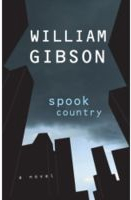
It has been over twenty years since I read the Sprawl trilogy by William Gibson. Neuromancer, Count Zero, Mona Lisa Overdrive— these combined with the short stories in Burning Chrome to form the basis of my first opinions of cyberpunk literature. Now, twenty-plus years later I am working for a large corporation building networks and recovering from a brain injury. Granted, the injury did not come from jabbing a plug into my skull to try and communicate with Wintermute.
While browsing at the bookstore last week, I ran across the paperback edition of William Gibson’s latest novel, Spook Country. I have not read any of the novels Gibson published between the Sprawl trilogy and now with the exception of The Difference Engine. It was my disappointment with that book that dissuaded me from trying again. Spook Country intrigued me in the idea that it was no a science-fiction novel, but a thriller set in modern day: a modern day at least hinted at early in Gibson’s career.

In 1990 I interviewed Dan Simmons. Cyberpunk was on its way out as a genre. I didn’t know that, but Simmons did. Nonetheless, Simmons was a gentleman and indulged a naive sophomore a few questions about the particular genre. While we were talking, Simmons related a story about William Gibson that has stuck with me. Simmons asked Gibson over dinner about his foremost experience of futureshock. Gibson answered, “Well two weeks ago I was in Tokyo and I got lost. I got off the train, the metro, in the wrong part of Tokyo, which was about thirty miles from the right part of Tokyo. And here I am wandering at 3 a.m. down some quiet street, bathed in neon and rain. And I come across a street corner dispenser of liter bottles of scotch. And the thing is humming and talking to itself in Japanese.”

And that is what I appreciate about Gibson. His critics are ruthless as they rant about his inability to present a compelling psychology, or to answer any big questions about the world in which we live. I think that misses the point. But what I like is that almost myopic view that defines the trend of intense specialization and its inevitable destination: vast swaths of blank ignorance. When he’s on, there’s nothing quite like that tiny, intensely personal mirror he can hold up.

I’m hoping Spook Country follows that trend.

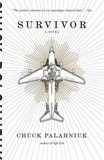
Survivor is the second novel by Chuck Palahniuk. You may recognize the author’s name from his first novel, Fight Club. Like the first novel, Survivor satirizes contemporary commercial culture. The setup for the story is obscure: the protagonist has commandeered a Boeing 747, emptied it of all its passengers, and flies it randomly until it runs out of fuel and crashes. The protagonist does this in order to tell his life story into the “black box” flight recorder.
From the back cover:

Tender Branson– last surviving member of the so-called Creedish Death Cult- is dictating his life story into the flight recorder of Flight 2039, cruising on autopilot at 39000 feet somewhere over the Pacific Ocean. He is all alone in the airplane, which will crash shortly into the vast Australian outback. but before it does he will unfold the tale of his journey from an obedient Creedish child and humble domestic servant to an ultra-buffed, steroid- and collagen-packed media messiah.

Unpredictable and unforgettable, Survivor is Chuck Palahniuk at his deadpan peak: a mesmerizing, unnerving, and hilarious satire on the wages of fame and the bedrock lunacy of the modern world.

Bookworm‘s Michael Silverblatt defines this genre of writing as transgressive fiction. This literary genre graphically explores taboo subjects– drugs, sex, violence, incest, pedophilia, crime– and dysfunctional family relationships with the underlying premise that knowledge is to be found at the edge of experience and that the body is the site for gaining knowledge: “Subversive, avant-garde, bleak, pornographic — and these are compliments.” With that definition I am reminded of a number of books and authors I have enjoyed over the years: Clockwork Orange by Anthony Burgess, Girlfriend in a Coma and Generation X by Douglas Coupland, Story of the Eye by Georges Bataille, Lolita and Ada by Vladimir Nabokov. That Palahniuk’s writing style was turned on by the aesthetic he heard in punk bands like the Germs and Generation X, and he admires the works of Shirley Jackson and Stephen King— these bits do not surprise me. They excite me. I look forward to reading this book all the more for learning them.

I think I’m going to take this book on the plane with me to Colorado, tomorrow. Somehow, that just seems right.

Some time in May I ran across a description of this book and wrote down the name as something I might be interested in reading. When I read the jacket cover to Whirl she responded that it did not sound like my typical choice in books. I’m not exactly sure how to take that. Is that a good thing that I’m branching out into a different style of writing? Is that a bad thing that my choices are rather predictable? What does that say about me, exactly. I believe choices and their consequences are fundamental elements to the development of personality and I believe that one of the benefits of reading is that it allows us to hold up a mirror to ourselves to judge the effects of our choices.

It is with those sorts of questions at the back of my mind that I have begun to read Will Lavender‘s first novel: a psychological thriller set in a small liberal arts college in rural Indiana. I have some familiarity with the small liberal arts colleges of rural Indiana. I graduated from one of those. I also have some familiarity with puzzles. I married one of those. Or rather, my child bride has a passion for solving puzzles and logic problems.

Just the superficial clues about the book and the setting I find intriguing. The title itself is a bit of a mystery, particularly coupled with the statue of statue of Stanley Milgram in the middle of the Winchester University campus. Stanley Milgram was a psychologist. The Milgram experiments demonstrated the average individual’s willingness to subject others to painful electric shocks when ordered to do so by someone identified as an authority figure.

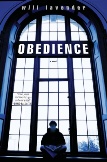
So we have logic and philosophy, college, murder, mayhem and Man’s inhumanity to Man. Sounds like an interesting time to me. Oh, and for those of you wondering what the text on the cover reads, here it is:

When the students in Winchester University’s Logic and Reasoning 204 arrive for their first day of class, they are greeted not with a syllabus or texts, but with a startling assignment from Professor Williams: Find a hypothetical missing girl named Polly. If after being given a series of clues and details the class has not found her before the end of the term in six weeks, she will be murdered.

At first the students are as intrigued by the premise of their puzzle as they are wary of the strange and slightly creepy Professor Williams. But as they delve deeper into the mystery, they begin to wonder: Is the Polly story simply a logic exercise, designed to teach them rational thinking skills, or could it be something more sinister and dangerous? The mystery soon takes over the lives of three students as they find disturbing connections between Polly and themselves. Characters that were supposedly fictitious begin to emerge in reality. Soon, the boundary between the classroom assignment and the real world becomes blurred—and the students wonder if it is their own lives they are being asked to save.

ChildhoodI’m trying to remember my first encounter with photography in any form other than being the subject of my parents’ all-seeing eyes. My dad enjoyed taking pictures of me as I grew up. He would shoot both slide and print film. Not unlike the experiences of many people, my childhood included a number of moments captured on film for all eternity. Some are sweet: my sister and me standing among the aspen as the leaves turned color in the fall. Some are embarrassing: naked, two years old and pudgy, collapsing a plastic swimming pool. Many are memorable in that classic sense, quiet captures of being in a certain place at a certain time. In all of this I was aware of the camera only as I was the subject.

I think the moment of realization that a mechanism to photography existed came later. The understanding that my dad had learned this method came to me when as a young boy as I looked at a picture he had taken at night in Washington D.C. I cannot recall the exact subject of the photograph– I suspect the primary subject was one of the monuments or famous buildings from the capital. I want to say it was a wide shot along side the mall with the Washington Monument off to one side. But what I remember clearly was that it contained a streetscape. Bright streaks raced along the pavement where the cars should have been. But there were no cars. There were only these streaks of light. I asked dad about the picture. He told me how he took it. I thought he was a magician. He took a picture and made all the cars disappear. Obviously the cars had gotten zapped by these streaks and now were gone!

Dad patiently explained to me how he composed the shot. He had taken a long, multi-second exposure and what I was seeing was the glow of tail lights as the cars moved through the frame. The entire lesson went right over my head at the time. What stuck with me was this idea that a photograph was an object in its own right. Up until that point I had thought that photographs were just ways to record what something else looked like: a secondary thing of no real importance. But the taillights proved otherwise. I knew the cars had been driving by when dad took the picture. But they were not in the picture. They disappeared. I knew taillights were not a hundred yards long, but they were in the picture. They went all the way down the mall to the monument.

I wanted to learn how to do this. I wanted to know how it worked. And with childish intensity I continued to pester my dad until he relented and began to reveal the secrets to me.

1965 Nikkormat FTDad’s 35mm Nikkormat FT was one of the first real cameras I ever used. Dad had bought it when he was in college. He took it with him everywhere. Backpacking in Colorado, canoe trips in Indiana, bicycle trips around Lake Michigan. Dad used this camera to capture the Colorado River at the bottom of the Grand Canyon and the top of Long’s Peak in Rocky Mountain National Park. He hauled it up to the top of Mt. Elbert and through the backwoods of the Minnesota Boundary Waters Wilderness Area. When I was fourteen, Dad gave me this camera. Although in all honesty I suspect it was a loan that I never paid back.

Read the rest of this entry »

Under the Banner of Heaven will be the third book I have read from author Jon Krakauer. The other two books include his moving non-fiction account of the harrowing 1996 summit of Mt. Everest, Into Thin Air, and the compelling research retrospective about the last two years of life for Christopher McCandless in Into The Wild. In Under The Banner Of Heaven Krakauer tells two stories: the formation and evolution of the the Church of Jesus Christ of Latter-day Saints, and a 1984 double murder committed by members of a separatist polygamist sect of Mormonism. Krakauer’s editors and publishers have provided this description of the book on its back cover:

Jon Krakauer’s literary reputation rests on insightful chronicles of lives conducted at the outer limits. He now shifts his focus from extremes of physical adventure to extremes of religious belief within our own borders, taking readers inside isolated American communities where some 40000 Mormon Fundamentalists still practice polygamy. Defying both civil authorities and the Mormon establishment in Salt Lake City, the renegade leaders of these Taliban-like theocracies are zealots who answer only to God.

At the core of Krakauer’s book are brothers Ron and Dan Lafferty, who insist they received a commandment from God to kill a blameless woman and her baby girl. Beginning with a meticulously researched account of this appalling double murder, Krakauer constructs a multilayered, bone-chilling narrative of messianic delusion, polygamy, savage violence, and unyielding faith. Along the way he uncovers a shadowy offshoot of America’s fastest growing religion, and raises provocative question about the nature of religious belief.

Despite the incendiary language, the blurb worked. It got my attention. This text is not alone, however, in moving Mormonism and polygamy to the forefront of American cultural media. HBO’s series Big Love has garnered critical acclaim and two Golden Globe nominations with its attempt to make a fair portrayal of polygamy in America without being judgmental. Former Massachusetts governor Mitt Romney helped to bring Mormonism to the national stage with his bid for the Republican presidential nomination. Mainstream media covered Romney’s religious affiliations extensively in the 2008 campaign. Many political analysts considered Romney the top candidate until John McCain‘s Super Tuesday results proved otherwise. Most recently, stories surrounding the Yearning for Zion Ranch in West Texas and the polygamist Fundamentalist Church of Jesus Christ of Latter Day Saints have been prominent in national news for the past month.

The Church of Jesus Christ of Latter-day Saints, the primary church of Mormonism that rejected the practice of polygamy in 1890, criticized Under the Banner of Heaven even before the book’s publication, stating “This book is not history, and Krakauer is no historian. He is a storyteller who cuts corners to make the story sound good. His basic thesis appears to be that people who are religious are irrational, and that irrational people do strange things.”

My skepticism urges me to disagree with the LDS’ claim as to Krakauer’s basic thesis. My experience reading his two other books bolsters my opinion that Krakauer is a meticulous journalist with integrity and credibility. Krakauer has responded publicly to the church and I expect I will read the entirety of the church’s criticism, and Krakauer response after completing the book itself.

War Protest 2An excited mob of bicyclists took over the intersection of East Monroe Drive and South Michigan Avenue while I was on my way home from work. At first I thought this stream of noisy cyclists was Critical Mass out for their last Friday of the month, traffic-stopping escapades. And it might have been part of that originally. But this much smaller group of cyclists, hundreds rather than thousands, let me know they were an impromptu moving protest against the War in Iraq and the Bush administration. I hastily yanked the camera out and took a couple of quick pictures. Shortly after I did that the heavens opened up and drowned the Loop in heavy rain.

I don’ t think the two events– the protest ride and the thunderstorm– were connected. I write this will full knowledge that my relationship with bicycles has undergone a radical change since the brain injury. I used to view the bicycle as an excellent means of transportation. Light, fast and flexible– bicycles are not nearly as clumsy or loud as automobiles. No pollution, good exercise. Bicycles have a lot going for them. It’s just that they’ve tried to kill me. Twice. I was glad to escape this encounter without ending up back in a coma.

Even with the downpour I made it home with a minimum of sogginess. Safely. On foot.