 Three years ago I almost died. Do not worry. The story does not have a bad ending. I would not be sitting here writing it if it did. Besides, I have already told the story a number of times, so repeating it once more would not be particularly interesting for anyone. Including me. So I’ll sum up quickly: three years ago I was involved in an accident that put me in a coma. I suffered a serious brain injury, almost died and spent months in recovery afterward. I got better. The end.
That is the end of the bad part of this entry. The good part of this entry is that every year my friends and I celebrate this date by going to Las Vegas. Today marks the third year we have done so.
It was a really fun trip. The day before we were scheduled to leave two of our group wrote to let us know they would not be coming so there were thirteen of us instead of the originally-planned fifteen. We stayed at the Imperial Place, which is a dive-y sort of hotel-casino on the Strip across from Mirage and Caesars Palace and next door to Harrah’s and the Flamingo. This was the first time for most of us staying there. In previous years we stayed at the Tropicana on the south end of the Strip. This year we talked about getting a different view of things and Steamboat Wille and Hurricane scouted the Imperial Palace for us when they went to Las Vegas with Hurricane’s parents in May.
 Imperial Palace is not fancy. It’s a little tired. A little run-down. It has some charm and some unique characteristics, but it’s not the brightest gem on the strip, by any stretch. I particularly enjoyed the Dealertainers.
In 2003, the Imperial Palace spun off part of their long-running tribute show, “Legends in Concert” as blackjack dealers. Now the likes of Britney Spears, Jake and Elwood Blues, Gloria Estefan, Dolly Parton and of course Elvis deal you cards. Every once in a while, they step back from the table, climb up onto a small stage, sing and dance. It works as a quirky, kitschy dive-y diversion and is a lot of fun– a good match for the Imperial Palace.
Before I go on, I should talk about the fire. This interesting event unfolded just as we landed in Las Vegas. The roof of the Monte Carlo casino caught fire. To the best of my knowledge there is no causal relationship between these two events. Correlation does not imply causation, as my scientist child bride is wont to remind me.
 We were driving north up the Strip and saw smoke rising in the sky. It was difficult to determine if Mandalay Bay, New York New York, or Excalibur were on fire. We were diverted off the Strip before we were able to see the Monte Carlo and caught the rest of the story when we got to Imperial Palace and were able to watch the news. This was a big story for Las Vegas, a major casino on fire on the Strip. I could not help but wonder why it was such a big story, though. It looked fairly obvious to me that it was a small section of the exterior facade that was burning rather than anything of real substance. And sure enough, the fire was extinguished fairly quickly, despite the smoke, falling flaming debris and gaggle of gawkers down below.
I have seen big fires in Chicago before– most notably the LaSalle Bank Fire and the Dexter Building Fire. Those were events: several hundred firefighters and serious property losses as a result. This was not. Now it may be a tribute to the Clark County Fire Department that it never got out of control, but the skeptic in me wants to assign the blame for the magnitude of the story to the media. Contrary to popular sloganism, what happens in Vegas rarely stays in Vegas. Flaming 40-story casinos make for dramatic copy.
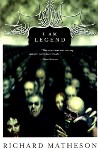 Richard Matheson wrote the apocalyptic novel, I Am Legend, in 1954. It is the story of the last man alive in a world overrun by a changed, bestial version of humanity. It is partly a vampire story. It is partly a zombie story. It is one of the definitive end of the world stories. I cannot help but hear Michael Stipe‘s rapid-fire mumble in the background as I read it. The novel has been adapted into film three times: Vincent Price starred in The Last Man on Earth in 1964. Charlton Heston starred in The Omega Man in 1971. Will Smith stars in the recently released film by the same name, I Am Legend. While I have only ever seen The Omega Man, I understand each of these film adaptations differ from the original novel in varying ways. I like a good vampire story; I like good zombie stories too. And you just can’t go wrong with positing the end of the world in gruesome ways.
 I’ve been following Barack Obama since his his 2004 Senate bid to replace the seat vacated by Republican Peter Fitzgerald. A number of people claim that his presidential campaign began with his keynote address at the 2004 Democratic National Convention. The 2004 Illinois senate run was filled with scandal and controversy on the Republican side of the ballot. In the general election, Obama received 70% of the vote to Alan Keyes‘ 27%. It was one of the largest margins of victory in Illinois history. When he officially announced his candidacy for US President in February, I was thrilled. The turnout in Iowa has further bolstered support in Illinois, and the midwest in general.
 I discovered Max Frisch in the very early spring of 1991. I was living in Tübingen, Germany and picked up Homo Faber on the recommendation from a friend of mine at the university. The title is Latin for “man the maker”: a creature who controls his environment with tools. Stefan based his recommendation on my literary interests of the day and my desire to read modern literature in German. By the time I had completed the book, Max Frisch had died and Volker Schlöndorff had completed a
 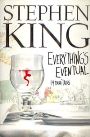 Not ten minutes after I finished reading The Mist, Whirl pressed this collection of Stephen King stories into my hand, Everything’s Eventual. She pointed out the inclusion of at least two Dark Tower-related stories: “The Little Sisters of Eluria” and “Everything’s Eventual”. When I cracked the binding I also discovered the collection includes the story “1408”. Whirl and I watched the movie adaptation of that story just a few weeks ago.
 Stephen King published The Mist twice before: the novella is included both as part of a broader 1980 anthology of horror stories from various authors entitled Dark Forces and in a 1985 collection of entirely Stephen King stories, Skeleton Crew. In conjunction with the movie adaptation of the story, publishers have brought a new, standalone, version to market. I had to take a quick trip to St. Paul, Minnesota for work, so I dragged this along for something to read on the plane. It is interesting to me to note that my plane left the Minneapolis-St. Paul runway just as a powerful winter snowstorm descended on the region.
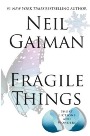 A few years ago I had the opportunity to attend a reading at the Printers Row Book Fair. Neil Gaiman read from his children’s story, The Wolves in the Walls. He spoke about writing and comic books and film. He told stories about his life and his family. At the time, The Wolves in the Walls was not yet published. Dave McKean had not finished most of the artwork. After he had read the story, Gaiman took questions from the audience and signed books. I had recently finished his novel, Neverwhere, and had added him to my ever expanding list of favorite authors. I have anticipated each of his new books as they come out.
 Beta|Erinyes