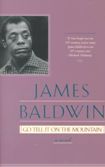
 The Chicago Public Library picked Go Tell It on the Mountain, the first novel by James Baldwin, as the Spring 2007 selection for One Book, One Chicago. I have tried to read each season’s selection since the program was inaugurated in 2001. Some selections have been familiar, many unfamiliar. Go Tell It on the Mountain belongs to the latter category.
The back jacket cover of the book reads:
James Baldwin’s stunning first novel is now an American classic. With startling realism that brings Harlem and the black experience vividly to life, this is a work that touches the heart with emotion while it stimulates the mind with its narrative style, symbolism, and excoriating vision of racism in America.
Moving through time from the rural South to the northern ghetto, starkly contrasting the attitudes of two generations of an embattled family, Go Tell It on the Mountain is an unsurpassed portrayal of human beings caught up in a dramatic struggle and a society confronting inevitable change.
It struck me as an appropriate book to begin today. Today marks the 60th anniversary of the day Jackie Robinson put on a Brooklyn Dodgers uniform in a regular-season game for the first time, thus re-integrating Major League baseball forever.
 One of Vladimir Nabokov‘s earlier works, Laughter in the Dark tells the story of a respectable, middle-aged man who abandons his wife for a lover half his age. This affection results in a mutually parasitic relationship. The themes Nabokov would revive in many of his later works, and most notably in Lolita. This novel interests me for several reasons. I have enjoyed everything I have ever read of Nabokov’s. This story is set in the film world of the 1930s Weimar Republic Berlin. And the book appeared as a minor plot device in LOST.
 Opening Day has come and gone this week. The Chicago White Sox have lost their first two games of the season. While I listened to game three against the Cleveland Indians, yesterday, it occurred to me that I had finished my last book and needed another. Bottom of the ninth, game tied 3-3. Mark Buerhle left the game in the top of the second after a line drive put a giant bruise on his left arm– his pitching arm.
 Terry Prachett and Neil Gaiman have said, “Good Omens was written by two people who at the time were not at all well known except by the people who already knew them.” Considering the book was originally published in 1990, I must concede they are correct on that point. Neil Gaiman found considerable success with the Sandman series, Neverwhere and American Gods. Terry Prachett’s Discworld series garnered him millions of fans. But in the latter part of the eighties, these things were not yet true. The two aspiring authors collaborated to write this hilarious and irreverent send-up of the Apocalypse.
 The relationship between artist and audience is a strained one. I believe an artist both loves and hates the audience. The artist requires an audience. Is an unread novel really a novel, regardless of how well-drafted it may be? Is a painting truly art if no one views it? Does an actor really act if the balcony is empty? I do not think so. I concede it may be possible to consider these events artistic absent any witnesses; but they strike me as something closer to lost treasures, valueless until the day they are actually discovered.
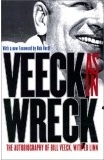 Spring is on its way. And spring means one important thing: baseball season. I have decided to set aside reading books I should have read in high school; I have had my fill of books about murder. I want something fun. I want baseball. Bill Veeck was a Chicago native and worked for many years in professional baseball in this town. Both sides of the town. He’s responsible for the ivy at Wrigley Field, the exploding scoreboard at Old Comiskey and Harry Carry’s “Take Me Out to the Ball Game” seventh-inning stretch.
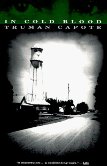 When I was at the bookstore last, I picked up To Kill a Mockingbird. I knew that Harper Lee and Truman Capote had been childhood friends. Lee has stated that she based the character, Dill Harris, on Capote. One of the great joys of bookstores lies in browsing them. A discovery on one shelf triggers a thought. I stalk to another section of the store looking for something– anything– inspired by that fleeting connection. To Kill a Mockingbird led to In Cold Blood. This non-fiction novel details the savage Clutter family murders in Holcomb, Kansas in 1959 and their aftermath.
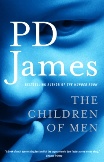 I think there is power in science fiction. I think there is a particular power in taking a simple, improbable– but not altogether impossible– premise and drawing from it a compelling story. PD James hypothesizes in The Children of Men that in 1995 the human race became infertile. She begins her story on 1. January, 2021: the last generation to be born is now adult. She shares a world where intimacy loses allure, art is abandoned, hope is lost. — And then proceeds to use that dark, unsettling setting to frame a story of risk, commitment and the joys and anguish of love.
 This is another one of those books I should have read years ago but for whatever reason never did. It was only last year that I saw Gregory Peck in the film. I am sure there is a lesson in this experience about squandering life on trivial amusements. Recently I corrected this sort of oversight with Joseph Heller‘s Catch-22. I am now– during black history month– correcting another delinquency with Harper Lee. To Kill a Mockingbird has won the Pulitzer Prize and sold millions of copies. I just learned that librarians across the country voted this book the best novel of the twentieth century. Whirl loves this story; she is quite pleased I am reading it. I am, too.
 It seems strange to be writing about love and Las Vegas at the same time. I can reconcile the ideas of lost love with Las Vegas, or betrayed love, or love of money. I can reconcile thoughts of lust, greed and gluttony– even wrath, sloth, pride and envy. But love? That just does not seem to fit quite right.
 Beta|Erinyes