 I am unsure why I missed reading Joseph Heller’s classic satire both in high school and in college but I did. There was a time when reading Catch-22 was nothing less than a rite of passage. And 45 years later, the novel’s strength can be found in how it still holds a looking-glass to the modern world. Again and again, Heller’s characters demonstrate that what is commonly held to be good, is bad; what is sensible, is nonsense.
Archives For author
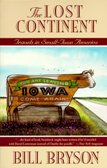 Journalist Bill Bryson wants to find the archetype of America– the small town of fantasy, where Jefferson Smith and Atticus Finch are your neighbors and the balcony to the Strand movie theater is still open on Saturday afternoons. He travels the country in an untrustworthy sedan. He begins from the driveway of his hometown of Des Moines, Iowa, travels south along the Mississippi, east to the Atlantic before criss-crossing the continent to the west and back again. In all, he visits thirty-eight states, always looking and never quite finding it all in the same locale. Along the way, Bryson serves up a colorful tale of boredom, kitsch, community and beauty when you least expect it.
What is it that draws me to something for mawkish reasons? Why do I regret actions without rational justification? What is it about something—something simple and concrete—that compels me to attach emotional value to it?
I know I am not alone. I find these experiences permeated throughout almost every aspect of the days between Thanksgiving and New Years Day. By no means are these the only times I come across these sorts of events and feelings. November to December serves as the climactic high point on the calendar. Traditions are born and broken. Or rather—for a pessimist like me, it is the breaking of those familiar traditions that evokes my maudlin, sentimental response.
And yet I wonder if I am a dying breed within my generation. Has Generation X subsumed itself so deeply into the cult of cynicism that we have eliminated any tolerance for sentimentality? We wear a peculiar perfume; the odor pervades us in a cloud of distrust of the integrity and professed motives of others—and even ourselves. We reek. We stink.
Nothing is sacred.
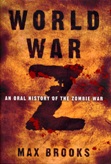 Mel Brooks’ son, Max Brooks, has undertaken the task of chronicling the first-hand accounts of the decade-long zombie war. From isolated attacks to full-scale military combat– the subtle, and not so subtle, jabs at various contemporary politicians, cultural icons and policies add considerably to the beauty of this skilled contribution to the zombie mythos.
 Novellas once more– this time, four earlier works written under Stephen King’s pseudonym: Richard Bachman. The collection includes “Rage,” “The Long Walk,” “Roadwork,” and “The Running Man.” Whirl, the consummate Stephen King fan, recommended the collection to me, as I’ve never read any of these “straight” stories.
Rarely do I speak—let alone write—about politics. I admit that without reservation. I understand that politics are complicated. I also understand that powerful and influential forces work to simplify political issues. The skeptic in me harangues to guess at the motivations of such political rhetoricians bent on simplification. Sometimes I listen. Sometimes I argue. I suppose that is the part of the point of politics, to be involved at some level with decision making. Most of the time, I find myself overwhelmed by the socio-political environment facing me. So I am left to wonder. I hypothesize. I also realize that is all I have: hypotheses. Untested, unproven, unreflective thoughts about topics I do not fully understand. I know; I hear you. “Join the fucking club of the most of us.”
Here is a result: I am back on the topic of fear, its insidious pervasiveness in our culture. I present a short list of events this week that spurred me to write on it again.
-
President Bush signed the Military Commissions Act of 2006 into law, seriously curtailing the right to habeas corpus.
-
Officials at an elementary school south of Boston have banned kids from playing tag.
-
Residents of Dearborn Park demonstrated their discontent over the lack of a fence around the city park adjacent to an elementary school by building a “human fence” for the nightly news.
Considerable controversy encompasses the Military Commissions Act. As I stated earlier, I understand this, like many political issues, to be a complicated one. And as tempted as I may be to try and simplify it—for myself and for others—I am attempting to stay away from that course of action. I will try and keep my basal exposition to a minimum. Still, I think it is important to at least provide a cursory explanation of what habeas corpus is. If I do this with any skill, I hope it will prove a valuable thread I can pull through the entirety of this bit of writing.
The writ of habeas corpus is a legal instrument employed by prisoners. The writ is a court order addressed to a prison warden. The writ orders that a detainee be brought to court for a simple purpose: to determine whether the prisoner is imprisoned lawfully and whether he should be released from custody based on that judgment. The writ of habeas corpus is one of the oldest defenses against tyranny. Versions of the device date back to the 12th and 13th centuries. The Constitution protects the right with the words, “The privilege of the Writ of Habeas Corpus shall not be suspended, unless when in Cases of Rebellion or Invasion the public safety may require it” (Article 1, Section 9). This right has been the “fundamental instrument for safeguarding individual freedom against arbitrary and lawless state action” (Brown v. Vasquez, 1992).
The Military Commissions Act law does not require that any detainees—defined as terror suspects—be granted legal counsel. More to my issue, the act specifically bars detainees from filing habeas corpus petitions challenging their detentions. The Associated Press quotes President Bush, “The bill I sign today helps secure this country and it sends a clear message: This nation is patient and decent and fair and we will never back down from threats to our freedom.”
 A literary murder mystery in mid-nineteenth century Boston. Matthew Pearl introduces a reluctant, elite group of American Dante scholars to catch the serial killer. My initial feelings on the book betray a certain discontent. Despite my interests in both the subject matter and the time period, I am not particularly compelled by Pearl’s execution of the story.
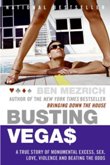 Returning to non-fiction I have picked up Ben Mezrich’s new book. To quote the back cover Busting Vega$ is a true story about a team of geniuses and a barely legal system for beating the blackjack tables: a riveting account of monumental greed, excess, hubris, sex, love, violence, fear, and statistics that is high-stakes entertainment at its best.
“The man in black fled across the desert, and the gunslinger followed.”
For Whirl and me it was not the desert across which we fled. We fled across the ocean. For over two weeks we traveled the Cyclades. These strange, magnificent islands have transfixed me. I have wanted to visit them from the time I first learned of them years ago. My first attempt to do so, in the long summer of 1991, aborted in a catastrophe: physically thrown from a train by a conductor, wearing two heavy backpacks, and separated from my girlfriend. She had about thirty drachma to her name—at the time thirty drachma was roughly equivalent to three dollars. I was carrying everything else. All of that is a story for another time. Our triumphant return to Greece includes nothing quite so pernicious.
On this trip we traveled by airplane. We traveled by ferry. We traveled by bus and automobile. One day we did all of these things in the twenty-four hour span of time. Mostly we traveled on foot.
That is a clue.
Whirl has never been off of the North American continent. We have traveled together outside America a couple times. We spent our honeymoon on the Caribbean island of St. Lucia. The idea of traveling abroad is one we have entertained for a long time. That fed into the requirements for this trip. We wanted to go someplace foreign. We wanted explore and experience a new and strange place at a visceral level.
I believe there is a distinction to be made between tourism and traveling. I understand the terms tourism and travel are often used interchangeably. I—admittedly unkindly—use the terms tourism and tourist pejoratively. I use them to convey a sense of a superficiality or shallow interest in the visited cultures and locations. A traveler also passes through a place. He does not become part of it or adopt it as his own. That hurdle cannot be surmounted. Nor should it. What a traveler can do—and what I strive to do when traveling—is to experience and enjoy where I am and who I am with for who they are in themselves. I endeavor to avoid comparisons: Oh we do this so much better back home. I adapt to the customs. I try to wrap my tongue around the language—if only to state “I’m so sorry! I made a horrible mistake!” If you learn nothing else in a foreign language, learn how to say “thank you”. It is a little thing on the surface. If I can learn the intricacies of Internet jargon, memorize the best lines from The French Connection, and remember the batting averages for scores of ballplayers, I can afford to spend the time and energy it takes to learn and remember how to express gratitude in the local manner.
Travel is essentially about sharing. “Take nothing but pictures; leave nothing but footprints.” What is left is a shared moment in time, a very literal fork in the road taken with strangers—who if by the simple existence of that fork are no longer strange. They become friends.
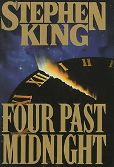 I have a theory that every bookstore in the world sells at least one book by Stephen King. On the Greek island of Sifnos, the little bookstore in Kameres sold three in English. I had not read this 900-page collection of novellas— I had read the other two choices. I am very glad I picked this up.
 Beta|Erinyes