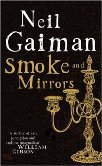
 More Neil Gaiman for reading while on vacation in Greece. This time I have chosen his collection of short stories and prose poetry. “We Can Get Them for You Wholesale,” “Murder Mysteries” and “The Price” are three of my favorite selections from this rich body of work.
Archives For author
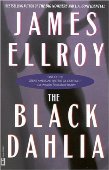 James Ellroy bases this classic crime-noir novel on a notorious, unsolved murder case. Passion, obsession, insanity and deceipt erupt in this the hard-boiled mystery. Ellroy breathes an uncanny life into the Los Angeles police department of the 1940s. I will catch the movie later; the power of Ellroy’s writing cannot be understated.
What is stress? We talk about it all the time. We talk about ways to treat stress. We devise methods for avoiding stress. We plan possibilities for contending with stress. We seek a myriad of ways to relieve stress. There are very detailed medical, physical and psychological definitions of the concept. I do not intend to go into that level of discussion. I am more interested—and capable—of writing about stress in the broad strokes. I contend that stress can include a hegemony of concepts: anxiety, antagonism, exhaustion, frustration, despair, overwork, over-focusing, confusion, mourning, fear.
But when I look carefully at this collection of experiences, I have come to realize that what I commonly call stress actually has two main components. There exist stressful events, situations and relationships that urge me forward, cause me to thrive or give me a real sense of fulfillment. Good stress. Eustress. This is contrasted with the litany of stressors we commonly talk about in our life—those that have a negative impact. Bad stress. Distress.
I believe the stressors vary from individual to individual as to their categorization. I believe the same exact stressor can be considered both eustress and distress depending on the victim. Examine this example: a constantly ringing telephone. For a salesman busy at work on the Glengarry leads this stressor fosters happiness—likely exhaustion, too, but the good kind of exhaustion. Our hypothetical Ricky Roma feels he has accomplished something. And he probably has. He has probably closed the big deal, or better yet, a series of big deals. And even if he did not, the fact that the phone continues to ring brings the promise that the big “always be closing” moment is imminent. Contrast this with the quiet architect who views the constantly ringing phone as an unmanageable series of interruptions. It disturbs his concentration; it retards his ability to focus—it confuses him.
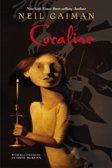 I have heard this book often compared to Lewis Carroll’s Alice in Wonderland series, or C.S. Lewis’ Narnia chronicles— comparisons primarily based upon the story’s alternate reality based plot. If you have read anything of Neil Gaiman you undoubtedly know such short-sightedness is rather off the point.
 I have thoroughly enjoyed Vladimir Nabokov’s work over the years. Ada, or Ardor is high on my list of all-time favorite novels. This one has been compared to Franz Kafka’s work— another favorite author. This book embodies a vision of a bizarre and irrational world, and it has escaped my attention. I am rectifying the oversight.
I have not written about baseball in a while. And there has been a lot to write about; I suspect many of the topics have already been covered by more insightful authors. Moreover, I doubt that most of my loyal audience is drawn in by my peculiar insight into sport. No, my thoughts comprise an alternate form of gnostic turpitude.
What I wish to present is a stylized conversation about baseball fandom I have been holding with some friends of mine. Two voices, niqui and I, are Chicago White Sox fans. The third, InleRah, is a New York Yankees fan. InleRah is first cousin to Yankees’ phenom, Derek Jeter.
We begin in early August. The White Sox host the Yankees in Chicago. niqui and I attend the game—even having our picture taken by the White Sox marketing machine. It is an exciting game. Scott Podsednik makes the first White Sox out of the game trying to stretch a double into a triple. Joe Crede drives in two runs with a single and a solo homer in the fourth. Paul Konerko ties it up with a leadoff homer in the bottom of the ninth against Mariano Rivera. There are a number of other gaffes, goofs and guffaws, but the Sox manage to find a way to win in the bottom of the eleventh. For a moment it seems a lot like last year. I come home to find a simple message from InleRah waiting for me: Damned Sox!
And that sparks the conversation. The next night it is my turn to mutter about the damned Yankees. InleRah describes that second game: It had us all muttering, believe me. Taking a near perfect game into the seventh with a seven-run lead only to have your closer almost but not quite blow it in the ninth, for a second day in a row. That he even had to be in there is grumbly enough. Sigh. Baseball. It will drive you crazy.
For me discouragement comes in the bases loaded, no outs, heart of the order bottom of the seventh. No runs. Nothing. Not to get any runs out of that situation with the height of the offense at the plate—that is tough. That the loss dropped the White Sox to third in the division felt like salt in fresh wounds.
For completeness I should state that the White Sox go on to win the third game of the series 5-4—helped out by two Yankees errors. Minnesota’s loss to the Blue Jays means that the White Sox were back in front of the Tiger hunt.
 Dan Simmons is a fan of the novella. I am, too. The novella is an intriguing literary form in that it straddles the distance between a short story and a full novel. This tenuous length requires an author to commit to the character depth and detail of a longer form and scrupulously apply an unapologetic editorial edge to the plot. This collection of five novellas includes “Orphans of the Helix”—a novella associated with the Hyperion Cantos—and the rare “Looking for Kelly Dahl.”
 Stephen King writes a 1940s-style pulp fiction crime novel. That’s what the book jacket declares, anyway. Reviews are less-favorable and King, himself, opines that readers will either love it or hate it. There will be no middle ground. That sounds like my kind of challenge.
What’s the deal with the trend of naming books? I am talking particularly about appending the subtitle: A Novel. This is often combined with using a single noun for the main title. Here are some examples: Stonehenge: A Novel, Raiders: A Novel, March: A Novel. I do not know anything about these three books. I have not read them. I do not want to say they are good or bad reads. I am simply focused on wondering what sort of purpose the subtitle serves. I already know it is a book. Shape alone is a dead giveaway there. I picked the book up in the fiction section; that tells me the kind of book. What possible purpose does the “a novel” subtitle serve? Now, if the title were Noun: A Kick in the Ass, I could see the need for some extra specification. Does conspicuously subtitling writing as “a novel” make some sort of cultural claim for the novel as a literary form? That is, does this overt subtitle substitute as a more refined expression of an otherwise vulgar boast: Noun: Not Shit?
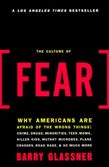 I have written about fear before, but it was only in the last week that I discovered this book at my local bookstore. Barry Glassner originally wrote it in 1999. I am curious to see how it stands up to the last seven years in America—seven years in which I often feel bombed not so much by dangers in and of themselves, but the unknown fears of unknowable dangers.
 Beta|Erinyes