“I have just fled my own office in horror at their fucking dimwittedness.”
I do not like Jay Mariotti. I do not like what he writes. I do not like what he says on the radio. I do not like what he says on television. I do not find his arguments compelling. I do not find his style intriguing. I find him tired, weak, and clichéd. I believe that Jay Mariotti wants to attract attention to himself. He wants people to listen to what he has to say. He wants people to read what he has written. He knows that people have done these things when they respond to him. He has found a swift way to accomplish those goals. He says something provocative, critical and negative and waits for the return volleys. Writing for a company that buys ink by the barrel and speaking from behind the one-way broadcast booths of television are radio are low-risk methods to achieve those goals.
I do like Ozzie Guillen. I do not like him simply because he is the manager of my favorite sports team—although that does not hurt his case. I love his candor. I appreciate his instincts with respect to baseball. I believe he does things right and calls things like he sees them. He makes mistakes. He speaks without reflection. These are consequences of his candid, earnest approach.
I believe there is courage in an honest straight-up debate where you present your opponents’ arguments in their strongest possible terms—and then defeat the arguments. I am unsure whether this is the role of sports reporting and sports commentary. I would like to think that it is.
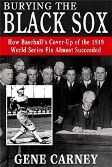 Most fans know that gamblers and ballplayers conspired to “fix” the 1919 World Series— but “eight men out” does not begin to adequately describe the Black Sox. Gene Carney explores what else happened in the nearly year-long cover-up: How Charles Comiskey, Ban Johnson and Kenesaw Mountain Landis tried to bury the incident, control the damage and how they failed; and how “Shoeless” Joe Jackson attempted to clear his name.
 The Chicago Sun-Times columnist Richard Roeper chronicles the astounding 2005 season— interlaced with a lifetime of thoughts, memories and anecdotes about what it means to be a fan of the White Sox.
 Douglas Coupland. Video game company. This latest novel is being described as something of an update to Microserfs for the age of Google. Are you still wondering why I’m reading it?
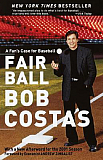 Read more as a follow-up to Game of Shadows—a primer, actually. This selection of essays by Bob Costas is a few years old. Originally written in 2000, he clearly and eloquently discusses a number of the difficulties with professional baseball in the 90s. My opinion of Costas continues to turn around.
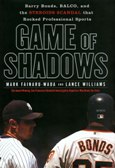 With homerun number 715* no longer speculation but fact, I decided to read this remarkable work of investigative journalism. San Francisco Chronicle reporters Mark Fainaru-Wada and Lance Williams broke this story— a story that continues to break my heart with every swing of his bat.
 Memorial Day means the beginning of summer. Summer means— among other things like baseball— summer vacations. J. Maarten Troost’s harrowing and hillarious two-year odyssey in the South Pacific is my most recent indulgence in travel books.
 Beta|Erinyes