 Sherman Alexie wrote The Lone Ranger and Tonto Fistfight in Heaven and The Toughest Indian in the World. He adapted parts of the first book into the screenplay for the 1998 feature film Smoke Signals. Flight is Alexie’s first novel in a decade. Using wit and eulogy, satire and sentimentality Alexie tells the story of an orphaned Indian boy who travels back and forth through time searching for his true identity. The book’s jacket states:
The journey for Flight‘s young hero begins as he’s about to commit a massive act of violence. At the moment of decision, he finds himself shot back through time to resurface in the body of an FBI agent during the civil rights era, where he sees why “Hell is Red River, Idaho, in the 1970s.” Red River is only the first stop in an eye-opening trip through moments in American history. He will continue to travel back to inhabit the body of an Indian child during the battle at Little Bighorn and then ride with an Indian tracker in the nineteenth century before materializing as an airline pilot jetting through the skies today. During these furious travels through time, his refrain grows: “Who’s to judge?” and “I don’t understand humans.” When finally, blessedly, our young warrior comes to rest again in his own life, he is mightily transformed by all he has seen.
I am a fan of all of Alexie’s previous work I have come across. I hope that this modern-day vision quest proves out as compellingly as it seems to promise. I suspect it will.
 Mike Royko wrote a newspaper column in Chicago for thirty-four years. He started at the Daily News, then moved to the Sun-Times when the Daily News shut its doors. In 1984 he left the Sun-Times for the rival Chicago Tribune when the Sun-Times sold to Rupert Murdoch, claiming, “No self-respecting fish would be wrapped in a Murdoch paper.” His column was syndicated to some 600 papers around the country. He won fans, antagonists and awards– including the Pulitzer– for his work.
 Rick Kogan works as the host of WGN radio’s “Sunday Papers with Rick Kogan” and a senior writer and “Sidewalks” columnist at the Chicago Tribune. Years ago I counted myself a regular at the Billy Goat tavern on Washington– not the original, but filled with some shared history. But I know only the myths and misconceptions. In the acknowledgements of this book about Chicago’s Billy Goat Tavern Kogan writes:
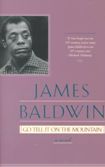 The Chicago Public Library picked Go Tell It on the Mountain, the first novel by James Baldwin, as the Spring 2007 selection for
  One of Vladimir Nabokov‘s earlier works, Laughter in the Dark tells the story of a respectable, middle-aged man who abandons his wife for a lover half his age. This affection results in a mutually parasitic relationship. The themes Nabokov would revive in many of his later works, and most notably in Lolita. This novel interests me for several reasons. I have enjoyed everything I have ever read of Nabokov’s. This story is set in the film world of the 1930s Weimar Republic Berlin. And the book appeared as a minor plot device in LOST.
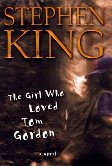 Opening Day has come and gone this week. The Chicago White Sox have lost their first two games of the season. While I listened to game three against the Cleveland Indians, yesterday, it occurred to me that I had finished my last book and needed another. Bottom of the ninth, game tied 3-3. Mark Buerhle left the game in the top of the second after a line drive put a giant bruise on his left arm– his pitching arm.
 Terry Prachett and Neil Gaiman have said, “Good Omens was written by two people who at the time were not at all well known except by the people who already knew them.” Considering the book was originally published in 1990, I must concede they are correct on that point. Neil Gaiman found considerable success with the Sandman series, Neverwhere and American Gods. Terry Prachett’s Discworld series garnered him millions of fans. But in the latter part of the eighties, these things were not yet true. The two aspiring authors collaborated to write this hilarious and irreverent send-up of the Apocalypse.
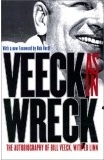 Spring is on its way. And spring means one important thing: baseball season. I have decided to set aside reading books I should have read in high school; I have had my fill of books about murder. I want something fun. I want baseball. Bill Veeck was a Chicago native and worked for many years in professional baseball in this town. Both sides of the town. He’s responsible for the ivy at Wrigley Field, the exploding scoreboard at Old Comiskey and Harry Carry’s “Take Me Out to the Ball Game” seventh-inning stretch.
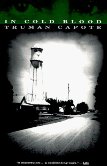 When I was at the bookstore last, I picked up To Kill a Mockingbird. I knew that Harper Lee and Truman Capote had been childhood friends. Lee has stated that she based the character, Dill Harris, on Capote. One of the great joys of bookstores lies in browsing them. A discovery on one shelf triggers a thought. I stalk to another section of the store looking for something– anything– inspired by that fleeting connection. To Kill a Mockingbird led to In Cold Blood. This non-fiction novel details the savage Clutter family murders in Holcomb, Kansas in 1959 and their aftermath.
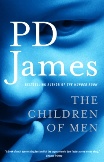 I think there is power in science fiction. I think there is a particular power in taking a simple, improbable– but not altogether impossible– premise and drawing from it a compelling story. PD James hypothesizes in The Children of Men that in 1995 the human race became infertile. She begins her story on 1. January, 2021: the last generation to be born is now adult. She shares a world where intimacy loses allure, art is abandoned, hope is lost. — And then proceeds to use that dark, unsettling setting to frame a story of risk, commitment and the joys and anguish of love.
 Beta|Erinyes