 This is another one of those books I should have read years ago but for whatever reason never did. It was only last year that I saw Gregory Peck in the film. I am sure there is a lesson in this experience about squandering life on trivial amusements. Recently I corrected this sort of oversight with Joseph Heller‘s Catch-22. I am now– during black history month– correcting another delinquency with Harper Lee. To Kill a Mockingbird has won the Pulitzer Prize and sold millions of copies. I just learned that librarians across the country voted this book the best novel of the twentieth century. Whirl loves this story; she is quite pleased I am reading it. I am, too.
Archives for category: Books
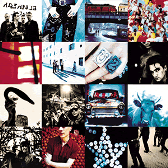 We talk about art being derivative. Or at least we talk that way when we do not like it. When we like a piece of art we talk about how it was inspired by others’ works. It is not imitation. I think these two reactions are emotional gut-checks on essentially the same phenomenon facing creativity. I believe creativity is a virus– creativity can infect others, induce them to write, to paint, to sculpt, to sing. And yet we seem to approach that fact with mixed emotions. We complain that our creativity is being copied at the same time we become excited that someone has thought so much of what we have created to do something themselves.
One of my favorite expressions of this paradox is– unsurprisingly– from an artist. These lyrics are from U2’s song, “The Fly” from their 1991 album, Achtung Baby.
It’s no secret that a conscience can sometimes be a pest
It’s no secret ambition bites the nails of success
Every artist is a cannibal, every poet is a thief
All kill their inspiration and sing about their grief
 Dan Simmons has written a new book. The story hits on several elements I enjoy. Simmons tells a story of exploration. He chooses an exploration story from the 19th century: an 1840s steamboat expedition in search of a Northwest Passage that stalls in pack ice for two winters. The officers and crews of the two ships, the Erebus and the Terror suffer botulism and frostbite, mutiny and cannibalism before Simmons unleashes his own hellbeasts upon the hapless, ragged survivors. 800 pages of predation and madness.
 Whirl recommended this book to me: as it is part memoir and part seminar. Stephen King has written about writing before, most notably in the 1981 volume Danse Macabre. In that book he primarily talks about pop culture and horror– two iconic topics for him. King published On Writing in 2000, a year after his own near-fatal injury. In this return to the craft of writing he talks about his inspirations, his techniques and most personally for me how that horrific event has affected him.
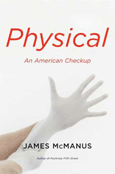 I picked up James McManus’ latest book based on the strength of his story of the 2000 World Series of Poker and Binion Murder trial, Positively Fifth Street. In this new book he explores not only his own health but also that of the health care system itself. He talks about the political realities of medical research and the business of medicine– an unabashed, gut-wrenching and often hillarious portrait of unwellness in America.
 Neil Gaiman returns to the epic world he created in American Gods to tell the story of two sons of an African trickster god, Anansi– “Mr. Nancy” in American Gods. I have been meaning to read this book for several months. I now have the opportunity. Gaiman has a gift for describing a rich mythology; I look forward to diving in headlong. I have missed Shadow and Low-Key.
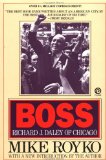 A Christmas gift from my good friends, Spencer and Templar— this book is the story of the late Richard J. Daley written in 1971 by another mainstay of Chicago journalism, Mike Royko. It is described as: a bare-all account of Daley’s cardinal sins as well as his milestone achievements … Royko brings to life the most powerful political figure of his time: his laissez-faire policy toward corruption, his unique brand of public relations, and the widespread influence that earned [Daley] the epithet of “kingmaker.”
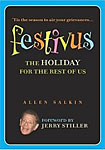 In “The Strike”, one of the most memorable episodes of Seinfeld ever, Frank Costanza revealed some of the rituals of a Festivus celebration: a bare aluminum pole, feats of strength, the airing of grievances. Transcending television to become a phenomenon in its own right– thousands of people now celebrate Festivus. Many do so to thumb their noses at the commercialism of Christmas. Others celebrate the cultural influence of a show about nothing. Farmboy gave me Allen Salkin’s book as a Christmas present. In it, Salkin romps through the real world of Festivus. He meets the real Miss Festivus, drinks Festivus beer, and ponders the Festivus snail– among many other ironies.
 I am unsure why I missed reading Joseph Heller’s classic satire both in high school and in college but I did. There was a time when reading Catch-22 was nothing less than a rite of passage. And 45 years later, the novel’s strength can be found in how it still holds a looking-glass to the modern world. Again and again, Heller’s characters demonstrate that what is commonly held to be good, is bad; what is sensible, is nonsense.
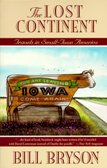 Journalist Bill Bryson wants to find the archetype of America– the small town of fantasy, where Jefferson Smith and Atticus Finch are your neighbors and the balcony to the Strand movie theater is still open on Saturday afternoons. He travels the country in an untrustworthy sedan. He begins from the driveway of his hometown of Des Moines, Iowa, travels south along the Mississippi, east to the Atlantic before criss-crossing the continent to the west and back again. In all, he visits thirty-eight states, always looking and never quite finding it all in the same locale. Along the way, Bryson serves up a colorful tale of boredom, kitsch, community and beauty when you least expect it.
 Beta|Erinyes