 Stephen King writes a 1940s-style pulp fiction crime novel. That’s what the book jacket declares, anyway. Reviews are less-favorable and King, himself, opines that readers will either love it or hate it. There will be no middle ground. That sounds like my kind of challenge.
Archives for category: Books
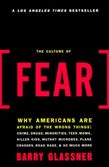 I have written about fear before, but it was only in the last week that I discovered this book at my local bookstore. Barry Glassner originally wrote it in 1999. I am curious to see how it stands up to the last seven years in America—seven years in which I often feel bombed not so much by dangers in and of themselves, but the unknown fears of unknowable dangers.
 Chuck Klosterman proudly wears the label and stereotype of “Generation X”: disaffected slacker, discontented cultural charlatan. When my fellow Gen-Xer, Johnny Smokes, recommended this book—a survey of popular culture mixed with personal memoirs of the same—I picked it up. It is important to remember that I am talking about a book based on a section of cultural history fiercely reliant on its lack of attention span. I fear even the book’s incongruities may feel somehow appropriate.
 Sherman Alexie‘s critically celebrated first collection of short stories vividly weaves memory, fantasy and stark reality to paint a portrait of life in and around the Spokane Indian reservation. Several of the stories have been adapted as the basis of the award-winning motion picture Smoke Signals— a favorite of mine.
 Upon reading about Tom Robbins’ uncertainty about writing again, I have dutifully returned to his novels after several years absence. This one is described as a fast-paced CIA adventure story with comic overtones. That would be most unfair: Robbins is a gifted wordsmith who defies definition with ferocity and elegance.
 Leave it to Stephen King to tell a harrowing zombie story and feature the most miserable of contemporary technological devices— the cellular phone— as the apocalyptic catalyst. It’s really all over… isn’t it? This is a triumphant story of horror for a new age.
 Sherman Alexie’s second collection of short stories is not a collection of stories about the Indian Condition; it is a collection of stories about Indians— urban and reservation, street fighters and yuppies, husbands and wives.
 The first volume in Armistead Maupin’s series of novels centering around the quirky house— and its even quirkier residents— at 28 Barbary Lane. If there were another city where I would like to live, San Francisco would be it.
 Dan Simmons’ takes the Internet’s Darwin Awards and combines them with urban legends and a touch of his own skill at storytelling to weave an exciting suspense story filled with dark gallows’ humor.
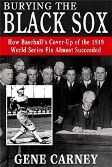 Most fans know that gamblers and ballplayers conspired to “fix” the 1919 World Series— but “eight men out” does not begin to adequately describe the Black Sox. Gene Carney explores what else happened in the nearly year-long cover-up: How Charles Comiskey, Ban Johnson and Kenesaw Mountain Landis tried to bury the incident, control the damage and how they failed; and how “Shoeless” Joe Jackson attempted to clear his name.
 Beta|Erinyes