Archives for category: Chicago

Zombies! 8Nothing says zombies quite like Christmas. You think I’m kidding, don’t you. You think that zombies should be relegated to Halloween. Well, it’s true. Zombies are an excellent metaphor for the conspicuous consumption of Christmas. This is not an original claim on my part. George Romero pointed it out in 1978 when he set Dawn of the Dead inside a shopping mall. Where did the zombies congregate? The shopping mall. Powerful stuff.

Zombies have returned to the cultural forefront in a big way in the last several years. A number of excellent zombie movies have been produced, including a remake of Dawn of the Dead, 28 Days Later, Land of the Dead and the spoof, Shaun of the Dead. Max Brooks published a fantastic zombie novel, World War Z. Stephen King recently did a take on the zombie legend with Cell. A number of really good video games have focused on zombies, recently, as well: Stubbs the Zombie, Dead Rising, Left 4 Dead, Dead Space. Zombies are hip and cool. And terrifying.

So when the Chicago Zombie organized a skating event at one of the most touristed locations in Chicago in the middle of December, I grabbed my camera and ran to get some pictures. Zombie hordes shuffling into Millennium Park and out onto the ice begs to be photographed.

What do you want for Christmas? Braaaaaains!

Lead Photo SelectionsA couple personal factors have raised my awareness this election cycle. The Illinois junior senator, Barack Obama, has been a figure in the race from the earlies days of a long campaign. I changed jobs — while within the framework of media, I moved from video games to traditional media. Newspaper, radio, television. My colleagues are the reporters, correspondents, editors, and photographers that make of Tribune Company. I don’t write this to seem boastful. Quite the contrary, it has been my association with these people that has enriched my own personal understanding of news and politics in ways that I had not previously experienced. One of my major projects this year was to provide the essential networking support for our editorial staff during the two major political conventions.

I read the daily paper. I work for the daily paper. My colleagues I work with are kind, insightful, curious, garrulous, demanding and intelligent. And despite the particular problems — from the general state of the economy to the specific challenges of print and advertisings to the very specific challenges of reinvigorating Tribune under new management and new ideas — I feel blessed to have the opportunity to work alongside these people.

Tonight, Election Night, I am working the late shift, from the mid-afternoon to the run of press and perhaps later. I slept in before voting this morning. And I tried to anticipate what might happen tonight — to the country, to the state of Illinois, the city of Chicago and to me. Election Night is about as big as it gets for news. This is the big night. This is politics on the grand scale and the small scale both. This is a two-year campaign, to research and polls and conversations both on and off the record. That this particular election has come down to a son of Chicago and is culminating in rally of hundreds of thousands in my back yard.

Read the rest of this entry »

I try to keep my personal politics off of this blog. I am not sure how successful I was when I was chronicling my work at the political conventions earlier this year, but I tried. My goal was to capture work-a-day experiences and write about the practical and logistical elements of my time there. I left the political opinions to my skilled co-workers from the Editorial departments. So, today, this day before Election Day, I am going to try and repeat that tone and talk a little bit about these last few days of the campaigns. You may have heard about the Rally in Grant Park scheduled for tomorrow night. My friends, John and Sabrina, have both managed to score a couple of the elusive 65000 tickets. The rest of us have been graciously invited by our Mayor to attend anyway. Not to be outdone, city officials quickly put together a scary list of steps they will be taking to manage the rally. Things like intermittent rolling street closures, controlled access, metal detectors. That sort of thing.

Read the rest of this entry »

It’s autumn, it’s Chicago and I’m looking for a new book to read. Fortunately my conscientious public library runs a nifty program twice a year to help people like me choose interesting books to read. Twice a year– once in the spring and once in the fall– the Chicago Public Library selects a book for the entire city to read. As part of One Book, One Chicago the library provides lectures, film screenings, Q&A sessions, seminars and other programs located at the various libraries throughout the city. The idea is to engage the populous in a discussion of a great book. The Fall 2008 selection is the 1979 book, The Right Stuff by Tom Wolfe. The Right Stuff tells the story of the lives of the seven astronauts chosen for Project Mercury. In the 1983 foreword to the edition I’m reading, Wolfe writes for several paragraphs about the style of military writing in the 20th century.

Immediately following the First World War a certain fashion set in among writers in Europe and soon spread to the obedient colonial counterparts in the United States. War was looked on as essentially monstrous and those who waged it– namely, military officers– were looked upon as brutes and philistines. [….] The only proper protagonist for a tale of war was an enlisted man, and he was to be presented not as a hero but as an Everyman, as much a victim of war as any civilian.

Wolfe goes on to explain that the early age of spaceflight was dominated by former military pilots. Officers. His book serves as an attempt to reconcile this era of the anti-hero with the courage and daring of not just the dangers of “test flight”, but the great unknown of spaceflight.

Chicago Public Library is presenting Tom Wolfe with the Carl Sandberg Literary Award tomorrow night at the Harold Washington Library across the street. Tickets to the dinner are going for a grand a piece. I don’t think I’ll be attending, but I am looking forward to reading this bit of New Journalism. I applaud the relevance of this book’s selection on several levels.

Mass Start 3Whirl and I got up early this morning to see the start of the Chicago Marathon. And when I say early, I mean early. The sun was not yet up when we headed up to Millennium Park. I had hoped to shoot the start of the race from the BP Bridge. I am a fan of the bridge and its architect, Frank Gehry. This morning I was not a fan of When I arrived an inconvenient sign notified me that only credentialed media photographers would be granted access. I briefly considered trying to flash my Chicago Tribune badge. While having drinks with Genaro Molina and Myung J. Chun, photographers from the Los Angeles Times, at this year’s political conventions, Genaro informed me that often the company ID badge is all the credential he has needed to gain access to shoot. So I thought about it. And then thought better of it– slinking off to shoot from the Randolph Street bridge with the rest of the great unwashed.

While waiting for the race, we caught a rare glimpse of two of the peregrine falcons Whirl monitors for the Field Museum. They were circling above us, maybe forty of fifty stories up between the Aon Tower and the Prudential Building.

As the warm morning light came over the trees, thirty-five thousand people took off in a mass for the start of this year’s marathon. I was not there to cheer on anyone in particular. No one I know personally was running this year; I just wanted to be a part of the start of it. To get a few pictures and enjoy one of the last great weekends outside before autumn turns to a cold winter.

Superheroes (and a Villain)The race route traveled through twenty-nine Chicago neighborhoods. I took a number of pictures along the start on Columbus before moving to the LaSalle Street bridge. There I took a few more pictures and asked Whirl if she wanted to hop the el down to Chinatown to catch up to the leaders. But by this point she was getting hungry so we settled for a quiet breakfast at the South Water Kitchen before making our way home.

I’m not sure I’ll ever garner enough courage to try a marathon. I am fairly certain I have the endurance for it, if I put my mind to it. I’m less confident about surviving the pounding my feet and legs would take. — And I’d need to drop the rest of this weight I’ve been steadily taking off over the past year. Nonetheless, the difference between walking twenty-six miles and running them is pretty big. Still, it was impressive to see this many people test themselves against a true test of strength and willpower. For those of you who did run: I applaud you.

Well done!

Pro C1/C2 15I have an awkward relationship with bicycles. Bicycles have been involved in two of the most dramatic events in my life. In 1984 I was struck by an automobile while riding a mountain bike on a closed road outside Aspen, Colorado. I flew through the windshield face first and ended up in surgery for six and a half hours– total stitch count: four hundred and thirty-five.

In January of 2005, while crossing the three-way intersection of Milwaukee, North and Damen in Wicker Park, I was struck by a bicyclist and suffered a severe brain injury. I crashed to the ground and cracked my head against the curb in a classic coup-counter coup trauma– total days spent in a coma: ten.

Juniors 1But the thing is not all my interactions with bicycles have been bad, brutal or bloody. Starting as a boy, somewhere around the spring of 1982, I began racing bicycles. My dad had been a bicycle enthusiast for a long time. While in college, he took long trips on his bike. He commuted into the office when we lived in Washington D.C. And he raced competitively for several years before I was born– including a qualifying entry in the the Nationals. When I took an interest in bicycles, dad renewed his. I was old enough that dad had someone he could ride with from time to time, and when we traveled to races together it was a trip we took together. I joined the United States Cycling Federation (USCF), the organizing body for amateur bicycle racing, and raced Juniors, kids 18 and younger. Dad had been a USCF member before, renewed and now raced Veterans, racers 35 and over.

Pro C1/C2 26The 1980s were a great time for cycling in the United States. The Coors Classic stage race was the largest stage race in the US– and fourth largest stage race world wide– and it ran for two weeks through my home state of Colorado. Greg LeMond won the Coors Classic in 1985. Bernard Hinault won it in 1986. LeMond would go on to win the Tour de France three times. Bernaurd Hinault had already won the Tour de France five times when he won the Coors Classic. The 1985 Kevin Kostner movie, American Flyers, is set during a fictional American stage race based off of the Coors Classic. They shot part of the movie on the brutal Morgul-Bismarck course– a road course I raced that year.

In 1984, Los Angeles hosted the Summer Olympics. Americans Alexi Grewal, Connie Carpenter, Rebecca Twigg, Steve Hegg, Mark Gorski and Nelson Vails all won medals in cycling that year. The United States Olympic Training Center is in Colorado Springs, just 40 miles from where I grew up, and when McDonald’s built the velodrome in Los Angeles for the Olympics they built an exact duplicate of it in Colorado Springs. For four years Dad and I would go to Colorado Springs to compete in the Tuesday night track racing series.

Elite C4 3This heightened interest in cycling in Colorado granted me the opportunity to meet and ride alongside Carpenter, Twigg, Gorski and Vails. Gorski and Vails just showed up at the velodrome one Tuesday evening on a lark. They demonstrated tandem sprint riding for us– some of the fastest, most explosive cycling you will ever see. I met Carpenter at the 1986 State Track Championships being held at the OTC Velodrome. I met Twigg at the 1987 State Road Championships at the Air Force Academy.

Spring and summer in the mid-1980s, Dad and I raced most weekends somewhere along the Colorado Front Range. We raced track races, road races and criteriums. When we were not racing, we were training or touring. I completed three centuries in those years of racing: a ride of 100 miles in one day. When I moved away to college, I sold my car but kept my bicycle. I continued to ride regularly and race somewhat irregularly through college. When I took a year to study in Germany, I did not bring my bike with me and that decision marked the end of my racing career. When I came back to the US, I continued to ride, but more as general exercise and for fun, rather than competitively.

Pro C1/C2 8Now. Today. My bike terrifies me. — What troubles me is that I was good at cycling. I had the endurance for it, I understood the tactics of it. Moreover, I enjoyed it. I still have the bike I rode to a silver medal in the Colorado Road Championships in 1987. I still have it and I cannot bring myself to ride.

I’ve written about my resurgence in my interest in photography. This weekend, I used that renewed interest an alternate angle to approach cycling. One fraught with less anxiety and with the promise of allowing me to enjoy something I once loved from a new perspective. Chicago hosted a criterium in Grant Park— an event they hope to make recurring in years to come. Grant Park is just a couple blocks from my house, so I grabbed the camera and spent the day at the races. I have been out of the sport so long that I don’t recognize any of the names of the riders. The gear has changed as well. But the energy and the emotion is still there and just as tangible. I took hundreds of pictures of the races. I came home and dumped them all from the camera and then ran back and took hundreds more.

I had a blast.

War Protest 2An excited mob of bicyclists took over the intersection of East Monroe Drive and South Michigan Avenue while I was on my way home from work. At first I thought this stream of noisy cyclists was Critical Mass out for their last Friday of the month, traffic-stopping escapades. And it might have been part of that originally. But this much smaller group of cyclists, hundreds rather than thousands, let me know they were an impromptu moving protest against the War in Iraq and the Bush administration. I hastily yanked the camera out and took a couple of quick pictures. Shortly after I did that the heavens opened up and drowned the Loop in heavy rain.

I don’ t think the two events– the protest ride and the thunderstorm– were connected. I write this will full knowledge that my relationship with bicycles has undergone a radical change since the brain injury. I used to view the bicycle as an excellent means of transportation. Light, fast and flexible– bicycles are not nearly as clumsy or loud as automobiles. No pollution, good exercise. Bicycles have a lot going for them. It’s just that they’ve tried to kill me. Twice. I was glad to escape this encounter without ending up back in a coma.

Even with the downpour I made it home with a minimum of sogginess. Safely. On foot.

My first experience with Wax Trax Records happened in the mid-80s. I happened upon the store late. The founders had moved on to Chicago to start a record label by the same name. They maintained ownership of the original store in the seedy Capital Hill area of Denver, just south of Colfax Avenue behind the state capital. The store served as a pilgrimage site for me every time I would head up to Denver for any reason. If my friends and I were headed up to see a concert, we always allowed several hours to go to Wax Trax. It was part of the ritual. Today, when I talk to my friends about record stores—bemoaning their deaths with quiet, romantic sympathy—it is often Wax Trax that I am talking about. I can recall asking the clerks about the association between the Denver store and the Chicago label on my second or third visit. By that time the focus had shifted from the Denver punk scene to Chicago industrial. The store combined elements of both major musical movements in a way unique to the entire state of Colorado.

The Wax Trax store helped introduce me to a huge number of bands I would never have discovered otherwise: Front 242, Hüsker Dü, KMFDM, New Order, Sisters of Mercy, Joy Division, My Life With the Thrill Kill Kult, Depeche Mode, Nine Inch Nails, Sinead O’Connor, Ministry, Bauhaus and the Revolting Cocks.

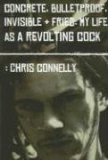
So when I began talking to my friend and co-worker, Bruce, about our various hobbies a few months back, he began describing his interest in music. I talked about my reintroduction to photography. He would show me the various specialized tubes he had purchased for his music equipment. I would talk to him about lenses and darkrooms. Bruce is a quiet, introverted, highly skilled engineer. I respect him a great deal. He has a passion for elegant technical solutions to difficult problems and the experience and track record to back up his quiet confidence. He also moonlights as a sound engineer and plays guitar in his own band. Some time ago we began exchanging books as well. I have lent him On the Road by Jack Kerouac and Rock On by Dan Kennedy. He just lent me the recently-published Chris Connelly autobiography: Concrete, Bulletproof, Invisible and Fried: My Life as a Revolting Cock. I have just started reading it.

The book promises to open up the lives of the people who were in the middle of the music scene I only orbited second-hand in Denver. The back cover reads:

Connelly’s superbly written, funny, irreverent, and sometimes downright scary memoir is one of the finest portrayals of a man trapped in the eye of a post-punk industrial storm this side of Armageddon.

In it Connelly attempts to paints a fair, but disturbing picture of a drug-addicted, out-of-control tyrant in Al Jourgensen, the founder of Ministry. He describes both the personalities and places with wit, originality and humility. The book includes a litany of hallowed Chicago nightlife institutions from the 80s and 90s: places like Smart Bar, ChicagoTrax, and Cabaret Metro. Places I missed by four or five years as I moved to Chicago too late to experience most of these at their prime. My visits to those places came after Wax Trax Records filed for bankruptcy in 1992. Seattle grunge was on the rise, not Chicago industrial.

I wonder if there is a connection there to draw upon with my relationship to my child bride. Whirl arrived in Chicago out of the grunge scene of the Pacific Northwest where I came to Chicago through this musical path. I will have to think about that as I turn the pages and get back to you.

MillipedeWhirl has worked at the Field Museum for ten years. She’s worked for a number of departments and divisions in that time doing a wide array of different jobs. We have joked that she seems to be collecting various divisions as a twelve year-old boy might collect baseball cards and have gone so far with the joke as to tell it to several of her current and former supervisors. But one thing she has not done in all of those years work at the Field Museum is to attend Members Night.

Members Nights are the museum’s annual Open House. Individuals who have agreed to become members of the museum get an opportunity to enter the collections and research areas typically off-limits to day-to-day visitors. What I quickly learned after Whirl began working at the museum is that only a small percentage of what The Field Museum is involved in is visible to the typical visitor on the floor. The Field Museum is a working research institution, not just a collection of dusty artifacts from long ago civilizations and exotic lands. Hundreds of scientists associated with the museum perform primary research in Anthropology, Botany, Geology, and Zoology. Members Nights are the museum’s way of inviting interested people behind the scenes to explore that vital aspect of the institution.

Horn from the MarquesasThis year, Whirl’s boss invited her to represent the Insects Division for the Zoology department. She had never done this before and so she attended for a short while on Wednesday night to get an idea of what to expect. On Thursday I went with her to explore on my own and to take a few photographs of her department and the other departments presenting exhibits at the museum.

Some highlights of this year included the preparation of a cheetah for display, newly received artifacts from the Marquesas islands, and hissing cockroach races. I also learned that fluorite is the state mineral for Illinois.

It is often that when Whirl and I talk about our work it seems like we are speaking entirely different languages to one another. The chance to see the museum in the same light that she does– if only for a few hours– was a treat.

The Chicago Public Library picked The Crucible as the Fall 2007 selection for One Book, One Chicago. Writing The Crucible in 1952, Arthur Miller presents the Salem witch trials as a mirror by which to reflect the anti-communist hysteria embodied by Senator Joseph McCarthy. But more than that, the play—like so many Arthur Miller plays—revolves around the concepts of power and betrayal. In the introduction to my edition of the play, Christopher Bigsby writes:

What replaces the sense of natural community in The Crucible, […] and, on a different scale, 1950s America is a sense of participating in a ritual, of conformity to a ruling orthodoxy and hence a hostility to those who threaten it. The purity of one’s religious principles is confirmed by collaborating, at least by proxy, in the punishment of those who reject them. Racial identity is reinforced by eliminating those who might “contaminate” it, as one’s Americanness is underscored by identifying those who could be said to be un-American.

I have tried to read each season’s selection since the program was inaugurated in 2001. Some selections have been familiar, many unfamiliar. The Crucible belongs to the former category. I read it in high school twenty years ago. I am reading it again; now, with what I hope is a keener eye and a clearer understanding of its place in the social discourse: what art can bring to culture, tradition, politics and religion.