Archives for category: Health

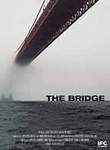
I have been anticipating the availability of this film on DVD since I first learned of it last year. The Bridge is a documentary film about suicide. Inspired by Tad Friend’s article “Jumpers” published in the New Yorker, Eric Steel filmed the Golden Gate Bridge for a year. Steel captured footage of the suicides and interviewed their friends and family members. Steel also interviewed people who have attempted suicide at the bridge, and witnesses of the suicides.

It is not difficult to imagine this is a controversial subject. Accusations of deceit and exploitation have dogged Steel and the project. Steel revealed in an interview with the San Francisco Chronicle that his goal all along was to “allow us to see into the most impenetrable corners of the human mind and challenge us to think and talk about suicide in profoundly different ways.” What he told the Golden Gate Bridge officials in order to get permits was that his work was to be the first in a series of documentaries about national monuments. Perhaps it is because I found the project compelling and worthwhile that I defend Steel’s actions, and am willing to concede the stated premise as true. The Golden Gate Bridge is a national monument.

More suicides occur at the Golden Gate Bridge than anywhere else in the world. This film is a rare, unapologetic look into the mystery of suicide, and into the psyche of a person who feels drawn towards death.

Evocative, engrossing and haunting—Steel has produced a sensitive study of an iconic bridge, the souls who throw themselves from it and the ripples that final act leaves behind.

Eric Schlosser levels the following charges: fast food has hastened the malling of our landscape, widened the chasm between rich and poor, fueled an epidemic of obesity, and propelled American cultural imperialism abroad. That’s a bold statement. Schlosser first wrote about the unsanitary and discriminatory practices of the fast food industry in a two-part series for Rolling Stone magazine in 1999. He expanded that treatment into this almost 300 page book and published it in 2001.

While reading about the book I found a number of comparisons to Upton Sinclair‘s 1906 novel The Jungle. I had to ask myself: have a hundred years gone by without any serious changes in the way America treats food? Have the ghosts of the Union Stockyards simply changed clothes and donned franchise uniforms at strip malls, pizza joints and hamburger stands across America?

I want to feel better about myself. To that end I have adopted a simple motto: eat less; move more. I am hoping this book will help me achieve that goal.

Whirl recommended this book to me: as it is part memoir and part seminar. Stephen King has written about writing before, most notably in the 1981 volume Danse Macabre. In that book he primarily talks about pop culture and horror– two iconic topics for him. King published On Writing in 2000, a year after his own near-fatal injury. In this return to the craft of writing he talks about his inspirations, his techniques and most personally for me how that horrific event has affected him.

I picked up James McManus’ latest book based on the strength of his story of the 2000 World Series of Poker and Binion Murder trial, Positively Fifth Street. In this new book he explores not only his own health but also that of the health care system itself. He talks about the political realities of medical research and the business of medicine– an unabashed, gut-wrenching and often hillarious portrait of unwellness in America.

What is stress? We talk about it all the time. We talk about ways to treat stress. We devise methods for avoiding stress. We plan possibilities for contending with stress. We seek a myriad of ways to relieve stress. There are very detailed medical, physical and psychological definitions of the concept. I do not intend to go into that level of discussion. I am more interested—and capable—of writing about stress in the broad strokes. I contend that stress can include a hegemony of concepts: anxiety, antagonism, exhaustion, frustration, despair, overwork, over-focusing, confusion, mourning, fear.

But when I look carefully at this collection of experiences, I have come to realize that what I commonly call stress actually has two main components. There exist stressful events, situations and relationships that urge me forward, cause me to thrive or give me a real sense of fulfillment. Good stress. Eustress. This is contrasted with the litany of stressors we commonly talk about in our life—those that have a negative impact. Bad stress. Distress.

I believe the stressors vary from individual to individual as to their categorization. I believe the same exact stressor can be considered both eustress and distress depending on the victim. Examine this example: a constantly ringing telephone. For a salesman busy at work on the Glengarry leads this stressor fosters happiness—likely exhaustion, too, but the good kind of exhaustion. Our hypothetical Ricky Roma feels he has accomplished something. And he probably has. He has probably closed the big deal, or better yet, a series of big deals. And even if he did not, the fact that the phone continues to ring brings the promise that the big “always be closing” moment is imminent. Contrast this with the quiet architect who views the constantly ringing phone as an unmanageable series of interruptions. It disturbs his concentration; it retards his ability to focus—it confuses him.

Read the rest of this entry »

Thus, the Fool may indicate the whole range of mental phases between mere excitement and madness, but the particular phase in each divination must be judged by considering the general trend of the cards, and in this naturally the intuitive faculty plays an important part.
~ Arthur E. Waite, occultist and co-creator of the Rider-Waite Tarot

I recently got the following message via email. It has been some time since I have thought in great detail on what happened to me, last year. And while I answered the letter, it caused me to reflect on my own experiences. The letter was short and to the point:

A friend of mine who has suffered from severe depression and who has had ECT is facing neuropsych testing to assess his work fitness and is rather anxious. Can you lead me to online sample test questions I can share with him (he’s not online)?

The tests I underwent were a modified version of the Halstead-Reitan test battery designed by the rehabilitation hospital to which I was admitted. The hospital specializes in brain trauma. I wrote some of my thoughts about the tests. In those entries I have given a couple of vague examples. I came to realize I have not truly described what these tests were like.

I do not mean to suggest by describing these tests that there is some way to be prepared for them. That is one of the elements I found the most frustrating about these tests: I could not study for them—by design. Unlike so many other tests, these tests did not seem to focus on what I had—or had not—learned. Rather they looked at whether I was capable of learning and to what degree. To that end they measure psychological functions known to be linked to particular brain structures or pathways. Before the injury I may have argued that this sort of testing was merely an updated version of phrenology. I do not argue that now.

Do not misunderstand. I still tend to consider psychology a form of augury. It is that with some time and perspective that I begin to see a method. And occasionally I see some results. Not always. Not about everything. But some of these experiences have proven occasionally helpful.

The tests are based on what I consider a somewhat unsteady presupposition. A neuropsychologist compares my raw score on a test to a comparable sample of other people. Before the tests even begin, there is an extensive interview to determine my age, level of education, background and ethnicity. These variables then come into play when trying to interpret my results. My raw score is compared to a group of people just like me—minus the brain injury. I suppose the ideal would be to have a baseline evaluation before the injury and then after. That scenario has some unfortunate impracticality associated with it. So we are left with the unsteady presupposition that a group of similar people can accurately represent me in my pre-morbid state. Such are the challenge of divination, I suppose.

Read the rest of this entry »

The true peculiarity of philosophy lies in the interesting individuality which is the organic shape that Reason has built for itself out of the materials of a particular age. The particular speculative Reason (of a later time) finds in it spirit of its spirit, flesh of its flesh, it intuits itself in it as one and the same and yet as another living being. Every philosophy is complete in itself, and like an authentic work of art, carries the totality within itself. Just as the work of Apelles or Sophocles would not have appeared to Raphael and Shakespeare — had they ever known them — as mere preparatory studies, but as a kindred force of the spirit, so Reason cannot regard its former shapes as merely useful preludes to itself.

— G. W. F. Hegel, The Difference Between Fichte’s and Schelling’s System of Philosophy

I promised myself that I wasn’t going to devolve this column into a series of complaints and recriminations. And now looking back over what I have written in the past several months, I am coming to the conclusion that that is exactly what I have done. It is troubling.

I am having trouble responding to unforeseen setbacks. Something goes wrong – plumbing, a work process, my sense of balance – and I seem unable to compensate adequately or appropriately. This is disturbing, because my very livelihood is predicated on the need for me to step up and solve unforeseen problems when they arise. Because they will arise. They always do.
Read the rest of this entry »

It has been approximately a month since I took the battery of neuropsychology tests to help determine if and when and how my injury has affected my ability to do things with my brain. No, I’m not talking about telepathy or pyrokinesis or any such powers. Despite some encouragement to the contrary, those abilities have not manifested. I suspect that they are, in fact, better off inside of a Stephen King novel than my head.

I’m talking about the simultaneously ordinary and amazing things that most human brains do: cognition, perception, emotion, reasoning, language, memory, learning. The big question was: Does Bingo’s brain do these things as well as it did in its premorbid state? I had to read the report a couple times to get past that description, too—premorbid state.

If this experience has taught me anything, it has underlined my belief that psychology is significantly closer to the traditions of divination than those of science as I understand it. Let me pause to mention that I don’t mean to offend any psychologists in the audience. My experience has been that those treating me with a more scientific approach have been considerably more capable in putting my head and life back together than the psychologists. And for that I am more thankful.

For example, at one point I told anyone who would listen that I had severe, recurring headaches. The scientifically-minded took a picture of my brain with a camera they had invented just for that purpose. They found a pool of blood exerting pressure on my frontal lobe. They cut a hole in my skull and siphoned the blood out. The headaches stopped.

The psychology camp asked me to repeat a random series of letters and numbers back to them in alphabetical and numerical order. This did not help. As further evidence against the psychologists I present this item: merely recalling the previously mentioned neuropsychology exams gives me a headache.

So when I went in to get my results on Tuesday, I was not particularly surprised at what they told me. Most of the test results corresponded closely to what I have been able to observe in my day-to-day life. My perception, cognition and problem-solving skills all scored highly—particularly on those tests that were verbally based. There was a small, but repeatable and statistically significant break in these scores when the tests were repeated in a non-verbal manner. This disparity was even more noticeable in the results of the memory tests.
Read the rest of this entry »

I’ve been back to work for three weeks. I think things are starting to catch up with me. When I first came back to work, I was excited about the possibility of getting back into the routine of things. I had been out for a long time. But more than that, I had been excited by the promise that I might return to something close to “normal” – the clichéd light at the end of the tunnel.

I think I believed that things were normal, when I came back. At least certainly after I had put the memories of the neuropsychology test battery out of my mind I was doing a pretty good job of thinking I has recovered completely.

I don’t think I can still say that. More and more, I am noticing the types of symptoms about which my doctors and therapists had talked to me at length. In most of the cases the symptoms do not seem to be having a strong effect on my day-to-day life. But they are there. I am aware of them. Memory problems, headaches, lack of attention, contending with large amounts of stimuli, fatigue, anger, and anomia: these things are with me, now.

Read the rest of this entry »

So as it turns out – and you might have gleaned from the title of this entry – the test I took on Tuesday was not the Halstead-Reitan test. After doing all the get-to-know-you parts of the interview before the test, my psychologist asked me if I had any questions about the test. So I took the opportunity to ask him if that was, in fact, what was going on. He laughed a little bit. I think I caught him off guard with the question as he responding by asking whether I had done research on the subject or something. I admitted that I had, and that was the name that kept coming up and seemed to fit the description I had been given by my therapists.

He set me straight. It turns out that the Halstead-Reitan test was developed almost fifty years ago with the goal of determining where in the brain injury or disease damage might have occurred. At the time, this was a useful thing to know and there were few non-intrusive ways to determine it. Now most neurologists rely on CT and MRI scans to do that work for them – more quickly and more accurately. There are still psychologists who see the Halstead-Reitan test as ‘the one true test’ (his words, not mine), but most psychologists have moved away from it to concern themselves with working on behaviors and skills rather than focusing on what is basically a medical diagnosis. What these psychologists find important is determining problems with cognition or memory, recognition or attention. My psychologist understandably found himself firmly in that latter camp: I don’t need to know where the injury is; what I need to know is how it affects his life. My life, as it turns out.

In the end, he conceded that some of the tests I was to take had been derived from the Halstead-Reitan battery. Of course, he did not tell me which ones.

Read the rest of this entry »