Archives for category: Opinion

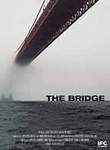
I have been anticipating the availability of this film on DVD since I first learned of it last year. The Bridge is a documentary film about suicide. Inspired by Tad Friend’s article “Jumpers” published in the New Yorker, Eric Steel filmed the Golden Gate Bridge for a year. Steel captured footage of the suicides and interviewed their friends and family members. Steel also interviewed people who have attempted suicide at the bridge, and witnesses of the suicides.

It is not difficult to imagine this is a controversial subject. Accusations of deceit and exploitation have dogged Steel and the project. Steel revealed in an interview with the San Francisco Chronicle that his goal all along was to “allow us to see into the most impenetrable corners of the human mind and challenge us to think and talk about suicide in profoundly different ways.” What he told the Golden Gate Bridge officials in order to get permits was that his work was to be the first in a series of documentaries about national monuments. Perhaps it is because I found the project compelling and worthwhile that I defend Steel’s actions, and am willing to concede the stated premise as true. The Golden Gate Bridge is a national monument.

More suicides occur at the Golden Gate Bridge than anywhere else in the world. This film is a rare, unapologetic look into the mystery of suicide, and into the psyche of a person who feels drawn towards death.

Evocative, engrossing and haunting—Steel has produced a sensitive study of an iconic bridge, the souls who throw themselves from it and the ripples that final act leaves behind.

I find talk of climate change seemingly everywhere I look. Yesterday more than a 150 of the world’s most popular music acts contributed to the worldwide concert, Live Earth. Twelve locations, seven continents, an audience of two billion. I have a difficult time wrapping my mind around something that large in scale. I wonder if that is not, in fact, part of the point.

Last month, on June 2nd, the Cool Globes project opened on the Chicago lakefront. One hundred and twenty-six five-foot globes have been set up as a public art display throughout Chicago, most of them along the lakefront in front of The Field Museum.

From the organizers:

“CoolGlobes: Hot Ideas for a Cooler Planet,” [is] an innovative project that uses the medium of public art to inspire individuals and organizations to take action against global warming. … [The globes are] displayed along Chicago’s lakefront from The Field Museum north and at Navy Pier. Artists from around the world, including Jim Dine, Yair Engel, Tom Van Sant and Juame Plensa, designed the globes, using a variety of materials to transform their plain white sphere to create awareness and provoke discussion about potential solutions to global warming.

Read the rest of this entry »

I will never understand the rivalry that exists between the fans of Chicago’s two baseball teams. I think it is something that develops at birth. I was not born here. I did not grow up here. I missed out. I came to Chicago as an adult. Granted, a tabula rasa when it came to professional baseball– but I still missed out. I think it is too late for me.

I understand that a division exists: as much as Chicago likes to describe itself as a diverse collection of peoples, places, things and ideas I’m convinced that what is really important to Chicagoans is not Chicago, but the local block. So we have a city of almost three million people. In that city I see more people describe themselves by their sports teams, political alliances, and neighborhoods than the city at large. “I’m from Bridgeport.” “I’m a Bulls fan.” “Me? Wicker Park hippy-artist.” That trend plays on stereotypes both good and bad. I mean both kind and unkind. Whirl expressed that she has never lived anywhere where so many people were so concerned about how she ate something. Pizza has to be like this. Nobody puts ketchup on a hot dog! We’re fat and happy and God damn it all we want you to be fat and happy, too.

As a curious counterpoint, I notice most suburbanites identifying themselves as Chicagoans rather than Palos Hillfolk, Oakbrookians or Schaumburgers.

Read the rest of this entry »

Discover is a curious word. I have been fascinated with the word discover for some time. We like to think that it means to learn or invent something spontaneously– as if producing something new out of thin air. We say Galileo discovered the laws of motion. Sir Isaac Newton discovered gravity. Christopher Columbus discovered North America. But the truth is that those things were there all along. The forces of gravity worked upon Achilles, Hector and Agamemnon just as effectively as they do upon you and me, today. These things were not transmogrified at their moments of discovery. They were revealed to be true. The cover of ignorance– of unknowing– had been removed: discovered, uncovered.

Art is different. At the moment art is revealed it is handed over. Art is a sacrificial gift to be coveted, savored, squandered, mocked or copied. And there is nothing the artist can do about that choice once it has been given.

The relationship between artist and audience is a strained one. I believe an artist both loves and hates the audience. The artist requires an audience. Is an unread novel really a novel, regardless of how well-drafted it may be? Is a painting truly art if no one views it? Does an actor really act if the balcony is empty? I do not think so. I concede it may be possible to consider these events artistic absent any witnesses; but they strike me as something closer to lost treasures, valueless until the day they are actually discovered.

Now some artists have had fun with this bit of cosmic irony, postulating a world in which discovery functions much more like true prestidigitation. This brings a whole new meaning to something like the Copernican revolution. I appreciate that. I think it speaks to a motivation for some artists: a desire to change the world through expression.

Read the rest of this entry »

It seems strange to be writing about love and Las Vegas at the same time. I can reconcile the ideas of lost love with Las Vegas, or betrayed love, or love of money. I can reconcile thoughts of lust, greed and gluttony– even wrath, sloth, pride and envy. But love? That just does not seem to fit quite right.

Maybe that contradiction served as a reason for the Cirque du Soleil to stage their tribute to the Beatles in Las Vegas. In reflection, it may have been a contributing factor in my decision to see that show rather than one of the hundreds of other opportunities.

Read the rest of this entry »

I do not know why January is named for the ancient Roman god of gates, Janus. He certainly seems an appropriate icon for this time: one face looking forward to a new year, one face look backward at the year past. Over the past two weeks of January, Whirl has remarked that I seemed to be focusing considerable attention on my health. Books I decided to read, discussions I would begin with my friends, comments I made during the course of the day– combined they seemed to suggest a shift in focus. She may be right. I am approaching the two year anniversary of my traumatic brain injury: for the morbidly curious, the 29th is the date.

Whirl, my friends and I plan to repeat our annual trip to Las Vegas to commemorate the event. We want to turn something horrible into something fun. Last year we succeeded in doing so. We hope to repeat that experience. This is important to me. That date has become a dividing line in my life: before the injury and after the injury. And as time pushes the part of my life before the injury further and further into the past, sentimentality colors that pre-morbid state. Another factor that I have been facing is the very real fact that life does not necessarily go easy on any of us. The appeal of dreams, the beauty of wishes– these can be transitory and ephemeral. Pessimism is easy. Clichés become comfortable. I work to avoid walking through my life speculating what else will go wrong. I do not like that I do that– that I have to work at such avoidance. The past appears brighter, warmer, happier.

This perception is not true in any objective sense. I know that. I remind myself of that. The reminders dull the unfair poignancy of the memories like aspirin for headaches.

Unconsciously imitating Janus while looking through some old files, I ran across this snippet. I found it in a .plan file from years ago. It predates the world wide web by at least a couple years. I would not call it a panacea, but it did make me smile– on both my forward-looking and backward-looking faces.

EARTH— For the 50 billionth consecutive week since its inception, life was revealed to be unfair Monday. Death and suffering continued to be dispersed randomly among the planet’s life forms, with such potentially mitigating factors as solid community standing, genetic superiority, and previous good works in no way taken into account. Despite the efforts of the Code of Hammurabi, the U.S. Bill of Rights, and People for the Ethical Treatment of Animals, life is expected to remain unfair far into the foreseeable future.

I am convinced something is changing with the way people communicate. I do not like this change. I am not talking about the insidious invasion represented by technology, but rather the linguistic shift that accompanies the barbarians. I am talking about the pernicious degradation of language itself.

Slang fills the Internet. I think that it has for quite some time. I remember writing a paper and giving a speech on the syntax, style and elements of Internet slang in 1992—spring of my senior year at Wabash. While the world wide web was invented in late 1990 at CERN. But the web needed a client. It needed a program to make it accessible. That program was Mosaic. Without Mosaic there was not much interest in the world wide web. Mosaic was released in April of 1993. I obtained my first exposure to Mosaic shortly thereafter at Loyola University here in Chicago. I developed my first web page– using Mosaic as the test client– in the summer of 1993.

What is significant about that moment, the creation of that first web page, is that it was the first time I incorporated an image into any content I transferred electronically to someone else. Up until that moment my use of the Internet was almost entirely textual. Not visual. In fact my exposure to networked computer systems at all up until that moment was almost entirely textual: LAN Manager networks, Novell NetWare networks and predominantly dial-up bulletin board systems. The client operating systems and applications all ran on DOS, or Windows 3.11. The servers usual did not run on anything much more sophisticated. My first exposure to the Internet came in 1991 when I discovered it was an even broader set of interconnected systems than the BITNET system to which Wabash connected. My first several Internet applications included email, BITNET relay, telnet, USENET news, IRC, FTP and gopher. I learned these programs primarily by obtaining accounts on first the Wabash VAX/VMS system and then later a Loyola AIX system.

Those first years on the Internet consisted of me staring at black window boxes filled with white text. The written word. Much of my early web browsing was done using the text-based web browser, lynx. I did this for two reasons: it was considerably faster, and the computer lab only had a very limited number of X-Windows workstations capable of running Mosaic. They were in high demand by computer science students. Philosophy graduate students “just screwing around on the computer” were significantly lower on the priority list. Then I learned about the dial-up access modem bank that was rarely used. I fired up ProComm Plus, dialed in, and was able to sit on that AIX shell for hours from the (relative) comfort of my grungy apartment and explore to my heart’s content—just as long as I did not mind everything being text-based. I did not mind. At the time, the Internet essentially was text-based.

Read the rest of this entry »

Over the past few days Whirl and I have been having a discussion about the geo-cultural classification of Chicago. Stated in the simplest terms: Is Chicago part of the Midwest? I hold that Chicago is part of the Midwest. My child bride does not. I must note that this discussion is not premised upon a purely geographical distinction. Neither one of us disagrees with the premise that Chicago sits firmly in the middle of the geographical region of America known as the Midwest. The interesting question for us is the cultural one.

As with most geographical regions—the boundaries of the Midwest are somewhat ambiguous. America’s history of westward expansion further complicates the issue. The original use of the term “Midwest” occurred in the 19th century and referred to the Northwest Territory bounded by the Great Lakes, and the Mississippi and Ohio Rivers. This Northwest Territory would form the states of Ohio, Michigan, Indiana, Illinois, Wisconsin and part of Minnesota. In time, some people began to include Iowa and Missouri under the aegis of the Midwest. With the settlement of the western prairie, a new term, “Great Plains States,” came into use to refer to North and South Dakota, Nebraska and Kansas. It is not uncommon for me to hear people refer to theses states as the Midwest, as well. – So we arrive at a list of twelve states in all. My altogether unscientific opinion is to define the Midwest as Ohio, Michigan, Indiana, Illinois, Wisconsin, Minnesota and Iowa—the original Northwest Territory region, plus Iowa. I drop Missouri immediately from the region because of its Civil War history. Missouri seceded from the Union to the Confederacy and my experiences in that state suggest that is a cultural identifier the residents still struggle with to one degree or another. Iowa I feel just got placed on the wrong side of a big river—through no fault of its own. So I include it readily into the Midwest. I likely do this out of rank sentimentality. And while I agree that there are strong similarities between the Great Plains States and the Midwest, I think there is a strong distinction to be made of generation. I see the Midwest as the first generation of states “born” within the confines of the country. I might consider the Great Plains States a second generation. A son may resemble his father considerably and even follow in his footsteps; they are often quite different people. (Then again, I may be pushing an anthropomorphic analogy beyond the pale. I will stop.)

So, out of twelve possibilities, I believe seven of them are the heart of the Midwest. Illinois is right in the middle of those seven, and Chicago is undoubtedly a significant part of Illinois. But so far this has all been a geographical discussion, with a few historical items sprinkled in. And I said in the first paragraph that this is essentially not a geographical debate. So why am I spending so much time on that element? I think there are two reasons. The first is the easy one. I do it to rhetorically preempt arguments for the separation of Chicago from the Midwest through fallacious comparisons to remote locales on the outskirts of the region. Chicago is not the Midwest. You ever been to Holcomb, Kansas? No. Go. You’ll see what I’m talking about.

The second reason is more complicated. I have become interested in the idea of place and its effect on people. Why do I prefer to work in the office rather than work from home? My home is certainly more convenient. The commute is better. Similarly, why do I prefer to play poker at a casino rather than online? Why do I enjoy seeing movies in the theater even with the distractions of crackling plastic, a yammering, and too expensive popcorn? (And do not get me started on my rant about not being able to watch a movie at a theater in my bathrobe.) These are little places and short events. I am now looking at the long term effects of place on personality. What does a region do to me? – I suppose this is one of the reasons why I enjoy traveling: to explore that very effect, if only for a short while. Now I am trying to apply that exploration to my day-to-day life.

Read the rest of this entry »
What is it that draws me to something for mawkish reasons? Why do I regret actions without rational justification? What is it about something—something simple and concrete—that compels me to attach emotional value to it?

I know I am not alone. I find these experiences permeated throughout almost every aspect of the days between Thanksgiving and New Years Day. By no means are these the only times I come across these sorts of events and feelings. November to December serves as the climactic high point on the calendar. Traditions are born and broken. Or rather—for a pessimist like me, it is the breaking of those familiar traditions that evokes my maudlin, sentimental response.

And yet I wonder if I am a dying breed within my generation. Has Generation X subsumed itself so deeply into the cult of cynicism that we have eliminated any tolerance for sentimentality? We wear a peculiar perfume; the odor pervades us in a cloud of distrust of the integrity and professed motives of others—and even ourselves. We reek. We stink.

Nothing is sacred.

Read the rest of this entry »

Rarely do I speak—let alone write—about politics. I admit that without reservation. I understand that politics are complicated. I also understand that powerful and influential forces work to simplify political issues. The skeptic in me harangues to guess at the motivations of such political rhetoricians bent on simplification. Sometimes I listen. Sometimes I argue. I suppose that is the part of the point of politics, to be involved at some level with decision making. Most of the time, I find myself overwhelmed by the socio-political environment facing me. So I am left to wonder. I hypothesize. I also realize that is all I have: hypotheses. Untested, unproven, unreflective thoughts about topics I do not fully understand. I know; I hear you. “Join the fucking club of the most of us.”

Here is a result: I am back on the topic of fear, its insidious pervasiveness in our culture. I present a short list of events this week that spurred me to write on it again.

  • President Bush signed the Military Commissions Act of 2006 into law, seriously curtailing the right to habeas corpus.
  • Officials at an elementary school south of Boston have banned kids from playing tag.
  • Residents of Dearborn Park demonstrated their discontent over the lack of a fence around the city park adjacent to an elementary school by building a “human fence” for the nightly news.

Considerable controversy encompasses the Military Commissions Act. As I stated earlier, I understand this, like many political issues, to be a complicated one. And as tempted as I may be to try and simplify it—for myself and for others—I am attempting to stay away from that course of action. I will try and keep my basal exposition to a minimum. Still, I think it is important to at least provide a cursory explanation of what habeas corpus is. If I do this with any skill, I hope it will prove a valuable thread I can pull through the entirety of this bit of writing.

The writ of habeas corpus is a legal instrument employed by prisoners. The writ is a court order addressed to a prison warden. The writ orders that a detainee be brought to court for a simple purpose: to determine whether the prisoner is imprisoned lawfully and whether he should be released from custody based on that judgment. The writ of habeas corpus is one of the oldest defenses against tyranny. Versions of the device date back to the 12th and 13th centuries. The Constitution protects the right with the words, “The privilege of the Writ of Habeas Corpus shall not be suspended, unless when in Cases of Rebellion or Invasion the public safety may require it” (Article 1, Section 9). This right has been the “fundamental instrument for safeguarding individual freedom against arbitrary and lawless state action” (Brown v. Vasquez, 1992).

The Military Commissions Act law does not require that any detainees—defined as terror suspects—be granted legal counsel. More to my issue, the act specifically bars detainees from filing habeas corpus petitions challenging their detentions. The Associated Press quotes President Bush, “The bill I sign today helps secure this country and it sends a clear message: This nation is patient and decent and fair and we will never back down from threats to our freedom.”

Read the rest of this entry »