
Email can certainly be a bear. I get a lot of it both at work and at home. And with the proliferation of mobile computing, it has become increasingly difficult to just walk away from it. My email walks with me. The danger is that email will become yet another interrupt-based technology. Frankly I don’t work all that effectively when confronted by overwhelming or unctuous interruptions.
Inbox Zero is a methodology for effectively dealing with the deluge of email we receive every day. Merlin Mann made a presentation on it at a Google Tech Talk in 2007 and has written several articles on the topic. The idea is simple. Instead of just checking email, you process them. Processing does not mean responding– in fact that’s often the least appropriate action to take. Instead you apply one of the following actions:
- delete
- delegate
- respond
- defer
- do
I don’t particularly subscribe to Mann’s entire Inbox Zero methodology, but I am rather draconian with how I handle incoming messages, and some of my techniques dovetail nicely with his approach. When I read my mail in a UNIX shell, I rigorously apply procmail. Over time I have developed more and more complex mail filters, eventually branching out to include SpamAssassin and other features. Mail filters continue to be my first– and often strongest– line of defense when dealing with email overload. I have them– lots of them– everywhere I read email.
I filter. I file. I delete. I delegate. — And for the most part, my inbox is pretty small, but very rarely zero. When I do manage to get it to zero, I allow a bit of celebration. It goes something like this.
“Inbox Zero”
Music by: Foreigner
Lyrics by: DJ Bingo
Sittin’ on the datacenter floor, with his head hung low
Couldn’t close a ticket, and it was time to go
Heard the roar at the bar, he could picture the scene
Put his head to the desk, then like a distant scream
He heard “You’ve got mail”, just blew him away
He saw blood in his eyes, and the very next day
Bought a beat up laptop, from the Craigslist store
Didn’t know how to work it, but he knew for sure
That one laptop, felt good in his hands, didn’t take long, to understand
Just one laptop, slumped way down low
Gotta close the tickets, only one way to go
So he started typin’, he ain’t never gonna stop
Gotta keep on typin’, someday gonna make it to the top
And be at inbox zero, got stars in his eyes, he’s at inbox zero
He took one laptop, inbox zero, stars in his eyes
Inbox zero, (stars in his eyes) He’ll come alive tonight
In a cube without a name, in a ticket downpour
Thought he passed his own shadow, by the breakroom door
Like a trip through the past, to that day in the cage
And that one laptop, made his whole life change
Now he needs to keep on typin’, he just can’t stop
Gotta keep on typin’, that boy has got to stay on top
And be at inbox zero, got stars in his eyes
He’s at inbox zero, got stars in his eyes
Yeah, inbox zero, stars in his eyes
With that one laptop, (stars in his eyes)
He’ll come alive, come alive tonight.
Yeah, he’s gotta keep on typin’, just can’t stop
Gotta keep on typin’, that boy has got to stay on top
And be at inbox zero, got stars in his eyes
He’s at inbox zero, got stars in his eyes
(Just one laptop) inbox zero, (aah aah aaah) got stars in his eyes
He’s just at inbox zero, aah aah aaah
Juke box (stars) hero, (stars, stars) inbox zero, (stars, stars)
He’s got stars in his eyes, stars in his eyes

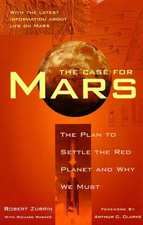 Six weeks ago NASA concluded its final shuttle mission, STS-135. At the time, I found myself rather conflicted about the whole thing. Space and all the things that go along with that — rockets, exploration, astronauts, the planets, moons and asteroids — have fascinated me from an early age. (That and dinosaurs, of course, but near anyone knows, there are no dinosaurs in space.) So to see NASA give up the last remnant of human spaceflight was saddening. No more rocket launches.


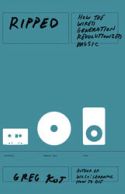 Greg Kot is joining Chuck Klosterman and Nathan Rabin at the DePaul Barnes and Nobel next week to talk about the role of music in their work and lives. I’m planning on attending for a number of reasons. Music is a topic I’m very interested in. Klosterman is an author I’ve come to enjoy a great deal over the past several years. And most coincidentally, Greg Kot is the music columnist for the Chicago Tribune where I work. But that’s not all. Kot’s latest book, Ripped: How the Wired Generation Revolutionized Music, chronicles the massive changes roiling through the music industry in the past fifteen years. Much of the book discusses the ways the Internet has changed music. But before that, Kot spends several chapters discussing the transformative effects of radio consolidation that gripped the industry in the 1990s: for example, the second chapter of Ripped details the practices of Clear Channel under the direction of Randy Michaels. Randy Michaels is now the current Chief Operating Officer of Tribune Company. Several other key Clear Channel executives were recruited to Tribune eighteen months ago when Tribune Company went private. Meet the new boss, indeed.
 Beta|Erinyes