Smokes found this 2008 TED Talk by Jill Bolte Taylor and pointed it out to me. I was hooked immediately. In her talk Taylor takes us through the dramatic self-analysis of a massive stroke she suffered in 1996 and shares insights about the nature of perception, personality and creativity. What makes this talk interesting to a general audience is that Taylor is a neuroanatomist — a brain scientist. The stroke provided her with an opportunity that few people come across — and perhaps even fewer would desire. Taylor has made the most of the opportunity, rejoining:
“How many brain scientists have been able to study the brain from the inside out? I’ve gotten as much out of this experience of losing my left mind as I have in my entire academic career.”
What make this talk interesting to me as a specific audience are the similarities between her experiences with her stroke and my experiences with my own brain trauma. Four years ago nearly to the day I underwent a second brain surgery to clear a large blood clot and relieve fluid pressure on my left frontal lobe. It was an illuminating event for me that sparked my own slow return to something resembling normal. It also awakened a latent interest into brain function. This blog’s first major purpose was to chronicle my experience and recovery and from time to time I have gone back and re-read some of those rough initial posts from 2005 and sought out new insights into what transpired. I don’t mean to equate my trauma as identical to Taylor’s, but to draw a loose line of similarity between these life-changing events and underline the complexity of brain function and neuroscience with a personal perspective.
The chance for Taylor present her talk at TED is huge. I highly recommend the 2007 documentary The Future We Will Create for a look inside this annual conference and its mission to illuminate “ideas worth spreading”. The documentary is available as DVD and live streaming through Netflix.
She concludes her talk with a challenge to the preconceptions of personality and creativity. She challenges the audience to choose to live inside the creative power of our minds:
Which do you choose? And when? I believe that the more time we spend choosing to run the deep inner-peace circuitry of our right hemispheres the more peace we will project into the world and the more peaceful our world will be. And I thought that was an idea worth spreading.
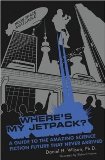 In 1940, Robert Heinlein wrote the story “The Roads Must Roll”. The rolling roads in the title were high-speed conveyors that connected cities. They carried people, freight and even restaurants and bars along for the ride. The express lanes of these roads had a top speed of 100 miles per hour. It is now sixty-seven years later and the best we can do to approach this idea are the moving walkways of Helmut Jahn‘s Concourse 1 out at O’Hare. That’s damned disappointing, right there. Don’t even get me started on the promises of flying cars, underwater resorts, moon colonies, and X-Ray glasses. And, hey! Where is my jetpack!?
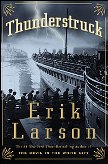 A little more than I year ago I finally read the Erik Larson blockbuster thriller, The Devil in the White City. I thoroughly enjoyed that book for a number of reasons: the book was factual, with hundreds of sources cited; it was set in nineteenth century America, a time and place with which I am repeatedly fascinated; it chronicled the 1893 Columbian Exposition that arguably brought Chicago back from the fire; and it illuminated– in great detail– the actions of one of America’s very first known serial killers.
 Beta|Erinyes