 Mike Royko wrote a newspaper column in Chicago for thirty-four years. He started at the Daily News, then moved to the Sun-Times when the Daily News shut its doors. In 1984 he left the Sun-Times for the rival Chicago Tribune when the Sun-Times sold to Rupert Murdoch, claiming, “No self-respecting fish would be wrapped in a Murdoch paper.” His column was syndicated to some 600 papers around the country. He won fans, antagonists and awards– including the Pulitzer– for his work.
Royko died in 1997, just five short years after I arrived in Chicago. I remember reading his column when I first moved to town. I also recall never quite understanding his impact. I suspect that may be the deficiency of not growing up in this city. One More Time is a collection of just over 100 of Royko’s best columns. They were selected by his widow, Judy Royko, and several of Mike’s friends. Studs Terkel provided an introduction. Royko’s classic characters like Slats Grobnik live on in this collection; the Billy Goat Tavern is here as Mike remembered it. Some critics have argued Chicago pols get more attention than they perhaps deserve. Royko was an expert at finding universal truths in parochial situations. He could also keenly examine larger issues–war and peace, justice and injustice, wealth and poverty.
One reviewer describes the writer and his posthumous book this way:
A gruff, no-holds-barred writer, Royko spoke for the many who are voiceless. Despite his success and the rise of celebrity journalists, he remained refreshingly unimpressed with himself. “I just hope my next column is readable, doesn’t bore people,” he said in a 1993 interview. “I don’t have any grand scheme.” Yet the continued relevance of these columns reminds us that good journalists can make a difference. A terrific compendium for those who always meant to clip and save Royko’s words but didn’t.
That would be me.
 Rick Kogan works as the host of WGN radio’s “Sunday Papers with Rick Kogan” and a senior writer and “Sidewalks” columnist at the Chicago Tribune. Years ago I counted myself a regular at the Billy Goat tavern on Washington– not the original, but filled with some shared history. But I know only the myths and misconceptions. In the acknowledgements of this book about Chicago’s Billy Goat Tavern Kogan writes:
 Last night’s game between the Chicago White Sox and the Texas Rangers was a treat. It showed teamwork. It showed skill. It showed drive and determination. It was a joy to watch. Last night’s game was also the first game in major league history to feature all of the following events. Each of these is something special in its own right, but to have all three happen in one game for the same team. Incredible:
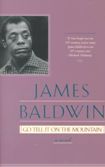 The Chicago Public Library picked Go Tell It on the Mountain, the first novel by James Baldwin, as the Spring 2007 selection for
  One of Vladimir Nabokov‘s earlier works, Laughter in the Dark tells the story of a respectable, middle-aged man who abandons his wife for a lover half his age. This affection results in a mutually parasitic relationship. The themes Nabokov would revive in many of his later works, and most notably in Lolita. This novel interests me for several reasons. I have enjoyed everything I have ever read of Nabokov’s. This story is set in the film world of the 1930s Weimar Republic Berlin. And the book appeared as a minor plot device in LOST.
 Opening Day has come and gone this week. The Chicago White Sox have lost their first two games of the season. While I listened to game three against the Cleveland Indians, yesterday, it occurred to me that I had finished my last book and needed another. Bottom of the ninth, game tied 3-3. Mark Buerhle left the game in the top of the second after a line drive put a giant bruise on his left arm– his pitching arm.
 Terry Prachett and Neil Gaiman have said, “Good Omens was written by two people who at the time were not at all well known except by the people who already knew them.” Considering the book was originally published in 1990, I must concede they are correct on that point. Neil Gaiman found considerable success with the Sandman series, Neverwhere and American Gods. Terry Prachett’s Discworld series garnered him millions of fans. But in the latter part of the eighties, these things were not yet true. The two aspiring authors collaborated to write this hilarious and irreverent send-up of the Apocalypse.
 The relationship between artist and audience is a strained one. I believe an artist both loves and hates the audience. The artist requires an audience. Is an unread novel really a novel, regardless of how well-drafted it may be? Is a painting truly art if no one views it? Does an actor really act if the balcony is empty? I do not think so. I concede it may be possible to consider these events artistic absent any witnesses; but they strike me as something closer to lost treasures, valueless until the day they are actually discovered.
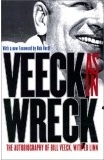 Spring is on its way. And spring means one important thing: baseball season. I have decided to set aside reading books I should have read in high school; I have had my fill of books about murder. I want something fun. I want baseball. Bill Veeck was a Chicago native and worked for many years in professional baseball in this town. Both sides of the town. He’s responsible for the ivy at Wrigley Field, the exploding scoreboard at Old Comiskey and Harry Carry’s “Take Me Out to the Ball Game” seventh-inning stretch.
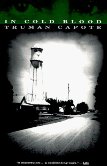 When I was at the bookstore last, I picked up To Kill a Mockingbird. I knew that Harper Lee and Truman Capote had been childhood friends. Lee has stated that she based the character, Dill Harris, on Capote. One of the great joys of bookstores lies in browsing them. A discovery on one shelf triggers a thought. I stalk to another section of the store looking for something– anything– inspired by that fleeting connection. To Kill a Mockingbird led to In Cold Blood. This non-fiction novel details the savage Clutter family murders in Holcomb, Kansas in 1959 and their aftermath.
 Beta|Erinyes