 Dan Simmons has written a new book. The story hits on several elements I enjoy. Simmons tells a story of exploration. He chooses an exploration story from the 19th century: an 1840s steamboat expedition in search of a Northwest Passage that stalls in pack ice for two winters. The officers and crews of the two ships, the Erebus and the Terror suffer botulism and frostbite, mutiny and cannibalism before Simmons unleashes his own hellbeasts upon the hapless, ragged survivors. 800 pages of predation and madness.
I do not know why January is named for the ancient Roman god of gates, Janus. He certainly seems an appropriate icon for this time: one face looking forward to a new year, one face look backward at the year past. Over the past two weeks of January, Whirl has remarked that I seemed to be focusing considerable attention on my health. Books I decided to read, discussions I would begin with my friends, comments I made during the course of the day– combined they seemed to suggest a shift in focus. She may be right. I am approaching the two year anniversary of my traumatic brain injury: for the morbidly curious, the 29th is the date.
Whirl, my friends and I plan to repeat our annual trip to Las Vegas to commemorate the event. We want to turn something horrible into something fun. Last year we succeeded in doing so. We hope to repeat that experience. This is important to me. That date has become a dividing line in my life: before the injury and after the injury. And as time pushes the part of my life before the injury further and further into the past, sentimentality colors that pre-morbid state. Another factor that I have been facing is the very real fact that life does not necessarily go easy on any of us. The appeal of dreams, the beauty of wishes– these can be transitory and ephemeral. Pessimism is easy. Clichés become comfortable. I work to avoid walking through my life speculating what else will go wrong. I do not like that I do that– that I have to work at such avoidance. The past appears brighter, warmer, happier.
This perception is not true in any objective sense. I know that. I remind myself of that. The reminders dull the unfair poignancy of the memories like aspirin for headaches.
Unconsciously imitating Janus while looking through some old files, I ran across this snippet. I found it in a .plan file from years ago. It predates the world wide web by at least a couple years. I would not call it a panacea, but it did make me smile– on both my forward-looking and backward-looking faces.
EARTH— For the 50 billionth consecutive week since its inception, life was revealed to be unfair Monday. Death and suffering continued to be dispersed randomly among the planet’s life forms, with such potentially mitigating factors as solid community standing, genetic superiority, and previous good works in no way taken into account. Despite the efforts of the Code of Hammurabi, the U.S. Bill of Rights, and People for the Ethical Treatment of Animals, life is expected to remain unfair far into the foreseeable future.
 Whirl recommended this book to me: as it is part memoir and part seminar. Stephen King has written about writing before, most notably in the 1981 volume Danse Macabre. In that book he primarily talks about pop culture and horror– two iconic topics for him. King published On Writing in 2000, a year after his own near-fatal injury. In this return to the craft of writing he talks about his inspirations, his techniques and most personally for me how that horrific event has affected him.
 I picked up James McManus’ latest book based on the strength of his story of the 2000 World Series of Poker and Binion Murder trial, Positively Fifth Street. In this new book he explores not only his own health but also that of the health care system itself. He talks about the political realities of medical research and the business of medicine– an unabashed, gut-wrenching and often hillarious portrait of unwellness in America.
I am convinced something is changing with the way people communicate. I do not like this change. I am not talking about the insidious invasion represented by technology, but rather the linguistic shift that accompanies the barbarians. I am talking about the pernicious degradation of language itself.
Slang fills the Internet. I think that it has for quite some time. I remember writing a paper and giving a speech on the syntax, style and elements of Internet slang in 1992—spring of my senior year at Wabash. While the world wide web was invented in late 1990 at CERN. But the web needed a client. It needed a program to make it accessible. That program was Mosaic. Without Mosaic there was not much interest in the world wide web. Mosaic was released in April of 1993. I obtained my first exposure to Mosaic shortly thereafter at Loyola University here in Chicago. I developed my first web page– using Mosaic as the test client– in the summer of 1993.
What is significant about that moment, the creation of that first web page, is that it was the first time I incorporated an image into any content I transferred electronically to someone else. Up until that moment my use of the Internet was almost entirely textual. Not visual. In fact my exposure to networked computer systems at all up until that moment was almost entirely textual: LAN Manager networks, Novell NetWare networks and predominantly dial-up bulletin board systems. The client operating systems and applications all ran on DOS, or Windows 3.11. The servers usual did not run on anything much more sophisticated. My first exposure to the Internet came in 1991 when I discovered it was an even broader set of interconnected systems than the BITNET system to which Wabash connected. My first several Internet applications included email, BITNET relay, telnet, USENET news, IRC, FTP and gopher. I learned these programs primarily by obtaining accounts on first the Wabash VAX/VMS system and then later a Loyola AIX system.
Those first years on the Internet consisted of me staring at black window boxes filled with white text. The written word. Much of my early web browsing was done using the text-based web browser, lynx. I did this for two reasons: it was considerably faster, and the computer lab only had a very limited number of X-Windows workstations capable of running Mosaic. They were in high demand by computer science students. Philosophy graduate students “just screwing around on the computer” were significantly lower on the priority list. Then I learned about the dial-up access modem bank that was rarely used. I fired up ProComm Plus, dialed in, and was able to sit on that AIX shell for hours from the (relative) comfort of my grungy apartment and explore to my heart’s content—just as long as I did not mind everything being text-based. I did not mind. At the time, the Internet essentially was text-based.
 Neil Gaiman returns to the epic world he created in American Gods to tell the story of two sons of an African trickster god, Anansi– “Mr. Nancy” in American Gods. I have been meaning to read this book for several months. I now have the opportunity. Gaiman has a gift for describing a rich mythology; I look forward to diving in headlong. I have missed Shadow and Low-Key.
Over the past few days Whirl and I have been having a discussion about the geo-cultural classification of Chicago. Stated in the simplest terms: Is Chicago part of the Midwest? I hold that Chicago is part of the Midwest. My child bride does not. I must note that this discussion is not premised upon a purely geographical distinction. Neither one of us disagrees with the premise that Chicago sits firmly in the middle of the geographical region of America known as the Midwest. The interesting question for us is the cultural one.
As with most geographical regions—the boundaries of the Midwest are somewhat ambiguous. America’s history of westward expansion further complicates the issue. The original use of the term “Midwest” occurred in the 19th century and referred to the Northwest Territory bounded by the Great Lakes, and the Mississippi and Ohio Rivers. This Northwest Territory would form the states of Ohio, Michigan, Indiana, Illinois, Wisconsin and part of Minnesota. In time, some people began to include Iowa and Missouri under the aegis of the Midwest. With the settlement of the western prairie, a new term, “Great Plains States,” came into use to refer to North and South Dakota, Nebraska and Kansas. It is not uncommon for me to hear people refer to theses states as the Midwest, as well. – So we arrive at a list of twelve states in all. My altogether unscientific opinion is to define the Midwest as Ohio, Michigan, Indiana, Illinois, Wisconsin, Minnesota and Iowa—the original Northwest Territory region, plus Iowa. I drop Missouri immediately from the region because of its Civil War history. Missouri seceded from the Union to the Confederacy and my experiences in that state suggest that is a cultural identifier the residents still struggle with to one degree or another. Iowa I feel just got placed on the wrong side of a big river—through no fault of its own. So I include it readily into the Midwest. I likely do this out of rank sentimentality. And while I agree that there are strong similarities between the Great Plains States and the Midwest, I think there is a strong distinction to be made of generation. I see the Midwest as the first generation of states “born” within the confines of the country. I might consider the Great Plains States a second generation. A son may resemble his father considerably and even follow in his footsteps; they are often quite different people. (Then again, I may be pushing an anthropomorphic analogy beyond the pale. I will stop.)
So, out of twelve possibilities, I believe seven of them are the heart of the Midwest. Illinois is right in the middle of those seven, and Chicago is undoubtedly a significant part of Illinois. But so far this has all been a geographical discussion, with a few historical items sprinkled in. And I said in the first paragraph that this is essentially not a geographical debate. So why am I spending so much time on that element? I think there are two reasons. The first is the easy one. I do it to rhetorically preempt arguments for the separation of Chicago from the Midwest through fallacious comparisons to remote locales on the outskirts of the region. Chicago is not the Midwest. You ever been to Holcomb, Kansas? No. Go. You’ll see what I’m talking about.
The second reason is more complicated. I have become interested in the idea of place and its effect on people. Why do I prefer to work in the office rather than work from home? My home is certainly more convenient. The commute is better. Similarly, why do I prefer to play poker at a casino rather than online? Why do I enjoy seeing movies in the theater even with the distractions of crackling plastic, a yammering, and too expensive popcorn? (And do not get me started on my rant about not being able to watch a movie at a theater in my bathrobe.) These are little places and short events. I am now looking at the long term effects of place on personality. What does a region do to me? – I suppose this is one of the reasons why I enjoy traveling: to explore that very effect, if only for a short while. Now I am trying to apply that exploration to my day-to-day life.
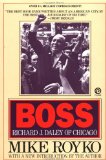 A Christmas gift from my good friends, Spencer and Templar— this book is the story of the late Richard J. Daley written in 1971 by another mainstay of Chicago journalism, Mike Royko. It is described as: a bare-all account of Daley’s cardinal sins as well as his milestone achievements … Royko brings to life the most powerful political figure of his time: his laissez-faire policy toward corruption, his unique brand of public relations, and the widespread influence that earned [Daley] the epithet of “kingmaker.”
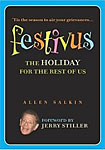 In “The Strike”, one of the most memorable episodes of Seinfeld ever, Frank Costanza revealed some of the rituals of a Festivus celebration: a bare aluminum pole, feats of strength, the airing of grievances. Transcending television to become a phenomenon in its own right– thousands of people now celebrate Festivus. Many do so to thumb their noses at the commercialism of Christmas. Others celebrate the cultural influence of a show about nothing. Farmboy gave me Allen Salkin’s book as a Christmas present. In it, Salkin romps through the real world of Festivus. He meets the real Miss Festivus, drinks Festivus beer, and ponders the Festivus snail– among many other ironies.
 I am unsure why I missed reading Joseph Heller’s classic satire both in high school and in college but I did. There was a time when reading Catch-22 was nothing less than a rite of passage. And 45 years later, the novel’s strength can be found in how it still holds a looking-glass to the modern world. Again and again, Heller’s characters demonstrate that what is commonly held to be good, is bad; what is sensible, is nonsense.
 Beta|Erinyes