Sean and I decided to devote the following weekend, this would be late mid-July, to Operation Warehouse Vacation. Feeling a bit unfocussed, we opted to seek help from the experts and so went online in search of a local travel agent. Over the next few days, we called as many as we could and, in the process, discovered something interesting – travel agents don’t really exist anymore. Due in large part to online booking sites like Expedia and Travelocity (which we always use too), the travel agency industry was swiftly going the way of the mighty dodo. Most agencies that had actually managed to stay in business spent their time working with big corporate clients, not wasting precious resources on little guys like us. The few travel agents who did talk to us tried to sell us pre-packaged vacations that sounded, honestly, lame and cost many, many more yams and goats than we currently possessed. Not to be discouraged, we turned again to the internets.
That’s when we found an immense website written by a guy named Matt Barrett, who, as it turned out, was an American ex-pat and vocal Greekthusiast. His online travel guide covered everything about travelling to Greece and the Greek Islands in exquisite and loving detail and Sean and I devoured every last page.
 I have thoroughly enjoyed Vladimir Nabokov’s work over the years. Ada, or Ardor is high on my list of all-time favorite novels. This one has been compared to Franz Kafka’s work— another favorite author. This book embodies a vision of a bizarre and irrational world, and it has escaped my attention. I am rectifying the oversight.
 Dan Simmons is a fan of the novella. I am, too. The novella is an intriguing literary form in that it straddles the distance between a short story and a full novel. This tenuous length requires an author to commit to the character depth and detail of a longer form and scrupulously apply an unapologetic editorial edge to the plot. This collection of five novellas includes “Orphans of the Helix”—a novella associated with the Hyperion Cantos—and the rare “Looking for Kelly Dahl.”
 Stephen King writes a 1940s-style pulp fiction crime novel. That’s what the book jacket declares, anyway. Reviews are less-favorable and King, himself, opines that readers will either love it or hate it. There will be no middle ground. That sounds like my kind of challenge.
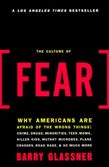 I have written about
  Chuck Klosterman proudly wears the label and stereotype of “Generation X”: disaffected slacker, discontented cultural charlatan. When my fellow Gen-Xer, Johnny Smokes, recommended this book—a survey of popular culture mixed with personal memoirs of the same—I picked it up. It is important to remember that I am talking about a book based on a section of cultural history fiercely reliant on its lack of attention span. I fear even the book’s incongruities may feel somehow appropriate.
 Sherman Alexie‘s critically celebrated first collection of short stories vividly weaves memory, fantasy and stark reality to paint a portrait of life in and around the Spokane Indian reservation. Several of the stories have been adapted as the basis of the award-winning motion picture
  Beta|Erinyes