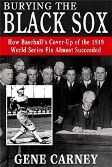
 Most fans know that gamblers and ballplayers conspired to “fix” the 1919 World Series— but “eight men out” does not begin to adequately describe the Black Sox. Gene Carney explores what else happened in the nearly year-long cover-up: How Charles Comiskey, Ban Johnson and Kenesaw Mountain Landis tried to bury the incident, control the damage and how they failed; and how “Shoeless” Joe Jackson attempted to clear his name.
 The Chicago Sun-Times columnist Richard Roeper chronicles the astounding 2005 season— interlaced with a lifetime of thoughts, memories and anecdotes about what it means to be a fan of the White Sox.
 Death, fear, tragedy—these are indisputable elements of life. I know that. The rational, reasonable side of me knows that. I accept these facts. In time, I accept these facts. I wanted to believe that I had been given a reprieve after last year. A reprieve for a short while, at least.
Yesterday afternoon Whirl and I put Equus down. Something happened around 2:00 am, Monday morning. He woke up as he often does and hopped off the bed. Whirl also got up and went to check on him— a move done more out of habit than any particular concern. She discovered him to be terrified, seemingly bewildered. Like he had been spooked by something. She made him comfortable in the bathroom and got him some water and woke me up to let me know she suspected something was wrong with Q. Whirl was right.
I got up and joined her. As soon as I had, Q suffered the first of what would be three violent grand mal seizures within the hour’s time it took us to get him to the emergency vet. The veterinarians did a comprehensive battery of blood tests and urinalysis. They took x-ray pictures. They could find no obvious causes: no infections or hormonal imbalances, nothing wrong with any of his major organs. They kept him for a few hours – until our regular vet opened—and we carefully transferred Q back close to home.
He never recovered. — He had lost his eyesight immediately preceding the first seizure. He would not respond to light or movement of any kind. He lost his balance. He was unable to stand. He lost coordination. We believe he lost most of his hearing. Always a vocal cat, he uncharacteristically made not a sound. He just was not there. Nor was he ever going to be there. Treatment was going to involve either MRIs and exploratory brain surgery or phenobarbital. I’ve been through the hell of the former. The latter would have likely wrecked his already fairly delicate liver. Both avenues promised very little chance of meaningful recovery.
The likeliest cause is trauma—a stroke or possibly a tumor.
 Douglas Coupland. Video game company. This latest novel is being described as something of an update to Microserfs for the age of Google. Are you still wondering why I’m reading it?
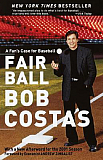 Read more as a follow-up to Game of Shadows—a primer, actually. This selection of essays by Bob Costas is a few years old. Originally written in 2000, he clearly and eloquently discusses a number of the difficulties with professional baseball in the 90s. My opinion of Costas continues to turn around.
I’ve just finished reading Mark Fainaru-Wada and Lance Williams’ book Game of Shadows. The book chronicles the BALCO illegal drug trade and subsequent federal investigations in sport—preeminently Olympic track and field and professional baseball. It pays particular attention to Barry Bonds, detailing compelling evidence that Bonds has used illegal drugs for years. The authors are not alone in describing this behavior as cheating.
Steroids, doping, juicing—these elements are not particularly new to the world of sports. It has been going on for years, decades—the entire lifetime of some endeavors like body-building. “The Chemical Era” of baseball consumes the 90s. Bob Costas wrote just last month:
Only segregation represents a greater blot on the game’s history and integrity. The Black Sox scandal of 1919 involved one team, one year. Pete Rose—one guy. The steroid era, still ongoing, likely involved every team, and more players than we can count. Baseball can’t have it both ways: It can’t celebrate its history and revere its records, and then turn a blind eye when its history and its record book are poisoned.
Former baseball commissioner Fay Vincent has stated “everything in the 1990s is tainted now.” He goes on to dishearteningly agree that the most hallowed records in baseball—755 and 61—are a little less hallowed now.
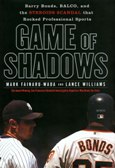 With homerun number 715* no longer speculation but fact, I decided to read this remarkable work of investigative journalism. San Francisco Chronicle reporters Mark Fainaru-Wada and Lance Williams broke this story— a story that continues to break my heart with every swing of his bat.
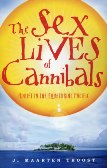 Memorial Day means the beginning of summer. Summer means— among other things like baseball— summer vacations. J. Maarten Troost’s harrowing and hillarious two-year odyssey in the South Pacific is my most recent indulgence in travel books.
We are living in a culture of fear. We have fetishized our fears, trepidations and anxieties to such a monstrous degree they have consumed us. Fear eliminates options. Fear stifles creativity. Fear paralyzes. Fear poisons. Fear murders the reasoned ability to act. Our fear thrusts us into one of two courses of action: fight or flight. And when our fears encompass the painful consequences of fighting, we are left with one choice—which is not a choice at all. We run.
Fear is a compelling motivator. And fear is not necessarily an irrational response to certain stimuli. When faced with very real danger, fear reminds us—sometimes not so gently—that there is a preferable alternative. In that respect fear is a good thing. Arbitrary death and injuries—be they physical, mental, emotional, financial or familial—are wasteful tragedies. They should be avoided—prevented if possible.
But our culture has transcended this simple approach to danger. And in so doing has made us more isolated, less tolerant, more prone to selfish bouts of anger, rage and conflict. Perhaps these are fleeting reactions to a perceived lack of control over our own destinies. That saddens me.
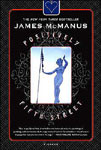 James McManus writes about sex, drugs, murder, Amarillo Slim, the history of cards, and the psychology of gambling. He does all of this using the vocabulary of no-limit Texas hold’em. Mick recommended this non-fiction book to me; I am quite grateful that he did. It does not hurt any that he is a White Sox fan— McManus, that is. Mick is a Cubs fan. I do not hold that against him.
 Beta|Erinyes