 In following with my return to science fiction, I have picked up the critically acclaimed BioWare action RPG, Mass Effect. I have not written much about video games since my departure from Midway a year ago. Whirl and I did pick up an Xbox 360 and an HD-capable television last summer. Whirl has been playing more games than I have, to tell the truth. I wonder if I needed to get some time away from them after the five years working in the industry. Mass Effect is something of a catalyst to return.
I have enjoyed a number of BioWare games over the years, most notably Baldur’s Gate, Neverwinter Nights and Jade Empire. Mass Effect has won a number of awards and received very high reviews from a number of critics, including “Game of the Year” from the New York Times and “RPG of the Year” from the Academy of Interactive Arts & Sciences. The inclusion of voice talent from Lance Henriksen (Aliens), Marina Sirtis (“Star Trek: The Next Generation”), and Seth Green (“Buffy the Vampire Slayer”) add to the significance of this piece of entertainment.
Reviews include:
The cinematic design is nothing short of masterful. This is a game that takes the aspects of film that make cinema so compelling and crosses it with the interactivity of games with unprecedented success. Linear storytelling feels quaint by comparison.
–IGNFar from being a ponderous sci-fi exposition, Mass Effect boasts a dynamic, well-constructed story with a broad emotional range.
–Electronic Gaming MonthlyIt’s the very definition of “widescreen sci-fi,” with its alien vistas, far-out music, and giant ideas. It begins with an ominous opening and ends with a fantastic finale that expertly intercuts between your individual actions with a massive space battle. It’s the rare title where the first thing I did upon finishing was to select “new game.”
–GameTap
I have been looking forward to playing this game since I first heard of its development. Jade Empire was an incredibly fun game with high replay value. This is all of that, plus being on the X360 console and being science fiction.
This is gonna be fun.
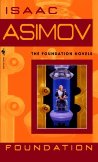 I decided to return to the classics of science fiction. I have read science fiction for a number of years but there are some standbys that I missed the first time through. Most noticeable on the list of works I missed on the first go is Isaac Asimov‘s Foundation trilogy: Foundation, Foundation and Empire, and Second Foundation. Alright. That is not entirely true. I did not miss it entirely. I attempted to read Foundation when I was eleven. I remember it being promoted as “the most important work of modern science fiction.” The Foundation series collection of novels and short stories won a special one-time-only Hugo Award for “Best All-Time Series” in 1966.
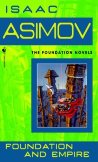 But here is the thing-the thing that I could not get past at the wise age of eleven. The premise of the series is the fall and renaissance of a galactic empire of astounding scale. Quadrillions of people scattered across tens of thousands of worlds, the plot moves forward at a pace of approximately a hundred years per chapter. The characters I just met in the last chapter are all dead at the beginning of the next. Asimov’s humans do not live much past eighty. But I wanted a hero! I wanted someone who was there from the beginning and would ride off into the sunset at the close of the last page-to return in the next sequel. This business with the main characters dying every chapter just would not do.
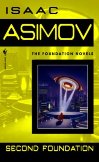 So, after about eighty pages it was out with Hari Seldon and in with John Carter. John Carter and the princesses, the gods, the warlords, the chessmen, the master minds, and the swordsmen of Mars. Edgar Rice Burroughs knew how to tell a story for young boys! Because what I wanted was pulp fiction not this psychohistorical drama played out over a thousand years. Besides, the editions I read all included fantastic covers illustrated by Michael Whelan. I remember those covers, alone, were worth the price of admission.
 My first experience with Wax Trax Records happened in the mid-80s. I happened upon the store late. The founders had moved on to Chicago to start a record label by the same name. They maintained ownership of the original store in the seedy Capital Hill area of Denver, just south of Colfax Avenue behind the state capital. The store served as a pilgrimage site for me every time I would head up to Denver for any reason. If my friends and I were headed up to see a concert, we always allowed several hours to go to Wax Trax. It was part of the ritual. Today, when I talk to my friends about record stores—bemoaning their deaths with quiet, romantic sympathy—it is often Wax Trax that I am talking about. I can recall asking the clerks about the association between the Denver store and the Chicago label on my second or third visit. By that time the focus had shifted from the Denver punk scene to Chicago industrial. The store combined elements of both major musical movements in a way unique to the entire state of Colorado.
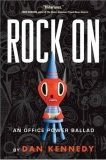 I perused a couple of the local bookstores a few days ago. I was looking for a copy of The Long Goodbye by Raymond Chandler. I found it. I bought it. I have completed reading it. At the time I was looking for it, however, I stumbled upon Rock On by Dan Kennedy. I picked it up, read the back cover and thought of my friend Smokes. Some of you may remember that Smokes was one of the champions of the
 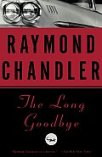 Twice a year– once in the spring and once in the fall– the Chicago Public Library selects a book for the entire city to read. This spring, “One Book, One Chicago” enters its seventh year as a program to promote reading and discussion among all city residents. The selection is the 1953 Raymond Chandler crime novel, The Long Goodbye. The choice of The Long Goodbye marks the first time that the committee has selected a mystery novel. I do not usually read mysteries or crime novels. Those tend more often to be Whirl’s preferences rather than mine. Occasionally she will recommend one for me to read, most notably novels by James Ellroy. I am also somewhat amused that the 1974 Robert Altman film adaptation by the same name arrived in the mail yesterday. I do not remember which of us added that to the movie queue, but the accidental timing was perfect. And I should probably also note that another Chandler adaptation sits on my short list of favorite films: The Big Sleep starring Humphrey Bogart. Suffice it to say I am excited to read this book.

 It is uncommon for a film to have a dramatic impact upon me. While I like film as a general rule and I enjoy discussing them with my friends and family, I generally reserve my highest praise with more than a little caution. To confess in public to a film having significant impact upon me is quite rare. In the case of a film based on a book, it is more likely for me to read the book first, and then see the film than the other way around. For whatever reason, Into the Wild happened in reverse. Of the films I have watched in the last year, Into the Wild is my favorite. Sean Penn adapted the film’s screenplay from the 1996 Jon Krakauer book of the same name.
 Three years ago, in January 2005, I suffered a serious traumatic brain injury. The injury placed me in a coma for ten days and the hospital for weeks more. The injury changed my life. Since that time I have looked for voices and means of expression of what I went through and continue to carry with me.
 I knew the Oscar-nominated film There Will Be Blood was inspired by the novel Oil!. What somehow slipped through my awareness was that Upton Sinclair was the novel’s author. This would be the same Upton Sinclair who wrote The Jungle, the seminal novel about the Chicago stockyards in the 19th Century. I ran across the recent printing of the novel browsing the bookstore last week. I picked it up.
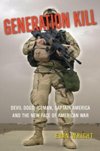 The wars in Iraq have figured as prominent cultural events in my adult life. I arrived in Berlin two weeks before the 1991 invasion and experienced firsthand the anti-American sentiment that decision fostered. When I returned to the States, I noticed how differently my experiences were from those of my friends and family. Germany’s perspective on war is different from that of many other nations, the US included. The last seven years have been characterized by various iterations of the terror war. I believe, in time, America’s involvement in Iraq will become the defining characteristic of my generation– more culturally significant than the Internet, the cellular phone, or Seattle grunge rock.
 Beta|Erinyes