Archives For author

Monday afternoon I saw my sister safely to O’Hare for her flight back to Colorado. On the way back home I picked up the last book in the Harry Potter series by J.K. Rowling. As I mentioned earlier, I drew the second seating to read this one behind my child bride. The good news is that she finished the 759 pages of Harry Potter and the Deathly Hallows in less than two days. The bad news is: I’m up. Whirl is desperate for me to finish it so that we can talk about it.

I came to the Harry Potter series somewhat late. Whirl had read the first three before I picked any of them up. I read Harry Potter and the Half-Blood Prince while recovering from my brain injury. That was the first book of this series I read immediately upon its release.

So now the gauntlet has been thrown: I want to finish the book and the series before I bump into news that will reveal plot developments out of Rowling’s intended order. Rowling has already upbraided a number of American newspapers for releasing reviews of the book before its general release—including the New York Times. Even though the book has been out for a week, now, I do not intend to add to that quagmire.

If you have read Harry Potter and the Deathly Hallows, let me know. I will be more than happy to talk to you about it. Only once I finish!

Stephanie on the Ferris WheelMy sister, Stephanie—not to be confused with my child bride of the same name—arrived in Chicago on Friday evening as I was flying back from Pittsburgh. (Yes, I passed the exams, thank you for asking. Aced them, in fact.) She stayed with us for the weekend and flew back out to Colorado this afternoon. It was just her; she did not bring her daughters with her.

Saturday morning we went to breakfast at Orange and then we went to Grant Park. We walked along the lake to Navy Pier. We toured the stained glass exhibit at the end of the pier, rode the Ferris Wheel and took in the Cirque Shanghai Bai Xi performance. Whirl left us for a bit to run back home and do some things about the house. So I took my sister up to American Girl Place at Water Tower. — Stephanie and all her daughters have American Girl dolls I learned this weekend. I’d never been to the store, but I knew where it was. Now I’ve been. And I know more about American Girl than I ever wanted to know. This week has been rather educational for me with regards to “what children want”. Still, we had a good time. Stephanie picked out some things for her girls and I played amateur sociologist.

Saturday night we went to Buddy Guy’s for dinner and some live blues. Between sets Whirl and Stephanie transformed themselves into epic pool players. Just ask them. They’ll tell you how epic they were at the tables. Go on. Ask.

Read the rest of this entry »

Work has sent me to Pittsburgh. I would not call Pittsburgh the most exotic of locales, but it has not been unpleasant. I’m here for a week’s worth of training on ATM. No, not that ATM. Not the machines that happily spit out currency from your bank account. I’m talking about the telecommunications protocol, ATM: Asynchronous Transfer Mode. The class is with Marconi—recently acquired by Ericsson. At work, we make extensive use of ATM to carry voice, video and data traffic between our various locations. I could ramble on about the virtues of ATM and all of what I’m learning. I just don’t anticipate that my faithful audience will have much interest in that. So I’ll spare you.

What I do find of more general interest about this class is that my co-worker, Rob, and I are the only people in the class working in the private sector. Rob works for broadcasting where we use ATM to deliver television content to a number of our television stations throughout the country. I’ve primarily used ATM to carry data networks. The other students in our class are either military or work for military contractors. We have had a couple of fascinating conversations over lunch about the differences between federal networks and private enterprise networks. As we talked about budgets Wednesday morning at break, I could not help but be reminded of Milo Minderbinder and his syndicate in Joseph Heller’s Catch-22.

I also got a chance to catch up with some childhood friends I have not seen in many years. Amy and my sister have been best friends since they were very young. I last saw Amy at her wedding eight years ago. Since then, Amy and Paul have had three children. I met all of them. I had dinner with Amy’s parents, Ann and Jim. In the process of meeting the children I learned all about The Rugrats, The Wild Thornberrys, Crocs and Jibbitz. Since that wedding, I’ve changed as well. We talked quite a bit about my brain injury and how that has radically altered my life. I had a great time with them.

I have orders from my sister to kidnap Amy into my carry-on bag and bring her back to Chicago with me. I’m still trying to figure out how to accomplish that. I’m nothing if not persistent. I’ll figure something out.

A couple other humorous observations about Pittsburgh and my class:

  • I now know where Pittsburgh is. Pittsburgh is never where you currently are; it is always just over that next hill.
  • That road you think goes over that next hill straight to Pittsburgh—doesn’t.
  • Pittsburgh seems curiously trapped between the East Coast and the Midwest, but does not sit comfortably in either cultural category.
  • The company, Marconi, is named after the Italian radio pioneer, Guglielmo Marconi.
  • Two bits of geeky creativity I found quite clever: the name of the company cafeteria is Bite 53. The name of the associated coffee shop is the Jitter Café.

Yes. I realize that another of my favorite authors is releasing an important fantasy book on Friday at midnight. Yes, I am excited! Yes, I will read that book as well. Yes, I realize this is not that book. You see there is a slight problem. I lost out. I got to read Book Six first, so that means Whirl gets to read Book Seven first. So I needed to pick up something else– preferably something within the same genre.

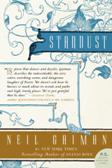
And to just put it bluntly, I got distracted by something shiny. I saw the movie poster for Stardust. I recognized the title and looked more closely at the poster to doublecheck my suspicisions. I was right. The film is based on this novel by Neil Gaiman. As the novel concerns a quest for a fallen star– the very archetype of “something shiny”– I suppose my distraction and subsequent absorption were unavoidable consequences.

That’s my story and I’m sticking to it!

I find talk of climate change seemingly everywhere I look. Yesterday more than a 150 of the world’s most popular music acts contributed to the worldwide concert, Live Earth. Twelve locations, seven continents, an audience of two billion. I have a difficult time wrapping my mind around something that large in scale. I wonder if that is not, in fact, part of the point.
Last month, on June 2nd, the Cool Globes project opened on the Chicago lakefront. One hundred and twenty-six five-foot globes have been set up as a public art display throughout Chicago, most of them along the lakefront in front of The Field Museum.

From the organizers:

“CoolGlobes: Hot Ideas for a Cooler Planet,” [is] an innovative project that uses the medium of public art to inspire individuals and organizations to take action against global warming. … [The globes are] displayed along Chicago’s lakefront from The Field Museum north and at Navy Pier. Artists from around the world, including Jim Dine, Yair Engel, Tom Van Sant and Juame Plensa, designed the globes, using a variety of materials to transform their plain white sphere to create awareness and provoke discussion about potential solutions to global warming.

Read the rest of this entry »

It is not normal for me to reread a book. I read a book, I savor it as I do so. I pick the next book from my stack. A claim that Benjamin Franklin would read a linear foot of books a week inspires me. I have no idea whether that claim is true or not– a quick bit of research found nothing to corroborate it. But that is not the point. The point, as I see it, states that there are so many books worth reading that rereading one might just be a waste of time. So, as a general rule, I don’t do it. I don’t reread books.
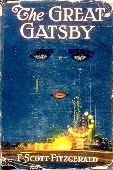
And like most self-made rules, I’ve broken this one on a number of occasions. My latest reading selection, The Great Gatsby by F. Scott Fitzgerald, stands as my most recent transgression. I remember reading this book in seventh grade– twenty-five years ago. I remember the parties. I remember the suicide. I remember the classroom discussion about the elements that appeared to be autobiographical. Several years later I remember attending the one-woman play, Zelda, by William Luce.

In the summer of 1930, F. Scott’s wife and archetypical flapper, Zelda Fitzgerald, suffered a mental breakdown, was diagnosed with schizophrenia and was committed to a sanitarium. Luce’s play is set in a psychiatrist’s office in that sanitarium the night before Zelda died in a fire. She spent the last seventeen years of her life in that hospital. In Luce’s play, Zelda claims Scott placed her there not because she was crazy, but rather so that he could carry on his selfish, indulgent lifestyle without her interference. Zelda recalls how F. Scott Fitzgerald used their lives together as source material for his novels. She charges he stole her diaries: he included her private confessions in his own books. And she rejoins that her own novel, Save Me the Waltz, tells her side of their story– and displays her own talent.

Inspired by these works of art and psychology, I have, on occasion, introduced Whirl as my Zelda Fitzgerald. Given the treatment Zelda suffered, and the depiction in Luce’s play, my moniker may not seem particularly affectionate. I don’t mean it that way. I can be a melancholy boy. The conflict– even torment– of life and art fascinates me. Zelda Fitzgerald fascinates me in that I view her as personification of that conflict.

So twenty-five years later, I am returning to what is arguably the supreme achievement of F. Scott Fitzgerald’s career. To a time and place when the New York Times noted, “gin was the national drink and sex the national obsession.”

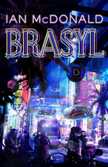
Ian McDonald has won a number of prestigious awards and nominations for his science fiction. Most recently these have included the British Science Fiction Association award and nominations for the Arthur C. Clarke Award and the British Fantasy Society award for his novel, River of Gods. River of Gods gives India a powerful postcyberpunk treatment. In McDonald’s 2047 India, we find genetically engineered children as a new caste. Adults are surgically transformed into a third, neutral, gender. The Ganges is running dry, sparking a water war.

Next up for McDonald: Brazil.

Publishers Weekly writes about McDonald’s most recent novel, Brasyl, published last month:

British author McDonald’s outstanding SF novel channels the vitality of South America’s largest country into an edgy, post-cyberpunk free-for-all. McDonald sets up three separate characters in different eras—a cynical contemporary reality-TV producer, a near-future bisexual entrepreneur and a tormented 18th-century Jesuit agent. He then slams them together with the revelation that their worlds are strands of an immense quantum multiverse, and each of them is threatened by the Order, a vast conspiracy devoted to maintaining the status quo until the end of time. As McDonald weaves together the separate narrative threads, each character must choose between isolation or cooperation, and also between accepting things as they are or taking desperate action to make changes possible. River of Gods, set in near-future India, established McDonald as a leading writer of intelligent, multicultural SF, and here he captures Latin America’s mingled despair and hope. Chaotic, heartbreaking and joyous, this must-read teeters on the edge of melodrama, but somehow keeps its precarious balance.

This will be my first book by Ian McDonald. I am excited to get started.

Bill Geist attended this year’s Printers Row Book Fair. He came as a guest author and signed copies of his new book, Way Off the Road. Whirl and I attended the book fair for two reasons. First reason, we had no choice. The fair sets up in our front yard. And it stays there for two days. If we want to go anywhere outside the building, we have to go through the fair. Second reason, they sell books at the book fair. I like books. Books are the one possession in our house that escapes the two-year rule. “If you haven’t used this in two years, you probably never are going to use it. It’s safe to get rid of it.”

The two-year rule is essential in our house. We do not have a lot of storage space– no garage, only a small space in the basement, certainly no spare bedrooms. Clutter can accumulate at an alarming rate. No, the clutter I tolerate tends to be the sentimental type: small, symbolic tokens representing larger events. Either that or they are just thoughts and memories I keep locked up in my head.

Those take up space, but a different kind of space.

Read the rest of this entry »

For years my friends have been trying to coerce me into reading something from Tim Powers. So I am. This is the editorial review: The colonization of Egypt by western European powers is the launch point for power plays and machinations. Steeping together in this time-warp stew are such characters as an unassuming Coleridge scholar, ancient gods, wizards, the Knights Templar, werewolves, and other quasi-mortals, all wrapped in the organizing fabric of Egyptian mythology. In the best of fantasy traditions, the reluctant heroes fight for survival against an evil that lurks beneath the surface of their everyday lives.

Clark BarClark Street cuts through a diverse section of Chicago. From north to south, Clark touches all of these neighborhoods: Rogers Park, Edgewater, Andersonville, Uptown, Sheridan Park, Lakeview, Wrigleyville, Lincoln Park, the Near North Side, the Gold Coast, the Loop, Printer’s Row, the South Loop, the Near South Side and Chinatown. Some of those areas are quite wealthy. Some are not. Some are rapidly developing. Some maintain a more steady-state of growth and decay. Some areas are commercial; some are industrial. Many are residential. A number of Chicago’s architectural and civic icons have addresses on Clark Street: Graceland Cemetery, Wrigley Field, and City Hall for three easy ones. Besides that, Clark is an angle street. For most of its length, Clark runs northwest-southeast. There are not a lot of angle streets in the city of Chicago. Most of the city is on a grid of north-south and east-west. My friend Mick has threatened to name all of his children after Chicago angle streets. So if you ever run into a bunch of children with the names Lincoln, Clark, Ogden and Archer you will know whose great idea that was. Anyway, I digress. Simply, I wanted to explore this wide-ranging artery of the city. I wanted to walk the entire length of Clark Street.

So today I walked Clark Street– the whole thing. I started at the northern border of the city at Howard and walked with Whirl and Niqui the twelve-mile stretch of fascinating streetscape to its southern terminus at Cermak Road. Liz and Smokes joined us for significant stretches along the way. It took the three of us five hours and forty-two minutes to complete the trek. That time includes a sixty-five minute lunch break across the street from the Chicago Historical Society. Those of you doing the math at home should come up with an average rate of travel of 2.6 miles per hour. I think that is a fine result.

Read the rest of this entry »