Thus, the Fool may indicate the whole range of mental phases between mere excitement and madness, but the particular phase in each divination must be judged by considering the general trend of the cards, and in this naturally the intuitive faculty plays an important part.
~ Arthur E. Waite, occultist and co-creator of the Rider-Waite Tarot
I recently got the following message via email. It has been some time since I have thought in great detail on what happened to me, last year. And while I answered the letter, it caused me to reflect on my own experiences. The letter was short and to the point:
A friend of mine who has suffered from severe depression and who has had ECT is facing neuropsych testing to assess his work fitness and is rather anxious. Can you lead me to online sample test questions I can share with him (he’s not online)?
The tests I underwent were a modified version of the Halstead-Reitan test battery designed by the rehabilitation hospital to which I was admitted. The hospital specializes in brain trauma. I wrote some of my thoughts about the tests. In those entries I have given a couple of vague examples. I came to realize I have not truly described what these tests were like.
I do not mean to suggest by describing these tests that there is some way to be prepared for them. That is one of the elements I found the most frustrating about these tests: I could not study for them—by design. Unlike so many other tests, these tests did not seem to focus on what I had—or had not—learned. Rather they looked at whether I was capable of learning and to what degree. To that end they measure psychological functions known to be linked to particular brain structures or pathways. Before the injury I may have argued that this sort of testing was merely an updated version of phrenology. I do not argue that now.
Do not misunderstand. I still tend to consider psychology a form of augury. It is that with some time and perspective that I begin to see a method. And occasionally I see some results. Not always. Not about everything. But some of these experiences have proven occasionally helpful.
The tests are based on what I consider a somewhat unsteady presupposition. A neuropsychologist compares my raw score on a test to a comparable sample of other people. Before the tests even begin, there is an extensive interview to determine my age, level of education, background and ethnicity. These variables then come into play when trying to interpret my results. My raw score is compared to a group of people just like me—minus the brain injury. I suppose the ideal would be to have a baseline evaluation before the injury and then after. That scenario has some unfortunate impracticality associated with it. So we are left with the unsteady presupposition that a group of similar people can accurately represent me in my pre-morbid state. Such are the challenge of divination, I suppose.
Read the rest of this entry »
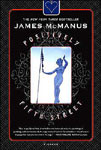 James McManus writes about sex, drugs, murder, Amarillo Slim, the history of cards, and the psychology of gambling. He does all of this using the vocabulary of no-limit Texas hold’em. Mick recommended this non-fiction book to me; I am quite grateful that he did. It does not hurt any that he is a White Sox fan— McManus, that is. Mick is a Cubs fan. I do not hold that against him.
 A collection of first person accounts of backpacking through Europe. It has been fifteen years since my poor treks through southern and central Europe. This book takes me back to that time. I forged friendships through a multi-language political debate on a nighttime ferry crossing of the Aegean during the Perseid meteor shower– among many other fond and whimsical adventures.
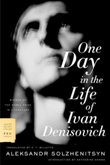 Aleksandr Solzhenitsyn’s Nobel Prize winning novel is this spring’s selection for the Chicago Public Library’s “One Book, One Chicago” program. Fierce, uncompromising and haunting– a relentless indictment of political oppression.
 “You shouldn’t read it if you cannot take a punch.” – Ernest Hemingway on Nelson Algren’s writing. This twelve thousand word prose poem is Chicago’s magnum opus.
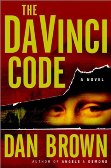 Dan Brown’s thriller marries an international murder to curious esoteria culled from centuries of Western history. It reminds me of Umberto Eco’s Foucault’s Pendulum— in that this is precisely the sort of book Eco satirized so well. Promise me you will remember it is a common work of fiction.
 Part Two of Dan Simmons’ literary diptych: start with the recipe for Ilium, but bake for 704 pages to higher degree of literary allusion. Garnish with Virgil and serve with a nice novel of later Heinlein.
 Part One of Dan Simmons’ literary diptych: mix one part Homer with one part Shakespeare and one part Proust in a bowl of high-concept speculative fiction– add a dash of Nabokov to taste.
 Beta|Erinyes