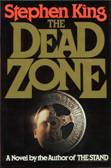
 Stephen King’s hauntingly sympathetic novel about injury, struggle, missed opportunity and a heroic Everyman, Johnny Smith.
Archives For author
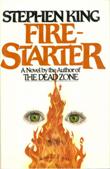 Stephen King’s compelling vintage novel.
I’ve sung the blues,
For every broken-hearted lovesick dream for you.
I’ve paid my dues,
Working hard-sweat, blood and tears for you.
I’m back in England. I left Chicago on Thursday. I was to stay for a week. Plans changed last night. I am staying longer—now nearly two weeks.
Due to a tragic series of delays in Chicago—it would be funny if the results were not so damned annoying—I did not get off the ground until three hours past our scheduled departure time. Consequently, I missed my connecting flight in Brussels to Newcastle. I was rebooked on the next available flight which left Brussels about five hours after I arrived. By the time I got into the Newcastle office, the reason for my leaving Chicago Thursday night was no longer viable. I was too late. The people I scheduled to meet had closed up shop for the weekend; I was shit out of luck. The following four days have been dominated by continued fallout, repercussions and recriminations.
 Erik Larson’s fascinating work of historical nonfiction interlacing the saga of the Century-defining 1893 World’s Columbian Exposition with the personal horror of a chillingly dedicated serial killer.
My grandfather died on Friday. He was ninety years old. My uncle Larry wrote in the Peoria Star-Journal:
Born November 22nd, 1915 in rural Yates City, Illinois to Winfield and Till “Tillie” Ware he married Helen Louise Pullen on August 29th, 1941 in Peoria. He was preceded in death by his wife, Helen, a sister, Mildred, and one daughter, Mary Helen. He worked at R.G. Letourneau (later WABCO) as a machinist from 1940 to 1979. He served in the United States Navy from 1945 to 1946. He enjoyed hunting, traveling and reading but most of all his dear friends and family.
Whirl and I spent much of this past week in Peoria with my family. We attended the wake, the funeral and the internment. I last visited Grandpa shortly before my injury when Whirl and I helped to prepare his home for sale following Grandma’s death.
I spoke at Grandma’s funeral. I wanted to speak at Grandpa’s. I could not rouse myself to do it. My dad, my uncles, my cousin Jackie—they spoke clearly and eloquently. I slipped into a quiet, simmering ire. As a boy I feared Grandpa. Tall and stern, he held you to a high level of expectation. He held those expectations in such a way that you instinctively did not want to disappoint him. You knew to do so would be wrong. As I grew up, I grew to know Grandpa. Fear matured into respect.
Grandpa combined quiet stoicism, hard work and self-discipline with the unwavering moral virtue of living for the sake of others—the venerable patriarch of our family. I love him very much. I will not forget the lessons his life—and now his death—have taught me.
“Time present and time past
Are both perhaps present in time future,
And time future contained in time past.
If all time is eternally present
All time is unredeemable.”
~ T. S. Eliot, Four Quartets
One year ago I got hurt. One year ago my portion of luck was misplaced. I was struck by a cyclist on my way home. I spent the next nine days in a coma, burr holes drilled into my skull. When I awoke I discovered that I had suffered a serious brain injury. – The term discovery is too gentle a way of describing the experience. Discovery suggests excitement; discovery suggests adventure; discovery suggests invention. Discovery does not suggest trauma.
It was not exciting—nor adventurous, nor inventive. It was Hell. I have written at length about the experience due to my—eerily precognizant—decision to begin keeping this journal. You will find my discussion in the archives. (Unsurprisingly the collection lacks much in the way of organization. I apologize for that.)
To mark this anniversary Whirl and I took a trip with our friends Smokes, Jim, Liz and Dr. Rob to Las Vegas. A year ago I declined an invitation by these same friends to join them on a last-minute plan to go to Vegas. Liz went to run a half-marathon; the others went to cheer her, play some poker and generally have a good time. Whirl was in Washington with her cousin. I decided not to go to Vegas. I decided to stay close to home. Looking back I often wonder what would have happened had I decided to go with them. One half of me—I cannot decide if this is the Optimist or the Pessimist—believes nothing would have happened. I would have escaped. The other half of me believes that being in Las Vegas would have changed nothing. I still would have gotten hurt. I still would have been in a coma. What would have changed is that now I would be 1500 miles away from home in a Nevada hospital.
The conversation begins innocently enough.
I was listening to sports radio the other day—as I do—and they meandered into the topic of misunderstood lyrics. Mick Jagger being the undisputed king of them, of course, brought up the lyric in “Sympathy for the Devil”.
Jagger? Moreso than Michael Stipe?
Jagger. Jagger was mumbling and howling words while Michael Stipe was still sucking his mammy’s titty. The lyrics actually say: “I watched and gleamed while you kings and queens fought for ten decades for the gods they made.” — Anastasia screamed in vain, you know. The whole song is genius, man. Genius! Best. Rock. Song. Evar. And the challenge is thrown down, Come on. Try me. (And don’t give me no Led Zeppelin pansy ass shit either. All that stuff about faeries and flowers in the hair.) I immediately nominate, “Like a Rolling Stone” by Bob Dylan and “London Calling” by The Clash. The answer: Like a Rolling Stone, done by Jimi Hendrix, is a good choice. London Calling too, but neither holds a candle.
And so it goes, suggestion and counter:
“My Generation”, The Who: Serious consideration, but no. “Hey Jude”, The Beatles: Not even the best Beatles song. “I Walk The Line”, Johnny Cash: Doesn’t have the same effect. “Me And Bobby McGee” Janis Joplin: Written by? Kris Kristofferson. Therefore, not rock. Q.E.D.
What makes the Best. Rock. Song. Evar? The question, once broached, demanded an answer. For the next two weeks I asked. I interrogated. I debated. I questioned. I tested. No one was safe. Cab drivers would find themselves musing on the idea as they drove. Before I would help people at work, I would require them to answer this one question. It was the new currency of technical support. I asked everyone I ran across. I took notes on the opinions of my friends and family, associates and enemies. I wrote to people I had not spoken to in months—years in at least one case.
Sometimes my target would nominate a song purely subjectively. I just like it. It rocks! Sometimes they would attempt an explanation, like this brilliant bit of poetry from Eamon:
Man, that’s a toughie. I think I’m going to go with AC/DC’s “For Those About to Rock (We Salute You)”, and here’s why: not only does it rock, but it makes you feel like you rock just for listening to it, and it makes whatever song comes after it rock even harder. Because while the song repeatedly promises that full-on rocking is imminent, in fact it has already begun rocking, thus thoroughly priming your sub-consciousness for continued rock.
I add that the fusillade at the end of the song does not hurt the strength of the nomination by any stretch. Liz went so far as to declare this to be the song she wants played at her funeral and Smokes has gallantly agreed to provide the necessary cannon fire.
In the end of 2005 three announcements were made in Chicago that concerned the closing of three Chicago cultural icons on State Street: Marshall Field’s, Trader Vic’s and the Berghoff. Marshall Field’s ownership has changed twice in the last two years as the department store giant struggled. The killing blow came with the September announcement: once the takeover of the brand is complete in early 2006 the Marshall Field’s name will dropped. The flagship store at 111 North State Street will no longer be Marshall Field’s. It will be Macy’s; it will be New York. Trader Vic’s, the signature Tiki bar and stalwart fixture in the basement of the Palmer House Hotel closed at the end of 2005. We learned of this on December 3rd. On December 29th we learned that the historic Berghoff Restaurant will close at the end of February. A 107-year-old business, the Berghoff was the first Chicago establishment to get a liquor license after Prohibition ended in 1933. It has been at its current location—next door to the original 1898 location—for seventy years.
State and Washington: Marshall Field’s, State and Monroe: Trader Vic’s at the Palmer House, State and Adams: the Berghoff. These three locations are located directly in the heart of downtown Chicago on State Street. During the latter half of the 19th century and through much of the 20th century, State Street was the main thoroughfare in Chicago, particularly for business and shopping. Marshall Field’s State Street business began in 1868. Field suffered the Great Chicago Fire of 1871 and contracted Daniel Burnham to build the replacement stores: eventually arriving at the one there today—twelve stories tall, and consuming an entire block of downtown real estate.
And now it is gone. – In an article on Chicago architecture, Lynn Becker writes: From their inception, department stores were like a museum, a riverfront, a memorial, or a stadium—something that defined the unique character of a city. Now they’re just roadkill in Wal-Mart America. But the effect is not limited to just retailers. Defining local culture includes a wide variety of icons: from museums and statesmen, to sports, parades and celebrations, to styles in music, food, drink and pastimes.
My friends have argued that I am being overly sentimental. They remind me that things change. Businesses fold. Buildings are torn down. Fashions go out of style. I understand this. I understand that one of Chicago’s great strengths is its adaptability, its ability to change with—and affect its own changes—throughout time.
What I object to is this: the unnecessary replacement of unique cultural icons with mediocrity and monotony—usually in the name of corporate leverage: greed.
Merry Christmas!
In a speech in Cape Town, South Africa, Robert Kennedy said, “There is a Chinese curse which says, ‘May he live in interesting times.’ Like it or not, we live in interesting times…” It is a nice saying. I like the saying. I will get to why in a moment. First, I must tell you there is a problem with the saying—other than the saying being a curse, of course. This is the problem. No one uttered it. It escaped Chinese literature without ever being written. The possibility of a pair of feckless translations from Chinese to English and back again does exist. However, I find that an unlikely explanation. Truth has rarely stood in the way of powerful rhetoric.
Still the sentiment has some merit, even if the attribution is misleading. I think most people would like to stand at a place and time in which others take interest: to go to a fabled town, to witness an historic event, to meet someone famous, to accomplish the astounding. The more one does this, the better. To travel an entire lifetime this manner would be the pinnacle. In sum– to always live in interesting times. To think that would also mean forgetting the curse. Curses are selfish. Curses are brutal. Curses are nasty. Curses have a way of settling things. This leaves us with a paradox. Interesting times are simultaneously the best and worst of what life has to offer.
If you have stayed with me this long, I will hazard a guess that you are asking something like this question: That’s great, Bingo, and Merry Christmas to you, too. But what the hell does that have to do with anything? And a second thing, why are you writing me this in a Christmas letter?
I will answer: For Whirl and me, 2005 was interesting times.
I spent two weeks in England and Germany last month. I traveled to London. I traveled to Newcastle. I traveled to Munich. The trip was not as exotic as those locations may sound. I spent a considerable amount of time in offices, train cars, and airplanes. Sightseeing was not a priority. I did have a couple of opportunities for something outside of work: I spent several hours on a Saturday in Northumberland looking at castles. I went on a self-guided walking tour of London to see some of the famous sights. And I had the pleasure of going to a pub in Newcastle on a whim—just to see what it was like—have a pint (or two) of beer and watch football.
I discovered real ale.

