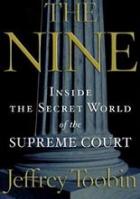
 Blame my increased interest in American politics on my employment by the fourth estate. Or my presence at both political conventions this year. Or the unusually close proximity of my home to the Election Night rally in Grant Park — and all that means for the junior senator from Illinois, now president-elect of the United States. Or maybe it’s just middle age reminding me that I should put down the comic books, turn off the video games and pay closer attention to the wider world around me.
In The Nine, Jeffrey Toobin, a legal writer for the New Yorker, surveys the United States Supreme Court from the Reagan administration on. During this period the justices wrestled with abortion, affirmative action, the death penalty, gay rights and church-state separation. And despite a court dominated by Republican apointees, Toobin’s picture is one not of unmitigated conservatism but surprising moderation. Toobin guides us through the last 15 years of court history by focusing on individual justices. Edward Lazarus of the Washington Post, while generally critical of Toobin’s conclusions, describes these portraits as “unspoiled by hagiography.”
Whirl recommended I read this book after she had finished it a few months ago. Toobin bases much of his book on exclusive interviews with the justices themselves and former law clerks. And by doing so attempts a contemporary profile of those justices, the institution of the court and the changes it has undergone over the last several decades. Lazarus writes,
[W]e have come to vest these unelected, life-tenured judges with final authority to interpret the Constitution as well as all federal law. Yet the justices go to considerable lengths to shroud their deliberations in secrecy, and some of them, notably the current chief justice, engage in a disinformation campaign, announcing that they are disinterested referees, like umpires in baseball, engaged in the pedestrian enterprise of calling legal balls and strikes according to a clear set of rules.
Toobin deserves credit for adding his influential voice to the chorus seeking to debunk this myth. As he observes, the justices are chosen through a political process for political reasons, and the decisions they reach are inevitably influenced by their ideological commitments, personal experiences and personalities.
 In 1998, Pete McCarthy embarked on a project to explore Ireland. Over the next six months he traveled from Cork in the south south up the west coast to Donegal in the north, always observing the Eighth Rule of Travel: “Never Pass a Bar That Has Your Name on It”. The result is McCarthy’s Bar. Publishers Weekly and Library Journal both compare McCarthy’s writing to that of Bill Bryson as he narrates the stories of his travels through the particular magic of Ireland.
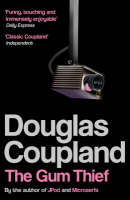 Douglas Coupland has written an epistolary novel. The Gum Thief is described as Clerks meets Who’s Afraid of Virginia Woolf? And quite candidly, that makes three things that I really like all wrapped up in one book. Roger and Bethany are the two main characters in the The Gum Thief, and Glove Pond is the novel within the novel– written by Roger. Roger is a middle-aged alcoholic contending with the fallout from an ugly divorce and loss of access to his child. Bethany is a younger goth girl without much direction other than black lipstick. They both work at Staples. Glove Pond is a corruption of Edward Albee’s play, Who’s Afraid of Virginia Woolf? At one point Roger writes that Glove Pond was supposed to contain characters like Elizabeth Taylor and Richard Burton — drunk movie stars who engage in witty repartee. Roger’s novel goes horribly wrong somewhere around the second paragraph.
 I have been disappointed in the Sookie Stackhouse novels. I attribute the Golden Globe award more to the cleverness of Alan Ball than the skill of Charlaine Harris or Anna Paquin. On the other hand, I have heard good things about this debut novel by the Swedish writer John Ajvide Lindqvist. So I have picked up Let the Right One In (the original Swedish title is Låt den rätte komma in). Like many horror novels, this book focuses on the darker side of humanity. Let The Right One In uses the genre to contend with drugs, theft, pedophilia and prostitution. With the exception of the Harris novels, I haven’t read much contemporary horror in a while. I’m hopeful that this novel will be more satisfying.
 John Gordon writes that Marley & Me is a story about his life and love with the world’s worst dog. I disagree. My family had dogs as pets all the time I was growing up. We had good dogs and bad dogs. Smart dogs and dumb dogs. My parents still have dogs. I sometimes tease my mother that when I went away to college she replaced me with a dog. I’ve grown up with pets as part of the family. When I moved to Chicago most of the places were I rented apartments had fairly draconian rules against dogs. That suited me fairly well, as I believe that having a yard is a prerequisite to having a dog. No yard, no dog. I know people without yards make it work with dogs. There’s a woman with a loft in Printer’s Row who has two Great Danes. I often see her walking them around the neighborhood. Anyway, my pets in Chicago have been cats. Quirky, wonderful, sneaky, loving cats. I don’t mean this as a slight on dogs or people who like dogs. I like dogs, too. A lot. This is all rambling pretext of no particular relationship to this book– other than to add that Mom read this book a while back and suggested it to me with the warning that she cried through the last several hours of it. Because really, I don’t think this is a story about a misbehaved dog so much as it is a story about the value of animals in our lives. And that transcends any species or breed.
 The HBO series “True Blood” concluded its first season a couple weeks ago. The television storylines followed most of the first book,
 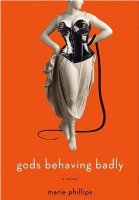 Impulse buys at the bookstore can be dangerous. I went into the bookstore yesterday without a particular idea of what I was looking for. I enjoy browsing bookstores for this very reason. Despite attempts to try and replicate the experience online with recommendations, reviews and customer profiling I cannot get over the idea that it just is not the same as moving from shelf to shelf through a well-stocked bookstore. So that’s what I do when I’m looking for something to read and don’t have a clear idea of what is is I’m looking to read. Yesterday I found Gods Behaving Badly, the first book by London anthropologist and BBC researcher Marie Phillips.
 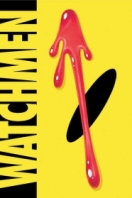 I will attempt to make a case that Watchmen is not as a comic book but a novel through the clever use of argumentum ad verecundiam. Ready? Watch. In 1988, Watchmen received the
 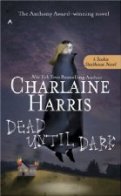 Halloween means monsters– ghosts, vampires, women wearing little more than fishnet stockings and a smile. So it is in the spirit of Haloween that I’ve started reading the Sookie Stackhouse novels by Charlaine Harris. Eight novels comprise the Sookie Stackhouse series, so far– the first one being Dead Until Dark published in 2001. The series takes the vampire legend and turns it on its head. The premise is that the development of synthetic blood has allowed vampires to come “out of the coffin” for the first time in history. So much of vampire lore is wrapped up in the element of secrecy about them. Harris does away with all that in the second paragraph before moving on to her version of vampire stories.
 Beta|Erinyes