 My first experience with Wax Trax Records happened in the mid-80s. I happened upon the store late. The founders had moved on to Chicago to start a record label by the same name. They maintained ownership of the original store in the seedy Capital Hill area of Denver, just south of Colfax Avenue behind the state capital. The store served as a pilgrimage site for me every time I would head up to Denver for any reason. If my friends and I were headed up to see a concert, we always allowed several hours to go to Wax Trax. It was part of the ritual. Today, when I talk to my friends about record stores—bemoaning their deaths with quiet, romantic sympathy—it is often Wax Trax that I am talking about. I can recall asking the clerks about the association between the Denver store and the Chicago label on my second or third visit. By that time the focus had shifted from the Denver punk scene to Chicago industrial. The store combined elements of both major musical movements in a way unique to the entire state of Colorado.
The Wax Trax store helped introduce me to a huge number of bands I would never have discovered otherwise: Front 242, Hüsker Dü, KMFDM, New Order, Sisters of Mercy, Joy Division, My Life With the Thrill Kill Kult, Depeche Mode, Nine Inch Nails, Sinead O’Connor, Ministry, Bauhaus and the Revolting Cocks.
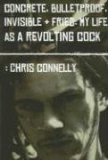
So when I began talking to my friend and co-worker, Bruce, about our various hobbies a few months back, he began describing his interest in music. I talked about my reintroduction to photography. He would show me the various specialized tubes he had purchased for his music equipment. I would talk to him about lenses and darkrooms. Bruce is a quiet, introverted, highly skilled engineer. I respect him a great deal. He has a passion for elegant technical solutions to difficult problems and the experience and track record to back up his quiet confidence. He also moonlights as a sound engineer and plays guitar in his own band. Some time ago we began exchanging books as well. I have lent him On the Road by Jack Kerouac and Rock On by Dan Kennedy. He just lent me the recently-published Chris Connelly autobiography: Concrete, Bulletproof, Invisible and Fried: My Life as a Revolting Cock. I have just started reading it.
The book promises to open up the lives of the people who were in the middle of the music scene I only orbited second-hand in Denver. The back cover reads:
Connelly’s superbly written, funny, irreverent, and sometimes downright scary memoir is one of the finest portrayals of a man trapped in the eye of a post-punk industrial storm this side of Armageddon.
In it Connelly attempts to paints a fair, but disturbing picture of a drug-addicted, out-of-control tyrant in Al Jourgensen, the founder of Ministry. He describes both the personalities and places with wit, originality and humility. The book includes a litany of hallowed Chicago nightlife institutions from the 80s and 90s: places like Smart Bar, ChicagoTrax, and Cabaret Metro. Places I missed by four or five years as I moved to Chicago too late to experience most of these at their prime. My visits to those places came after Wax Trax Records filed for bankruptcy in 1992. Seattle grunge was on the rise, not Chicago industrial.
I wonder if there is a connection there to draw upon with my relationship to my child bride. Whirl arrived in Chicago out of the grunge scene of the Pacific Northwest where I came to Chicago through this musical path. I will have to think about that as I turn the pages and get back to you.
 The wars in Iraq have figured as prominent cultural events in my adult life. I arrived in Berlin two weeks before the 1991 invasion and experienced firsthand the anti-American sentiment that decision fostered. When I returned to the States, I noticed how differently my experiences were from those of my friends and family. Germany’s perspective on war is different from that of many other nations, the US included. The last seven years have been characterized by various iterations of the terror war. I believe, in time, America’s involvement in Iraq will become the defining characteristic of my generation– more culturally significant than the Internet, the cellular phone, or Seattle grunge rock.
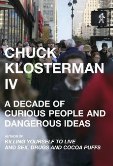 Chuck Klosterman has created a collection of previously published essays as Chuck Klosterman IV: A Decade of Curious People and Dangerous Ideas. The title is a tribute to Led Zeppelin’s untitled fourth album– commonly known as Led Zeppelin IV. He breaks the volume up into three sections: Things That Are True, Things That Might Be True, and Something That Isn’t True. Publishers Weekly describes his work, “Whether investigating Latino fans of British pop icon Morrissey, interviewing female tribute bands like Lez Zeppelin and AC/DShe or eating nothing but Chicken McNuggets for a week, Klosterman is always entertaining and often insightful.” My friend Smokes turned me on to Klosterman with Sex, Drugs and Cocoa Puffs. I liked most of that volume and I’ve been looking out for his name from time to time, now. I ran across a couple of his articles in Esquire magazine: “
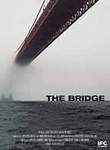 I have been anticipating the availability of this film on DVD since I first learned of it last year. The Bridge is a documentary film about suicide. Inspired by Tad Friend’s article “
 I find talk of climate change seemingly everywhere I look. Yesterday more than a 150 of the world’s most popular music acts contributed to the worldwide concert,
 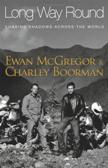 It’s spring of 2004. Ewan McGregor and Charley Boorman are trying to decide what to do with their summer. They come up with an incredible plan. Both are motorcycle enthusiasts and they want to do something unique. They decide to take the summer off and ride motorcycles around the world. They plan to start in London and end in New York City. And since they are planning something so singular, they decide to film it. Then they decide it would be better if someone filmed it for them. I imagine the initial conversation going something like this:
 Mike Royko wrote a newspaper column in Chicago for thirty-four years. He started at the Daily News, then moved to the Sun-Times when the Daily News shut its doors. In 1984 he left the Sun-Times for the rival Chicago Tribune when the Sun-Times sold to Rupert Murdoch, claiming, “No self-respecting fish would be wrapped in a Murdoch paper.” His column was syndicated to some 600 papers around the country. He won fans, antagonists and awards– including the Pulitzer– for his work.
 Beta|Erinyes