Illinois Canyon 8This past weekend Whirl and I celebrated our eleventh anniversary at Starved Rock State Park outside Utica, Illinois. I have been to Starved Rock several times but I had not been back to the park since college and I don’t recall ever spending the night there. We stayed in the historic lodge (a lodge that is currently celebrating its 70th anniversary) and spent much of our time on the park trails exploring. We took the opportunity to haul a bunch of our photography gear with us and I am quite pleased with the results of having done so. (Even if my back is a little annoyed with me for asking it to lug that stuff up and down the canyons).

We had mostly great weather — comfortable temperatures and lots of sun — for most of our stay. Saturday afternoon was rainy and we stayed indoors after a leisurely morning exploration of Illinois Canyon at the far east end of the park. The rest of the time we tromped around the trails unencumbered by computers or cell phones or other people. It was a great opportunity for us to just spend time with each other doing something we both enjoy. And doing it together.

The Lodge was bustling with activity. At least three weddings, and two major family reunions happened while we were there. One of the women working the front desk remarked that they were booked solid through the end of September and had been steadily busy most of the summer.

American White Pelican Pod

As far as wildlife, we were far too late to see the famous Bald Eagles that winter above the Lock and Dam on the Illinois River. But we did see plenty of other animals. Dozens of Great Blue Herons, scores of Double-crested Cormorants, rough-winged swallows, chipping sparrows, wild turkeys, an Egret, deer (complete with a spotted yearling fawn), blue birds, Indigo Buntings, blue-gray gnatcatchers, and what we’re pretty sure was a muskrat swimming along the riverbank. Perhaps the most surprising sighting for me were these huge pods of American White Pelicans traveling west down the Illinois River. On Sunday we perched on Eagle Overlook above the Lock and Dam and watched as pod after pod flew by in formation. Most of the groupings were ten to twenty birds in size, with the largest grouping number well over fifty birds. Over the course of a couple hours we must have seen two hundred pelicans flying west along the river. Spiders, dragonflies and damselflies were out in force feeding on mosquitoes. The spiders provided particularly intriguing opportunities for macro photography.

If you’ve never been to Starved Rock State Park, I highly recommend visiting. It is a wonderful little oasis in the middle of the state.

Men C3 1The second annual Chicago Criterium ran today in Grant Park. The first race of the day, the Juniors race, started at 7:00 AM, so I trundled out of bed early and walked over to the park. Despite the smallness of the hour, this had a nice photographic benefit of allowing me to shoot in the warm morning light just after sunrise. Normally a Sunday morning at that hour is deserted downtown. The Starbucks by our house doesn’t get busy until at least a couple hours later. But today the Loop was busy already early in the morning.

Men C3 3Last year, I wrote about my experiences with the race. I reminisced about my experiences as a bicycle racer. What I did not mention was that I came to the Criterium without much of a plan. I just came to check it out and see what it was like. I used the excuse that I was going to take pictures to push me over there. But once I was there, I was somewhat at a loss. So I shot a lot of pictures of people I didn’t know and just soaked it all in. It was enlightening to me to be around bike racing again after so many years away from it.

When I posted the pictures I got a number of messages from people expressing interest in the photos or requesting permission to use them on other websites. So this year, I tucked a few of those names in my back pocket and made it a point to seek them out and say hello. One is the father of two boys ages 10 and 12 who are starting racing. Another is the skilled rider whose win in the Category 4s race last year advanced him to Category 3 where he’s raced successfully this year.

Men C3 7This gave my photography some direction. I sought these people out and tried to make interesting pictures of them in action. In effect I was my own photo desk: I gave myself a photo assignment and carried it out. Not that I have a particularly keen understanding of how that sort of assignment works in the real world, but I pretended. I also tried some other techniques. I tried to do some more panning shots. I tried to get a good shot of a start, and of a finish. I’m quite pleased with the results.

My only regret is that I decided to only bring one lens to the race. And it was the same telephoto lens I had brought last year. So I retread some ground, shooting similar shots from similar positions on the course. I wished I had brought my wide angle lens to try and get a different look of the race. I took notes as to what some of the other photographers were trying in hopes that next time I’ll come up with something new.

I had heard that last year’s Criterium was well-received by the cycling community. The announcers reiterated that fact more than once, that USA Cycling (formerly USCF) rated the Chicago Criterium the top criterium race in the nation last year. The rating was based on organization, the course, the schedule, the availability to transportation and a host of factors that might easily be used to demonstrate that Chicago is capable of hosting an Olympic-level cycling event. Several people I talked to expressed that they thought if Chicago were to win the Olympic bid we would see more interest in racing. And if Chicago lost the Olympic bid, they feared this may be the last year for the Criterium. I guess we’ll find out in October.

Dragon Boat Bow This morning Whirl and I took the El down to Chinatown to watch the Dragon Boat Races off Ping Tom Park. This was the ninth year for the Race. It’s presented by the Chinatown Chamber of Commerce in cooperation with the City of Chicago and the Chicago Park District. We’ve never attended them before. It’s quite an event, and I had a fun time trying to capture some of the excitement with photographs.

I had a number of questions about the sport, how the tournament is structured. What the rules are. And several of the spectators were more than happy to explain what was happening. While most of the teams competing today were company teams put together to raise money for Chicago Public Schools’ Office of Culture and Diversity, I was intrigued to learn that there are professional Dragon Boat teams. And when we saw a couple of these teams take to the river, the difference in skill and technique was easy to discern. They knew what they were doing and were serious about doing it.

Flying MonkeyTeams were comprised of twenty one crewmen: eighteen paddlers, a drummer, a steersman and a flag puller. The tournament began with a series of matched time trials that fed into a seeded elimination bracket. The course was a 1000 yard strait stretch of the south branch of the Chicago River. A typical race lasted about a minute and a half. I was most intrigued by the flag puller. The flag puller is a special crew position aboard the dragon boat. The flag puller rides aboard near the decorated dragon head, out of the way of the drummer. The race is concluded when the flag puller successfully grabs the float flag at the finish line. The flag puller must not miss pulling the flag, otherwise the boat is disqualified. Fellow spectators told me that the flag puller position is called “the monkey.”

Me Talk Pretty One Day, David SedarisMe Talk Pretty One Day is a collection of essays by David Sedaris. Sedaris has been a frequent contributor to Ira Glass’ Chicago Public Radio show This American Life on WBEZ. In fact several of the essays in this book were first read on This American Life. I’ve become an avid fan of Glass’ show. Most often I listen to it in podcast form. Very occasionally I will listen to it online, and once in a great while I will listen to it broadcast on the air. There’s a sort of timelessness to the show. After all, as Glass himself states, This American Life is not really a news show.

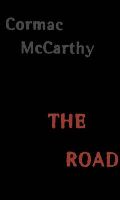
So it is out of my appreciation for This American Life that I have picked up Sedaris’ collection of mostly autobiographical essays. Reviews of the book have been almost universally laudatory. And after the bleak and powerful conclusion of Cormac McCarthy‘s The Road, I could use with a bit of a laugh.

Print EditionsI just came back from the panel discussion over at the DePaul Center. Three authors were there promoting their books and talking about music.

Chuck Klosterman: Fargo Rock City; Sex, Drugs, and Cocoa Puffs; Killing Yourself to Live; Chuck Klosterman IV; Downtown Owl.

Greg Kot: Wilco: Learning How to Die; Ripped; “Turn It Up” Chicago Tribune.

Nathan Rabin: The Big Rewind; “The A.V. Club”.

Each presented a reading from their work. Rabin started with a section of his book dealing with drugs and the challenge with his reading was more technical than anything. The sound system in the basement of the DePaul center seemed to have been set by bonobos with a penchant for reverb. Big hollow room and nervous spoken word came out as a booming, sometimes incomprehensible mess.

Rabin Klosterman KotBy the time Klosterman took the microphone, they had figured out the sound system. Klosterman’s new book Downtown Owl is a novel. It is his first. And instead of reading from that novel he read an essay from his forthcoming book, Eating the Dinosaur. He explained this decision by saying that authors reading from their own novels can never end well. A reading should select a small section of the book and present it in an entertaining way. If you do that successfully, the audience is left wondering what the other 400 pages are all about and walk away thinking the novel is craptastic, pretentious fluff. After all, they have already heard the best part. And if the author flounders in making the selection for the reading, then the reading goes poorly and the audience walk away thinking the author is craptastic, pretentious fluff. So he reads essays. Essays are about the right size for this sort of event. And so he selected an essay about Chicago’s favorite musician: Garth Brooks. (His claim; not mine.) The essay focused on the need for our music to be both authentic and staged and looks with laser-like relentlessness at Chris Gaines. Klosterman tries to answer the question nobody is asking: why did Garth Brooks create Chris Gaines?

Greg Kot, just off the highs of the Pitchfork Festival, joked that if he wasn’t as successful in entertaining the audience he would be brief so that we could get out of there and catch the Billy Joel/Elton John concert at Wrigley Field. And if we couldn’t afford that we might get more entertainment from perusing the reader comments of his review of Thursday’s concert. Nevertheless, he selected a short section of Ripped that dealt with how the Internet has hyper-accelerated the development time bands have previously enjoyed. It was a theme he repeated in some of his reviews of acts at Pitchfork.

Chuck Klosterman 2After the readings the panel took questions with Kot, the journalist, firing the first few off to his fellow authors. The topic focused on the health of media: specifically print and music. The authors contrasted the two fields, how even if all music were available for free, musicians had a revenue stream unavailable to authors: live performances. They talked about the role of record companies, the apparent uptick in nostalgia formats like vinyl and eight-track.

And at the very end each of the authors patiently stuck around for at least an hour to talk to audience members and sign books. After all, that is how authors make their money: they sell books. Kot underlined this point at the close of the panel when he asked the rhetorical question: Let’s be honest how many of you would have paid $15 to hear us?

Quiet laughter filtered through the room.

Dinosaurs may have consumed my boyhood attention from time to time but space was one of those concepts that fascinated me. Today is the 40th anniversary of one of the defining moments of mankind’s attraction to space. It’s an easy date to remember. (It’s also my sister’s birthday.) This piece of work from one of my colleagues in Baltimore provided me another element of photographic inspiration.

Reaching Tranquility, Karl Ferron, The Baltimore Sun
Karl Ferron, photographer on staff for The Baltimore Sun shot and produced this video commemorating the 40th anniversary of the Apollo 11 mission. He has intercut archival footage obtained from NASA and the JFK Library with eight months worth of time-lapse video of the moon travelling across the Baltimore skyline. Steve Sullivan, Multimedia Editor for The Baltimore Sun, describes the result as: “an extraordinary convergence of history and art.”

Look up.

The Road, Cormac McCarthy A week or so ago, Smokes recommended this book to me. So on my most recent trip to the bookstore I picked it up. I’d seen it several times and considered it as a possible read, always putting it back down again. I would get distracted by something shiny.
The Road is a novel by Cormac McCarthy: tale of a father and son traveling across the blasted landscape of a post-apocalyptic world. It won the Pulitzer Prize in 2007. Most of the structures of a story are missing. The characters are nameless; there are no chapters. Pieces of punctuation are missing. These editorial decisions provide a haunting framework for the story itself. A meditation on isolation and desolation and meaning. The style adds to the artistry of the piece, increasing its emotional impact on a personal level. The themes reach the scope of the literary epic because they have been drawn with such bleak minimalism: through a mirror darkly.

The Washington Post writes:

The Road is a frightening, profound tale that drags us into places we don’t want to go, forces us to think about questions we don’t want to ask. Readers who sneer at McCarthy’s mythic and biblical grandiosity will cringe at the ambition of The Road. At first I kept trying to scoff at it, too, but I was just whistling past the graveyard. Ultimately, my cynicism was overwhelmed by the visceral power of McCarthy’s prose and the simple beauty of this hero’s love for his son.

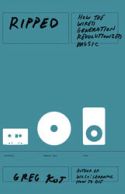
Ripped, Greg KotGreg Kot is joining Chuck Klosterman and Nathan Rabin at the DePaul Barnes and Nobel next week to talk about the role of music in their work and lives. I’m planning on attending for a number of reasons. Music is a topic I’m very interested in. Klosterman is an author I’ve come to enjoy a great deal over the past several years. And most coincidentally, Greg Kot is the music columnist for the Chicago Tribune where I work. But that’s not all. Kot’s latest book, Ripped: How the Wired Generation Revolutionized Music, chronicles the massive changes roiling through the music industry in the past fifteen years. Much of the book discusses the ways the Internet has changed music. But before that, Kot spends several chapters discussing the transformative effects of radio consolidation that gripped the industry in the 1990s: for example, the second chapter of Ripped details the practices of Clear Channel under the direction of Randy Michaels. Randy Michaels is now the current Chief Operating Officer of Tribune Company. Several other key Clear Channel executives were recruited to Tribune eighteen months ago when Tribune Company went private. Meet the new boss, indeed.

So we have a fascinating constellation of topics — personal, professional and accidental — that have come together in a book that has landed almost literally on my doorstep. And much of that, while interesting to me, says very little about the quality of research and attention Kot pays to the subject at hand. Still, I found this quote in a review of Ripped by David Thigpen, former Time music writer, particularly poignant:

Kot’s insider access and the chops honed as a music critic give this book a richness that makes it an indispensable survey of the turbulent turn-of-the-century music scene. Ironically, with the digital revolution also putting newspapers on notice, it’s unlikely the “wired” generation of legions of bedroom bloggers and earnest but unprofessional amateurs will soon produce a writer with the broad perspective and access it took to achieve this book.

Chicago Alefest Whirl and I spent most of the afternoon at Alefest Chicago. It was a beautiful day today, and it just did not seem right not to get outside and enjoy the afternoon. So at about 1:00 in the afternoon, after a leisurely morning cup of coffee, we made our way across Grant Park to the south lawn of Soldier Field. There we found almost fifty different exhibitors with over 150 different rare and craft-brewed beers, ales, lagers, pilsners and … well, my mind gets a little fuzzy if I try too terribly hard to remember them all. We spent four hours at the festival, enjoying ourselves and the delicious beverages that surrounded us. I was rather surprised at the turnout. I had expected, given the tradition of beer-drinking in Chicago, that the festival would have been crazy busy. It wasn’t. I mean, there were people there, but never more than the venue could handle. I never waited more than about 15-30 seconds to get a beer. I met some really friendly and well-educated craft brewers. And did I mention the tasty beer that surrounded us? There were many tasty beers.
Between the two of us, we had forty tickets with which to try various brews. I think we made it through thirty different types before discretion reminded us of its better half. I tried several pils and wheat beers, I found a brewery that made altbier in the style of Germany’s Ruhrgebiet. I tried a strangely refreshing beverage I might never have tried otherwise: a lemon radler from Austria. And most surprisingly of all, I discovered an importer of my all-time favorite beer: Jever Pils. I discovered Jever when I lived in Germany. When I returned to the United States I was saddened to learn Jever did not export outside of the country. Now they do. And I had one for the first time in 18 years. And it was good. It was very good.

The festival included a number of organizations and brewers supporting the craft brew hobby and businesses. If you have an interest in drinking, learning about or making hand-crafted, not mass-produced beer, this is the place to be.

What added a particular sentimental enjoyment for Whirl and me were the memories of our first weekend together. The weekend Whirl and I first met, we attended a similar beer festival in Portland, Oregon. The beer festival was (part of) our first date. It was quite fun to allow those memories to wash over us — accompanied by the warm memories of all the years in between.

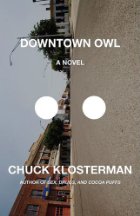
Downtown Owl, Chuck KlostermanOn Wednesday, July 21st, Chuck Klosterman is joining Greg Kot of the Chicago Tribune and Nathan Rabin of The A.V. Club at the DePaul University bookstore for a panel discussion on the role of music in their work and their lives. I’ve read quite a few books by Chuck Klosterman over the past few years, most recently Killing Yourself to Live, where Klosterman travels the United States to visit a number of locations where rock stars have died. During that “epic” road trip, Klosterman pontificates at length about music. (This is not all that surprising given the premise to the piece he floated past his editor at the time.)

Downtown Owl, in contrast, is (mostly) fiction and not (directly) about music. — Although I could argue that all Klosterman writing is, in some way, about music and non-fiction.

Downtown Owl is the unpretentious, darkly comedic story of how it feels to exist in a community where rural mythology and violent reality are pretty much the same thing. It’s technically about certain people in a certain place at a certain time … but it’s really about a problem. And the problem is this: What does it mean to be a normal person? And there is no answer. But in Downtown Owl, what matters more is how you ask the question.

Owl, small town in rural North Dakota, is home to a wide cast of nicknamed characters: a town described as a place where disco is dead but punk never happened.

As I’m reading this, I’m looking forward to meeting Klosterman and maybe — just maybe — asking him to sign my paperback copies of his books.