 One of our traditions is to build gingerbread houses with Spencer and Templar sometime between Thanksgiving and Christmas. We started doing this probably ten or eleven years ago, while Spencer and Templar were attending graduate school and before Hill or Danaan were born.
The first year we each built our own construction. I constructed the John Hancock Building. Whirl built a jail scene from rural Louisiana. Spencer succeeded at a traditional gingerbread house, and Templar added a giant “atomic duck” to Spence’s backyard. The next year we decided on a combined project: a big gingerbread castle. Spencer was in charge of all the Disneyesque fantasy themes while Whirl, Templar and I subverted it with candy-on-candy warfare. We deployed a gummi bear army to defend Gingerbread Castle and rallied a huge band of marauding barbarian marshmallow men to assault it. The castle grounds were covered in candy-gore. We cut gummi bears in half and dripped red food coloring over the icing for blood. We constructed small siege engines and then smashed them. It was deliciously gorey. This set the tone for the project from then on. A somewhat coordinated effort using the combined creativity of the group, limited by the construction properties of gingerbread and the availability of particular cookie cutters.
The third year we built a zoo — but not your ordinary zoo this one came complete with a Jurassic Park-styled velociraptor pen. Of course in our version of the zoo the velociraptors escaped and began eating the hapless gummi bear zookeepers. We had giant gummi worms, and gnostic bears worshiping a mysterious coyote-god. In 1999, we included our friends Viv and Rio in on the fun and built a Star Wars: Phantom Menace inspired gingerbread pod race. (Templar built a Sarlacc Pit to go with it.)
For several years the gingerbread tradition languished when Spencer, Templar and Hill moved to Philadelphia. We got together for Thanksgiving in 2004 in Philadelphia and reprized the tradition in an abbreviated form, building a Gingerbread Race Track for Hill and his Hot Wheels.
 This year we got back into the full swing of things and built the Gingerbread Field Museum. While we considered adding some horrorshow elements to the construction, we generally kept things on an even keel, and did our best to try and represent the museum in gingerbread. We included elements of well-known exhibits like Sue, the lions of Tsavo, the hall of gems and Bushman the Gorilla. Whirl meticulously fashioned a pair of peregrine falcons out of jelly beans and installed them on frieze above the south entrance.
We are not particularly reverent with our portrayals. Spencer has pictures from several of the years projects, but most of them were shot on film. We talked about scanning them in sometime and including them online. If she can find them.
This year’s was big. It took the six of us — four adults and two children — about six hours to complete. It measures a little more than three feet wide by two feet deep by about a foot high. Both Spencer and I took pictures before, during and after the construction.
It will remain at the Perry’s house and serve as decoration, snack and dessert for the next couple weeks. The candy usually goes first, and then the gingerbread. Sacrifices to the spirit of Christmas sugar.
 The HBO series “True Blood” concluded its first season a couple weeks ago. The television storylines followed most of the first book,
 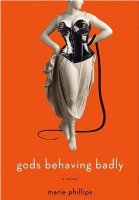 Impulse buys at the bookstore can be dangerous. I went into the bookstore yesterday without a particular idea of what I was looking for. I enjoy browsing bookstores for this very reason. Despite attempts to try and replicate the experience online with recommendations, reviews and customer profiling I cannot get over the idea that it just is not the same as moving from shelf to shelf through a well-stocked bookstore. So that’s what I do when I’m looking for something to read and don’t have a clear idea of what is is I’m looking to read. Yesterday I found Gods Behaving Badly, the first book by London anthropologist and BBC researcher Marie Phillips.
 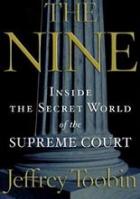 Blame my increased interest in American politics on my employment by the fourth estate. Or my presence at both political conventions this year. Or the unusually close proximity of my home to the Election Night rally in Grant Park — and all that means for the junior senator from Illinois, now president-elect of the United States. Or maybe it’s just middle age reminding me that I should put down the comic books, turn off the video games and pay closer attention to the wider world around me.
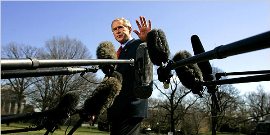 This morning Whirl and I concluded watching the PBS public affairs program, Frontline, turn a critical eye on its own world: modern American journalism. “News War” is a four-part in-depth series about a myriad of issues facing journalism today. Employed as I am by a large media company saddled with debt and riding into an uncertain economic horizon, the topics of this series were near and dear to my heart.

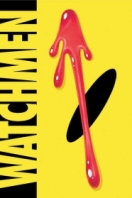 I will attempt to make a case that Watchmen is not as a comic book but a novel through the clever use of argumentum ad verecundiam. Ready? Watch. In 1988, Watchmen received the
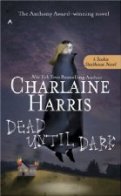 Halloween means monsters– ghosts, vampires, women wearing little more than fishnet stockings and a smile. So it is in the spirit of Haloween that I’ve started reading the Sookie Stackhouse novels by Charlaine Harris. Eight novels comprise the Sookie Stackhouse series, so far– the first one being Dead Until Dark published in 2001. The series takes the vampire legend and turns it on its head. The premise is that the development of synthetic blood has allowed vampires to come “out of the coffin” for the first time in history. So much of vampire lore is wrapped up in the element of secrecy about them. Harris does away with all that in the second paragraph before moving on to her version of vampire stories.
 Beta|Erinyes