 I’m trying to remember my first encounter with photography in any form other than being the subject of my parents’ all-seeing eyes. My dad enjoyed taking pictures of me as I grew up. He would shoot both slide and print film. Not unlike the experiences of many people, my childhood included a number of moments captured on film for all eternity. Some are sweet: my sister and me standing among the aspen as the leaves turned color in the fall. Some are embarrassing: naked, two years old and pudgy, collapsing a plastic swimming pool. Many are memorable in that classic sense, quiet captures of being in a certain place at a certain time. In all of this I was aware of the camera only as I was the subject.
I think the moment of realization that a mechanism to photography existed came later. The understanding that my dad had learned this method came to me when as a young boy as I looked at a picture he had taken at night in Washington D.C. I cannot recall the exact subject of the photograph– I suspect the primary subject was one of the monuments or famous buildings from the capital. I want to say it was a wide shot along side the mall with the Washington Monument off to one side. But what I remember clearly was that it contained a streetscape. Bright streaks raced along the pavement where the cars should have been. But there were no cars. There were only these streaks of light. I asked dad about the picture. He told me how he took it. I thought he was a magician. He took a picture and made all the cars disappear. Obviously the cars had gotten zapped by these streaks and now were gone!
Dad patiently explained to me how he composed the shot. He had taken a long, multi-second exposure and what I was seeing was the glow of tail lights as the cars moved through the frame. The entire lesson went right over my head at the time. What stuck with me was this idea that a photograph was an object in its own right. Up until that point I had thought that photographs were just ways to record what something else looked like: a secondary thing of no real importance. But the taillights proved otherwise. I knew the cars had been driving by when dad took the picture. But they were not in the picture. They disappeared. I knew taillights were not a hundred yards long, but they were in the picture. They went all the way down the mall to the monument.
I wanted to learn how to do this. I wanted to know how it worked. And with childish intensity I continued to pester my dad until he relented and began to reveal the secrets to me.
 Dad’s 35mm Nikkormat FT was one of the first real cameras I ever used. Dad had bought it when he was in college. He took it with him everywhere. Backpacking in Colorado, canoe trips in Indiana, bicycle trips around Lake Michigan. Dad used this camera to capture the Colorado River at the bottom of the Grand Canyon and the top of Long’s Peak in Rocky Mountain National Park. He hauled it up to the top of Mt. Elbert and through the backwoods of the Minnesota Boundary Waters Wilderness Area. When I was fourteen, Dad gave me this camera. Although in all honesty I suspect it was a loan that I never paid back.
 Under the Banner of Heaven will be the third book I have read from author Jon Krakauer. The other two books include his moving non-fiction account of the harrowing 1996 summit of Mt. Everest,
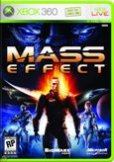 In following with my return to science fiction, I have picked up the critically acclaimed BioWare action RPG, Mass Effect. I have not written much about video games since my
 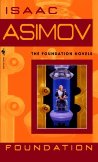 I decided to return to the classics of science fiction. I have read science fiction for a number of years but there are some standbys that I missed the first time through. Most noticeable on the list of works I missed on the first go is Isaac Asimov‘s Foundation trilogy: Foundation, Foundation and Empire, and Second Foundation. Alright. That is not entirely true. I did not miss it entirely. I attempted to read Foundation when I was eleven. I remember it being promoted as “the most important work of modern science fiction.” The Foundation series collection of novels and short stories won a special one-time-only Hugo Award for “Best All-Time Series” in 1966.
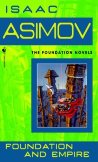 But here is the thing-the thing that I could not get past at the wise age of eleven. The premise of the series is the fall and renaissance of a galactic empire of astounding scale. Quadrillions of people scattered across tens of thousands of worlds, the plot moves forward at a pace of approximately a hundred years per chapter. The characters I just met in the last chapter are all dead at the beginning of the next. Asimov’s humans do not live much past eighty. But I wanted a hero! I wanted someone who was there from the beginning and would ride off into the sunset at the close of the last page-to return in the next sequel. This business with the main characters dying every chapter just would not do.
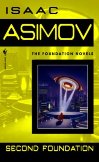 So, after about eighty pages it was out with Hari Seldon and in with John Carter. John Carter and the princesses, the gods, the warlords, the chessmen, the master minds, and the swordsmen of Mars. Edgar Rice Burroughs knew how to tell a story for young boys! Because what I wanted was pulp fiction not this psychohistorical drama played out over a thousand years. Besides, the editions I read all included fantastic covers illustrated by Michael Whelan. I remember those covers, alone, were worth the price of admission.
 My first experience with Wax Trax Records happened in the mid-80s. I happened upon the store late. The founders had moved on to Chicago to start a record label by the same name. They maintained ownership of the original store in the seedy Capital Hill area of Denver, just south of Colfax Avenue behind the state capital. The store served as a pilgrimage site for me every time I would head up to Denver for any reason. If my friends and I were headed up to see a concert, we always allowed several hours to go to Wax Trax. It was part of the ritual. Today, when I talk to my friends about record stores—bemoaning their deaths with quiet, romantic sympathy—it is often Wax Trax that I am talking about. I can recall asking the clerks about the association between the Denver store and the Chicago label on my second or third visit. By that time the focus had shifted from the Denver punk scene to Chicago industrial. The store combined elements of both major musical movements in a way unique to the entire state of Colorado.
 I perused a couple of the local bookstores a few days ago. I was looking for a copy of The Long Goodbye by Raymond Chandler. I found it. I bought it. I have completed reading it. At the time I was looking for it, however, I stumbled upon Rock On by Dan Kennedy. I picked it up, read the back cover and thought of my friend Smokes. Some of you may remember that Smokes was one of the champions of the
  Twice a year– once in the spring and once in the fall– the Chicago Public Library selects a book for the entire city to read. This spring, “One Book, One Chicago” enters its seventh year as a program to promote reading and discussion among all city residents. The selection is the 1953 Raymond Chandler crime novel, The Long Goodbye. The choice of The Long Goodbye marks the first time that the committee has selected a mystery novel. I do not usually read mysteries or crime novels. Those tend more often to be Whirl’s preferences rather than mine. Occasionally she will recommend one for me to read, most notably novels by James Ellroy. I am also somewhat amused that the 1974 Robert Altman film adaptation by the same name arrived in the mail yesterday. I do not remember which of us added that to the movie queue, but the accidental timing was perfect. And I should probably also note that another Chandler adaptation sits on my short list of favorite films: The Big Sleep starring Humphrey Bogart. Suffice it to say I am excited to read this book.

 It is uncommon for a film to have a dramatic impact upon me. While I like film as a general rule and I enjoy discussing them with my friends and family, I generally reserve my highest praise with more than a little caution. To confess in public to a film having significant impact upon me is quite rare. In the case of a film based on a book, it is more likely for me to read the book first, and then see the film than the other way around. For whatever reason, Into the Wild happened in reverse. Of the films I have watched in the last year, Into the Wild is my favorite. Sean Penn adapted the film’s screenplay from the 1996 Jon Krakauer book of the same name.
 Beta|Erinyes