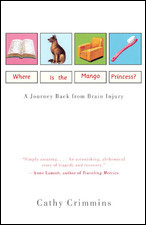
 If you’ve been reading this blog for a while now, you may have heard this story before. Here’s the short summary. Man is out and about doing something totally mundane– walking home from a friend’s house or ferrying garbage and laundry across a lake in a small boat at the end of a summer vacation– when he suddenly and violently strikes his head. He is rushed to the hospital and falls into a coma. Meanwhile, the wife, not present at the scene, rushes to her husband, and waits. Because that’s what you do when someone you love is in a coma. You wait. The patient either comes out of it or doesn’t. In our story, the man does eventually awaken from the coma. Although it’s straining credulity a little bit to say he is the same person as he was before.
This is the story of traumatic brain injury. It is what happened to Alan Forman in the summer of 1996. And it is what happened to me in the beginning of 2005. Where Is the Mango Princess? is a non-fiction account by humorist Cathy Crimmins. Alan is Crimmins’ husband. His head was run over by a speedboat while the family was on vacation in Canada. The book is an intimate account of the effects of traumatic brain injury, not only on the direct victim, but on her, their daughter and every aspect of their lives.
My friend, Princess, told me about the book when we were talking about her senior level physiology class she’s taking this quarter at Northwestern. Part of this class comprises a disease symposium. Students group up and research a given topic. She has chosen traumatic brain injury and using the Forman case to present for the symposium. I’m reading the book for more personal reasons. I have a strong personal interest in TBI. Whirl is concerned that it is causing me distress to read this book. I admit there are a peculiar number of similarities in the cases. The sections about recovery and therapy have been the most troublesome for me, bringing up echos of my own anger and sense of helplessness at the time. Crimmins writes with a voice that is at once deeply personal, gut-wrenching and often hilarious. I applaud her for that.
When I’m finished with this book, it will stand alongside My Stroke of Insight, The Diving Bell and the Butterfly, Brainlash and Your Miracle Brain as part of my ever-growing library about scrambled eggs.
 When I told Mick that I was reading the fifth book in the Song of Ice and Fire series by George R.R. Martin he offered to save me the trouble of wading through the 1000 pages to find out what happens, “everybody dies.” Mick is like a number of people I’ve met who started reading these books early. Years ago. They are interested in the series, and invested in the story. You have to be invested after 5000 pages of text about a very rich and interesting world and set of characters.
  Alright, so that went fast. It took me just two short days to finish Catching Fire, and now I’m already deeply into the third and final volume of the Hunger Games series by Suzanne Collins, Mockingjay.
  I’ve been patiently waiting for someone to publish the second and third volumes of the Suzanne Collins‘ Hunger Games series in paperback. I read the
  Funny story. I’ve been patiently waiting for A Dance with Dragons, the fifth book from George R. R. Martin‘s Song of Ice and Fire series, to come out in paperback. Originally it was scheduled to be published in mid-August. My friends and I anticipated picking it up. But as the date grew near, suddenly the publication date was pushed back to March of next year. Oh no! I had a choice. I could purchase the book in hardback. I could finally break down and get an e-book reader of some sort. Or I could wait until March. I came home from work and explained the situation to Whirl. She said, helpfully, “Oh, I bought that in hardback a long time ago. Read that.” Now I didn’t particularly want to read it in hardback, because it is a very large book. I mean physically. It’s big. It’s a big book. Hauling it around to and from work, or swim practice or on the bus or wherever– it’s just not the sort of volume one thinks of when describing something as portable. It comes in at over three pounds and over a thousand pages. (Incidentally, the other paperback volumes in the series are not particularly smaller in the size department, but every little bit helps, I guess.)
  Rudyard Kipling published The Jungle Book as a collection of short stories in 1894. He would go on to win the Nobel prize for literature in 1907. Neil Gaiman published The Graveyard Book as a novel in 2008. The Graveyard Book won the Hugo Award for Best Novel, Newbery Medal, and Locus Award for Best Young Adult Book in 2009, as well as the Carnegie Medal in 2010.
  It’s been a while since I’ve updated the blog with what I’m reading. My current book comes courtesy of a suggestion from my 13 year-old niece when we were together in late March. She was quite effusive with her praise of The Hunger Games by Suzanne Collins. And so I picked it up.
 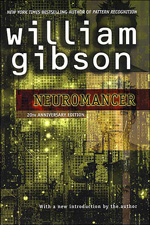 Neuromancer, by William Gibson, is over twenty-five years old. It won the Hugo, the Nebula and the Philip K. Dick awards — the first novel to accomplish such a task — and forever changed science fiction.
 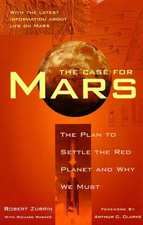 Six weeks ago NASA concluded its final shuttle mission, STS-135. At the time, I found myself rather conflicted about the whole thing. Space and all the things that go along with that — rockets, exploration, astronauts, the planets, moons and asteroids — have fascinated me from an early age. (That and dinosaurs, of course, but near anyone knows, there are no dinosaurs in space.) So to see NASA give up the last remnant of human spaceflight was saddening. No more rocket launches.
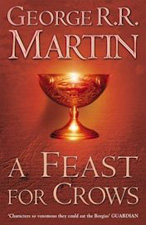 Okay, okay, okay. I know all I’ve been doing on this blog is writing on and on about this incredible series of books by George R.R. Martin: The Song of Ice and Fire. I just finished the third book last night and picked up volume four, A Feast for Crows, on my way home tonight. I have just a few words to say about the last book, because I really want to get to reading. So, here you go. All you need to know about A Storm of Swords is summarized in one scene: The Red Wedding.
 Beta|Erinyes