 I consider myself a well-read, liberally educated man. Few authors have sunk so low in my esteem that I have stricken them from consideration when selecting a book to read. I like to read. I have respect for authors who have suffered the painstaking ordeal of writing a novel. In the vast majority of cases authors deserve a measure of respect for accomplishing that much. Jane Austen is not one of these authors. I know, I know. She’s amazingly popular. Her skills as a writer are transcendent. Her social commentary is sublime; her irony is dramatic, bitter and pointed — all at the same time (something Alanis Morissette was never quite capable of pulling off I’m sad to say). I don’t like Jane Austen books. I don’t. I don’t care for her writing. I don’t like Jane Austen books. So, aside from a compulsory reading assignment in school the only way you would ever entice me to pick up a Jane Austen novel would be to put zombies in it.
And sure enough, that’s exactly what Seth Grahame-Smith has done. Pride and Prejudice is part of the public domain, so Grahame-Smith took the text and intercut it with a contemporary zombie story that would make George Romero proud. The end product: Pride and Prejudice and Zombies. In an interview Grahame-Smith explains, “You have this fiercely independent heroine, you have this dashing heroic gentleman, you have a militia camped out for seemingly no reason whatsoever nearby, and people are always walking here and there and taking carriage rides here and there … It was just ripe for gore and senseless violence.”
It’s October. That means Halloween and spooky things. There are new horror movies to see — including at least two zombie movies: Zombieland and Survival of the Dead. So I’m going to read a Jane Austen zombie book. Yes. A zombie book!
From the back cover:
“It is a truth universally acknowledged that a zombie in possession of brains must be in want of more brains.” So begins Pride and Prejudice and Zombies, an expanded edition of the beloved Jane Austen novel featuring all-new scenes of bone-crunching zombie mayhem. As our story opens, a mysterious plague has fallen upon the quiet English village of Meryton — and the dead are returning to life! Feisty heroine Elizabeth Bennet is determined to wipe out the zombie menace, but she’s soon distracted by the arrival of the haughty and arrogant Mr. Darcy. What ensues is a delightful comedy of manners with plenty of civilized sparring between the two young lovers — and even more violent sparring on the blood-soaked battlefield. Can Elizabeth vanquish the spawn of Satan? And overcome the social prejudices of the class-conscious landed gentry? Complete with romance, heartbreak, swordfights, cannibalism, and thousands of rotting corpses, Pride and Prejudice and Zombies transforms a masterpiece of world literature into something you’d actually want to read.
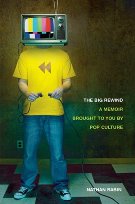 The Big Rewind is a collection of autobiographical essays by Nathan Rabin. Rabin is the third author to be featured at the
  Me Talk Pretty One Day is a collection of essays by David Sedaris. Sedaris has been a frequent contributor to Ira Glass’ Chicago Public Radio show
  A week or so ago, Smokes recommended this book to me. So on my most recent trip to the bookstore I picked it up. I’d seen it several times and considered it as a possible read, always putting it back down again. I would get distracted by something shiny.
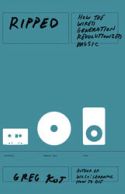 Greg Kot is joining Chuck Klosterman and Nathan Rabin at the DePaul Barnes and Nobel next week to talk about the role of music in their work and lives. I’m planning on attending for a number of reasons. Music is a topic I’m very interested in. Klosterman is an author I’ve come to enjoy a great deal over the past several years. And most coincidentally, Greg Kot is the music columnist for the Chicago Tribune where I work. But that’s not all. Kot’s latest book, Ripped: How the Wired Generation Revolutionized Music, chronicles the massive changes roiling through the music industry in the past fifteen years. Much of the book discusses the ways the Internet has changed music. But before that, Kot spends several chapters discussing the transformative effects of radio consolidation that gripped the industry in the 1990s: for example, the second chapter of Ripped details the practices of Clear Channel under the direction of Randy Michaels. Randy Michaels is now the current Chief Operating Officer of Tribune Company. Several other key Clear Channel executives were recruited to Tribune eighteen months ago when Tribune Company went private. Meet the new boss, indeed.
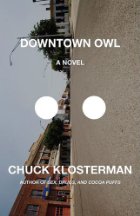 On Wednesday, July 21st, Chuck Klosterman is joining Greg Kot of the Chicago Tribune and Nathan Rabin of The A.V. Club at the DePaul University bookstore for a panel discussion on the role of music in their work and their lives. I’ve read quite a few books by Chuck Klosterman over the past few years, most recently Killing Yourself to Live, where Klosterman travels the United States to visit a number of locations where rock stars have died. During that “epic” road trip, Klosterman pontificates at length about music. (This is not all that surprising given the premise to the piece he floated past his editor at the time.)
 In February 2008, Dr. Jill Bolte Taylor gave a fascinating talk for TED about her experience with having a stroke. She called this life-changing event her stroke of insight. In the talk she explains the asymmetry of the brain in in vivid detail. She published a book about the same experiences, My Stroke of Insight. I’ve
  Most people recognize F. Scott Fitzgerald as a novelist. I remember college professors promoting
  The Chicago Public Library’s Spring 2009 selection for
 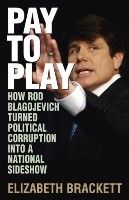 I feel I’ve been on a political roller-coaster this year in Illinois. I’m sure part of that has to do with my work
  Beta|Erinyes